‘It was there’🖼️ ‘It wasn’t there’🗋 – Robert Rauschenberg
“Is creating art the only form of art? Can destroying art also be art?”
Robert Rauschenberg (1925–2008), the revolutionary who shook the foundations of 20th-century modern art by posing this shocking question. He broke down the boundaries of art with his ‘Combine Painting’, which blended everyday objects with art to blur the lines between painting and sculpture.
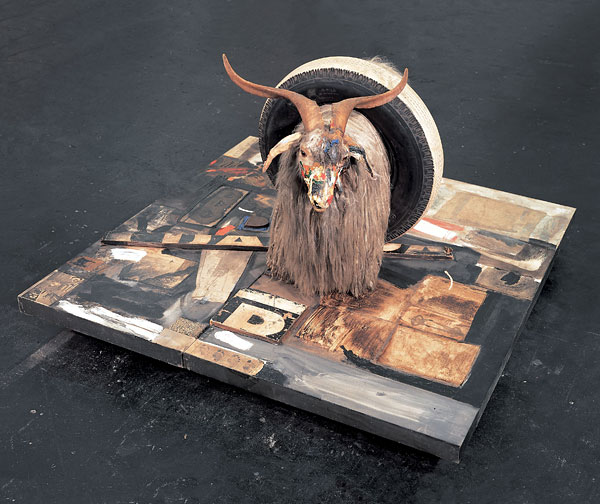
However, his most shocking experiment was something else entirely: the creation of new art by ‘erasing’ an existing artwork. In 1953, he carried out an unprecedented performance in which he completely erased a drawing by Willem de Kooning, a master of the art world. This is ‘Erased de Kooning Drawing’.
This work is not merely a case of ‘erasing a doodle’. It is one of the most provocative acts in art history, posing the fundamental question: ‘What is art?’

“Erase a master’s work? I thought he was mad.”
Rauschenberg harboured scepticism towards the American art world of the 1950s, which was dominated by Abstract Expressionism. He rebelled against the attitude of masters such as Jackson Pollock, Mark Rothko and de Kooning, who viewed art as a ‘pure expression of emotion’. He wondered whether art might not only express emotion, but also ‘deconstruct’ it.
Then one day, he conceived a daring experiment. ‘Could the very act of destroying a work of art become a form of art in itself?’
However, simply erasing ordinary paper was not enough. He decided that it would only have true meaning if he erased a great work that had already been recognised as art. So he knocked on the door of Willem de Kooning, the greatest painter of his time.
In 1953, when Rauschenberg arrived at his doorstep, de Kooning was the most famous contemporary artist in New York City. De Kooning’s paintings were extremely expensive, and even a mere sketch held both financial and art-historical value.
*Willem de Kooning (1904–1997): A 20th-century painter of Dutch origin. He was an Abstract Expressionist who worked primarily in the United States, characterised by an expressive style that defies classification as either figurative or abstract, and by his vigorous brushwork. De Kooning is a leading figure in ‘action painting’, on a par with Jackson Pollock, and one of the founders of Abstract Expressionism.

“De Kooning, may I erase your painting?”
Rauschenberg went to see De Kooning in person. The 27-year-old artist boldly asked, “May I erase your painting?” At first, De Kooning laughed as if taken aback. However, he soon understood Rauschenberg’s intention and began to consider it seriously.
“All right. But I can’t give you a work that will be easy to erase.”
De Kooning personally selected and handed over a drawing that had been layered with pencil, charcoal and crayon—one that would be extremely difficult to erase. He knew this would be no easy task, and he hoped Rauschenberg would take on the challenge with genuine commitment. After receiving the work, Rauschenberg returned home.
And he soon began the ‘battle’ of erasing.
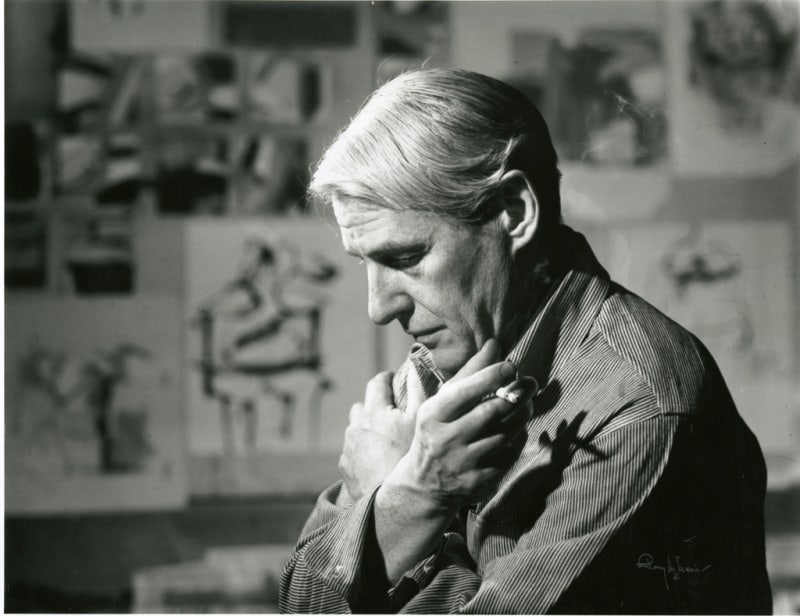
A two-month ‘war of erasure’
The process of erasing the artwork was agonisingly arduous. It was not something that could be completed simply by rubbing with an eraser a few times.
- He kept rubbing away, changing erasers as he went
- Striving to remove as much as possible of the traces left by a mixture of pencil, charcoal and crayon
- When the marks could not be completely erased, he applied even greater pressure
- Repeated erasing, ceaselessly, over the course of two months
Whilst erasing, Rauschenberg found himself wondering: ‘Am I erasing this, or am I creating new art?’
Finally, de Kooning’s traces vanished completely. A single sheet of white paper remained. So, had this paper now become ‘nothing’? Or had it been reborn as a new form of art?

“Once it was erased, it became a more powerful work”
Rauschenberg did not simply throw this sheet of paper away. He suggested to his friend and fellow artist, Jasper Johns, that he turn this work into an official artwork. Johns framed it and wrote the title beneath it.
“Erased de Kooning Drawing, Robert Rauschenberg, 1953”
Now, it was no longer merely a ‘blank sheet of paper’. It was an ‘erased work’ and ‘art reborn’.

“Is this art? Or simply the erasure of a doodle?”
Rauschenberg’s ‘Erased de Kooning’ sparked fierce controversy as soon as it was unveiled.
- “This is nothing more than an act of destruction!”
- “If that’s the case, is a piece of paper thrown in the bin art too?”
- “No, this work is a revolutionary attempt that fundamentally challenges the very essence of art!”
Rauschenberg relished this controversy. He said:
“I did not simply erase the work. Through the act of ‘erasing’, I created a new work.”
This experiment of his became the starting point for the subsequent movements of Conceptual Art and Performance Art. Following the path he paved, Marcel Duchamp, Joseph Beuys and subsequent contemporary artists began to create ‘works that recognise the act itself as art’.
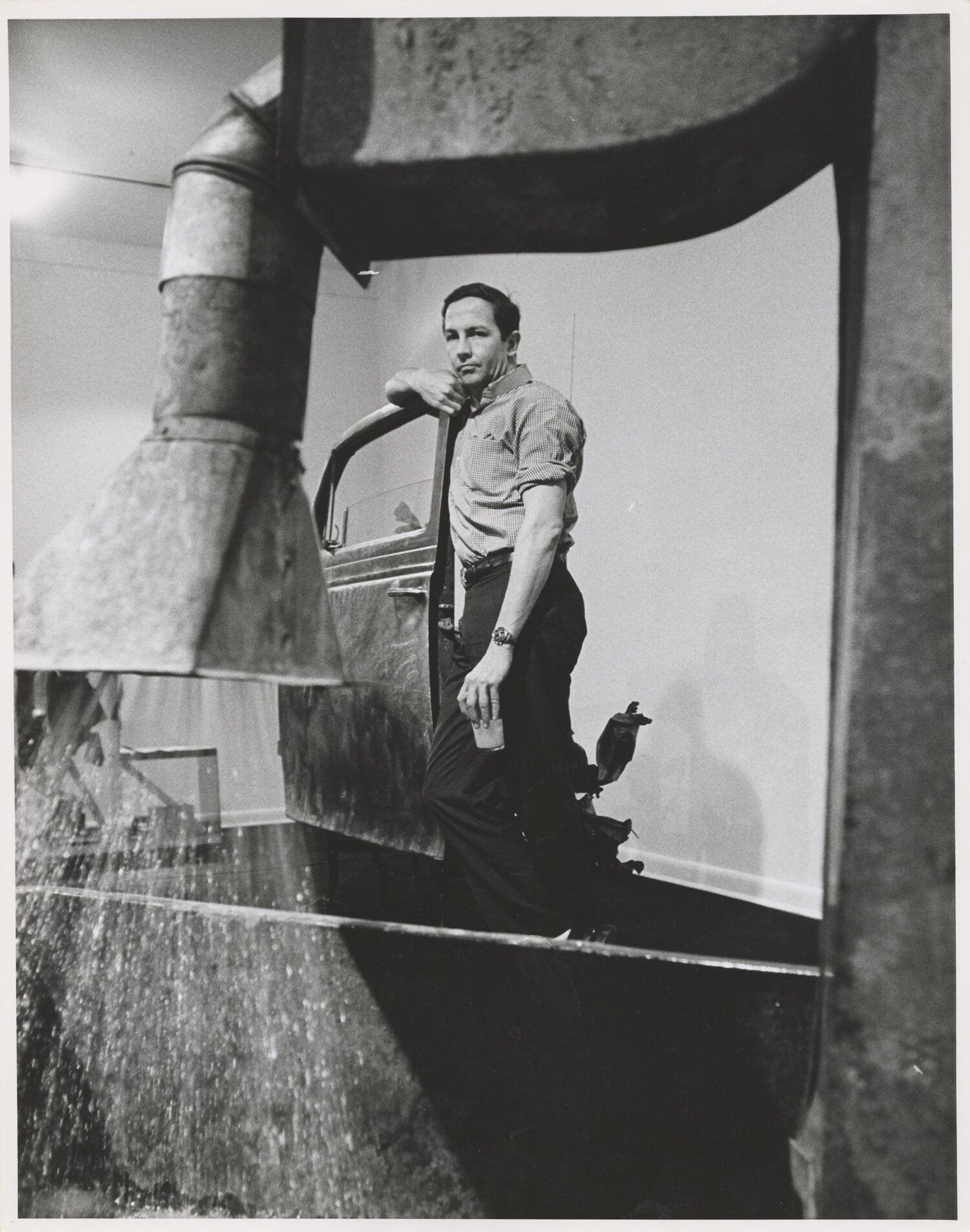
The man who dismantled art, and the man who created a new form of art
Rauschenberg’s work is not merely a prank. He constantly questioned the nature of art and tested the answers through his own physical experimentation. His works become art the very moment they prompt the question: ‘Is this art too?’
So now, I ask you: is the erased de Kooning drawing truly art? Or is it merely an erased scribble?
The moment you seek the answer to this question, you have already entered Rauschenberg’s artistic world.