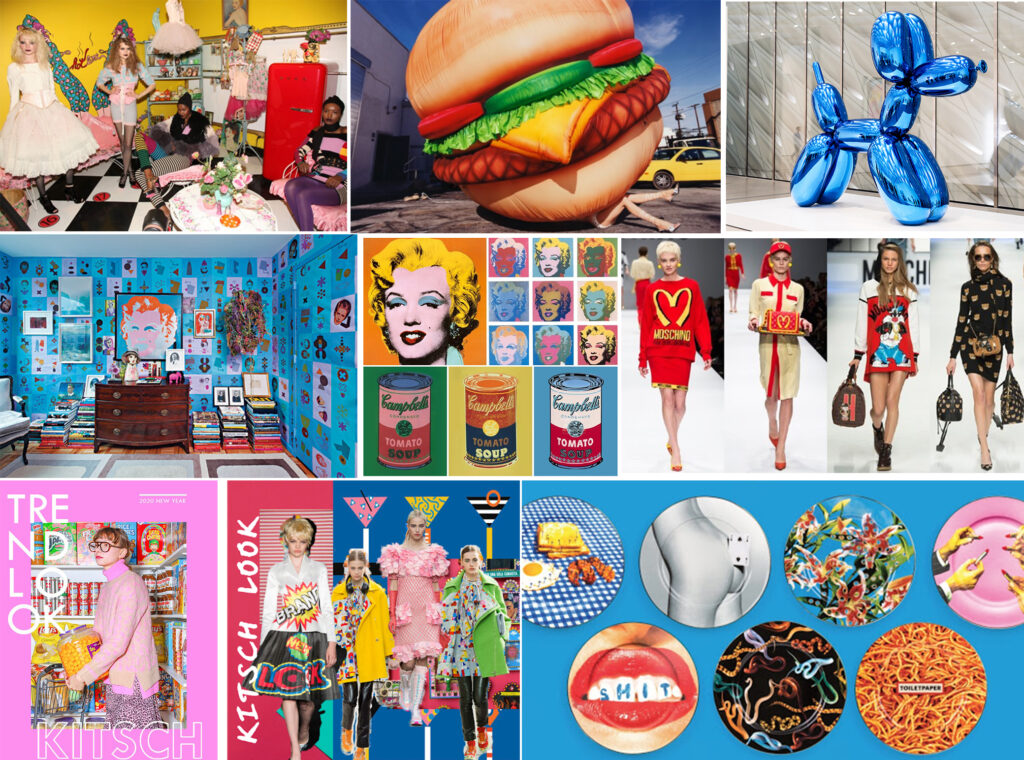
Fascinated by the vulgar aesthetics of 'kitsch'
In the heart of an auction house where works fetch hundreds of millions of dollars, a massive ‘puppy balloon’ made of dazzling pink stainless steel stands, its brilliance almost blinding. Some may ask, ‘Why is this art? Isn’t it just a toy?’, yet this piece has claimed the title of the world’s most expensive work by a living artist. This ‘intentional tackiness’, which has proudly entered the hallowed halls of high art, is what we call kitsch.
How did this aesthetic, once dismissed as ‘fake’ or ‘cheap’, become the very heart of contemporary luxury art?

What is Kitsch: ‘The genuine pleasure derived from the fake’
In today’s art world, kitsch is defined as ‘intentional tackiness’. Originally, kitsch was a derogatory term for inferior reproductions imitating high art, or for popular art that pandered to the vulgar tastes of the masses.
However, in the modern era, kitsch has become a powerful artistic tool that subverts stereotypes. For audiences weary of art that is too serious and heavy, kitsch offers new aesthetic pleasures: ‘humour’, ‘satire’ and ‘familiarity’. Fakes that are more real than the real thing, and tackiness reinterpreted with sophisticated taste – this is kitsch in the modern sense.
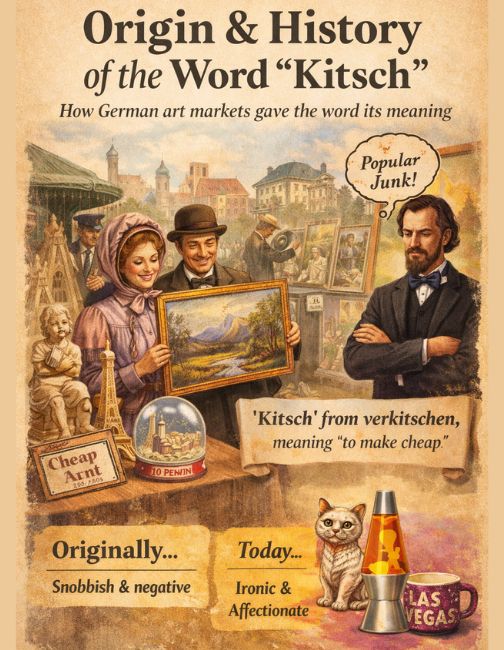
A word born from a rubbish heap
The roots of the word ‘kitsch’ trace back to mid-19th century Germany. The prevailing theory is that it derives from the German ‘verkitschen’, meaning ‘to sell’, or ‘kitschen’, meaning ‘to dust off’ or ‘to clear away’. At the time, it was a slang term used in the Munich art market to describe crude paintings or souvenirs produced cheaply to sell to tourists.
As the middle classes, who had begun to accumulate wealth following the Industrial Revolution, sought to emulate the refined tastes of the aristocracy, the ‘fake luxury goods’ mass-produced to satisfy their desires came to be known as kitsch. To the elite critics of the time, kitsch was akin to a ‘cancerous growth on art’.
The ‘chic tackiness’ we love
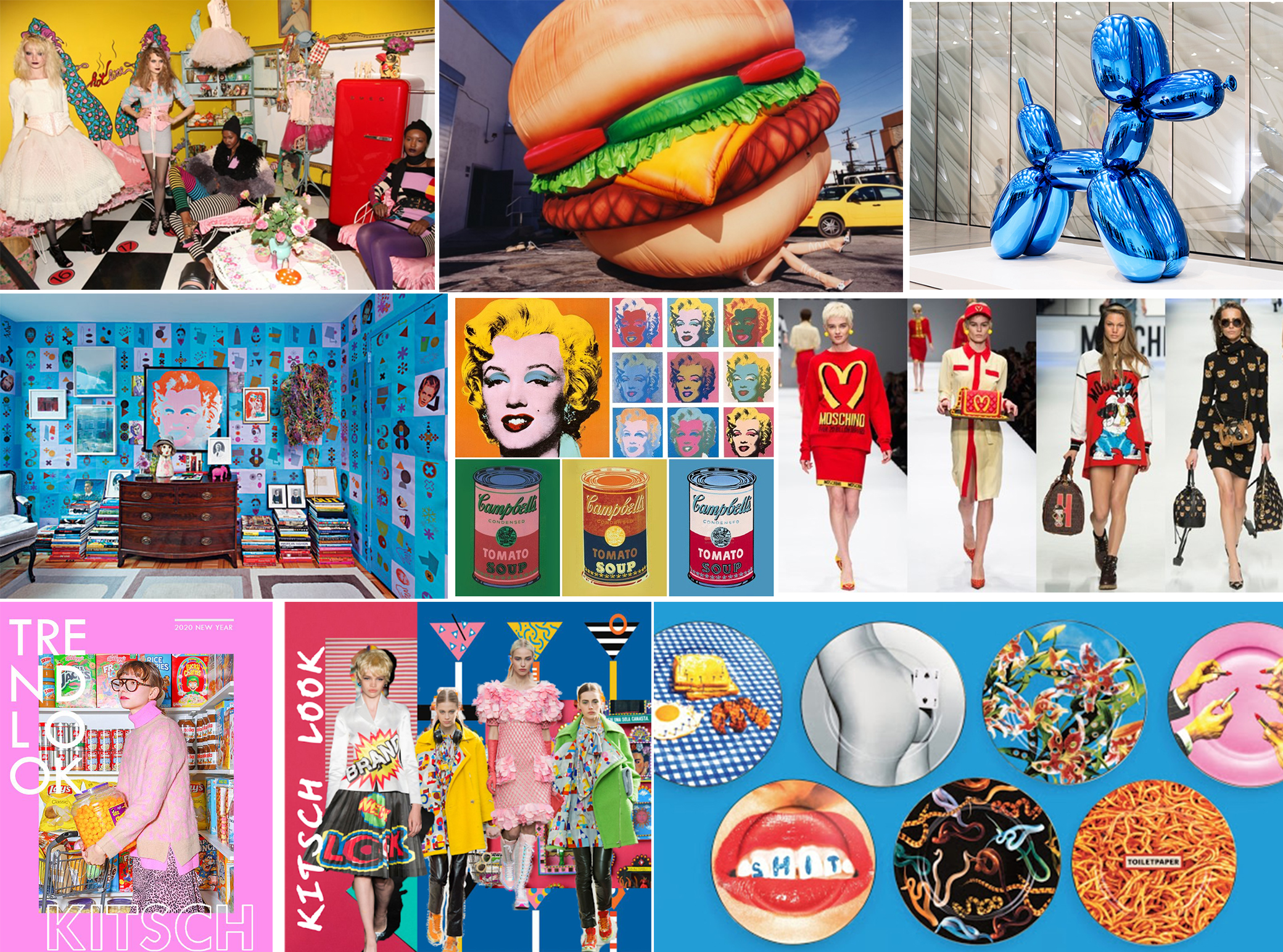
Today, kitsch has moved beyond art galleries to take over the catwalks and the very heart of our living rooms. Here are some prime examples that have elevated kitsch to the ranks of art.
[Campbell’s Soup and Marilyn Monroe: The Birth of Pop Art]
Andy Warhol repeatedly reproduced images of supermarket tins and popular stars. By shattering the exclusivity of high art and bringing ordinary (kitsch) everyday subjects into the gallery, Pop Art was the driving force behind elevating kitsch to the mainstream of contemporary art.

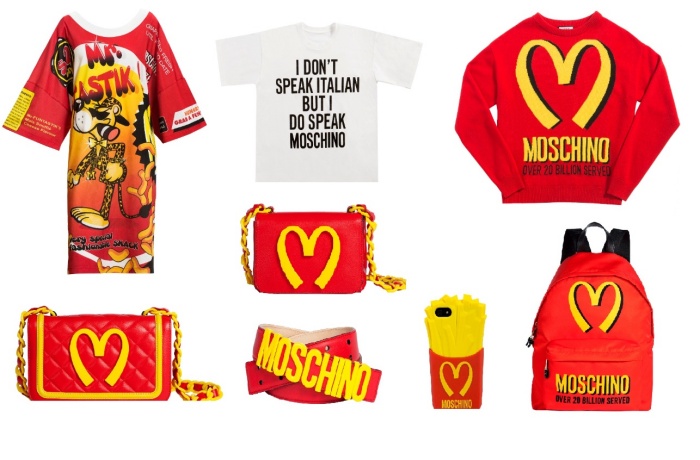
[The Kitsch Craze in Luxury Fashion: Moschino]
Recently, luxury brands have been using kitsch as a core strategy. Luxury bags embroidered with cartoon characters or dresses parodying the McDonald’s logo propose ‘luxury to be enjoyed’ rather than ‘luxury so perfect it takes your breath away’. This appeals to the sensibilities of modern consumers who playfully consume the symbols of capitalism.
Epilogue: Kitsch Never Dies
If kitsch in the past was the ‘art of the poor’, modern kitsch is the ‘humour of the affluent’. In a world where the line between what is real and what is fake has become blurred, kitsch does not force a definitive answer upon us. It merely whispers, ‘Don’t take life too seriously,’ and winks.