The desires of the age and standards of beauty: Barbie
A Plastic Doll’s Snapshot of the Times
In 1959, a 29-centimetre-tall doll with a full bust and a slim waist made its debut at the New York Toy Fair. It was the first ‘Barbie’, created by Ruth Handler, co-founder of Mattel.
To the children of that era, who played with baby dolls to practise being mums, Barbie—with her adult figure—was nothing short of revolutionary. Now, some 70 years on, Barbie is regarded as more than just a toy; she is considered the most iconic design, perfectly encapsulating the standards of beauty and social desires that have spanned the ages.

The 1950s and 1960s: the white male fantasy perpetuated by mass media
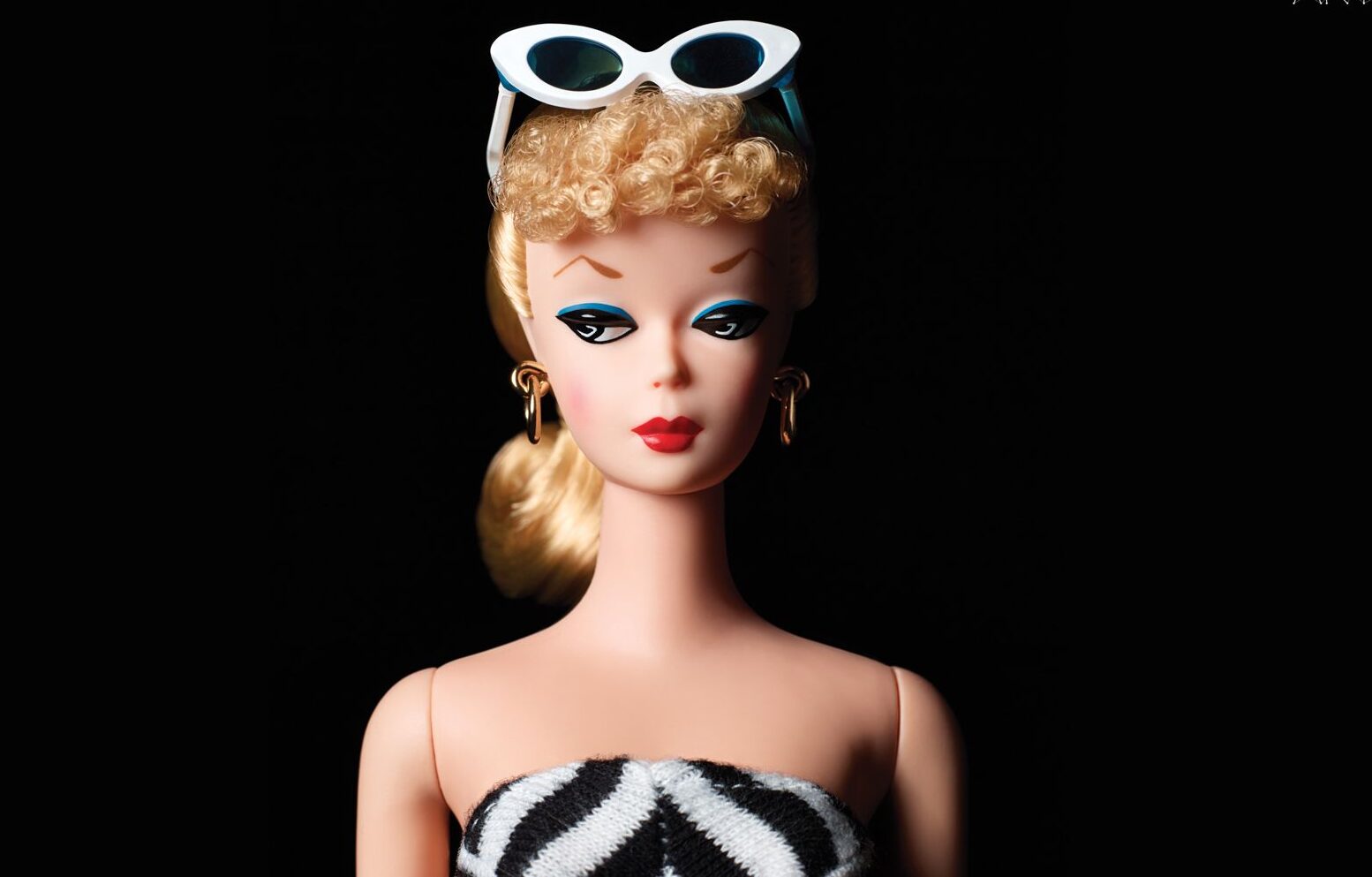
The first Barbie resembled Marilyn Monroe and Elizabeth Taylor, who dominated popular culture at the time. Heavy make-up, upturned eyes, and an extreme hourglass figure were a projection of the ‘ideal female image’ defined by the patriarchal American society of the 1950s.
It is interesting to note that the gaze of the early Barbie was directed slightly to the side rather than straight ahead. This was a result that implicitly reflected the social position of women at the time, who were conscious of and conformed to the male gaze.

Conflict with Second-wave Feminism and Oppression
To the activists of the ‘Second-wave feminism’ movement, which unfolded from the late 1960s through to the 1970s, Barbie was a symbol of female oppression that had to be overthrown. Criticism poured in that Barbie instilled in young girls an unrealistic, white-centric obsession with appearance, instilled by patriarchal capitalism.
In fact, if Barbie’s early body measurements were converted to real human proportions, her internal organs would not all fit inside her body, and she would be unable to walk on two legs. In the 1970s, women’s liberation activists staged fierce protests at events such as the New York Toy Fair, arguing that Barbie forced women to become ‘consumerist dolls’.
During this period, Barbie was at the centre of criticism as a tool of oppression that objectified women’s bodies.
The 1970s and 1980s: Women’s Liberation and Career Expansion
Amidst this feminist criticism and public backlash, Barbie’s design reached a major turning point.
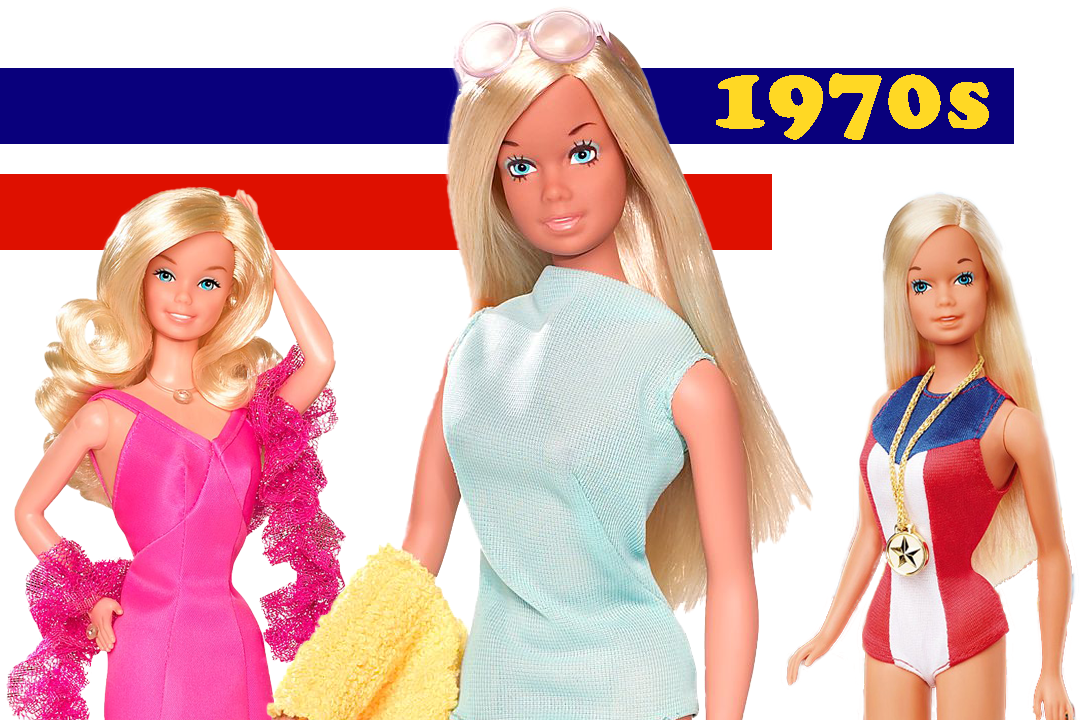
The most symbolic change was her ‘gaze’. The ‘Malibu Barbie’, launched in 1971, finally began to hold her head high and look straight ahead. It was the moment she declared her transformation from a passive object under the male gaze into a subject who looks squarely at the world.
During this period, Barbie actively incorporated the feminist movement’s achievement of ‘women’s entry into the workforce’ into her design. Following the release of the Astronaut Barbie in 1965, a flood of Barbies dressed in professional uniforms—such as doctors, CEOs and pilots—appeared.
Under the slogan ‘We Girls Can Do Anything’, Mattel began to reposition Barbie as an icon of the independent woman who swiftly absorbed the spirit of the times.

Since the 2000s: a new narrative of diversity and inclusion
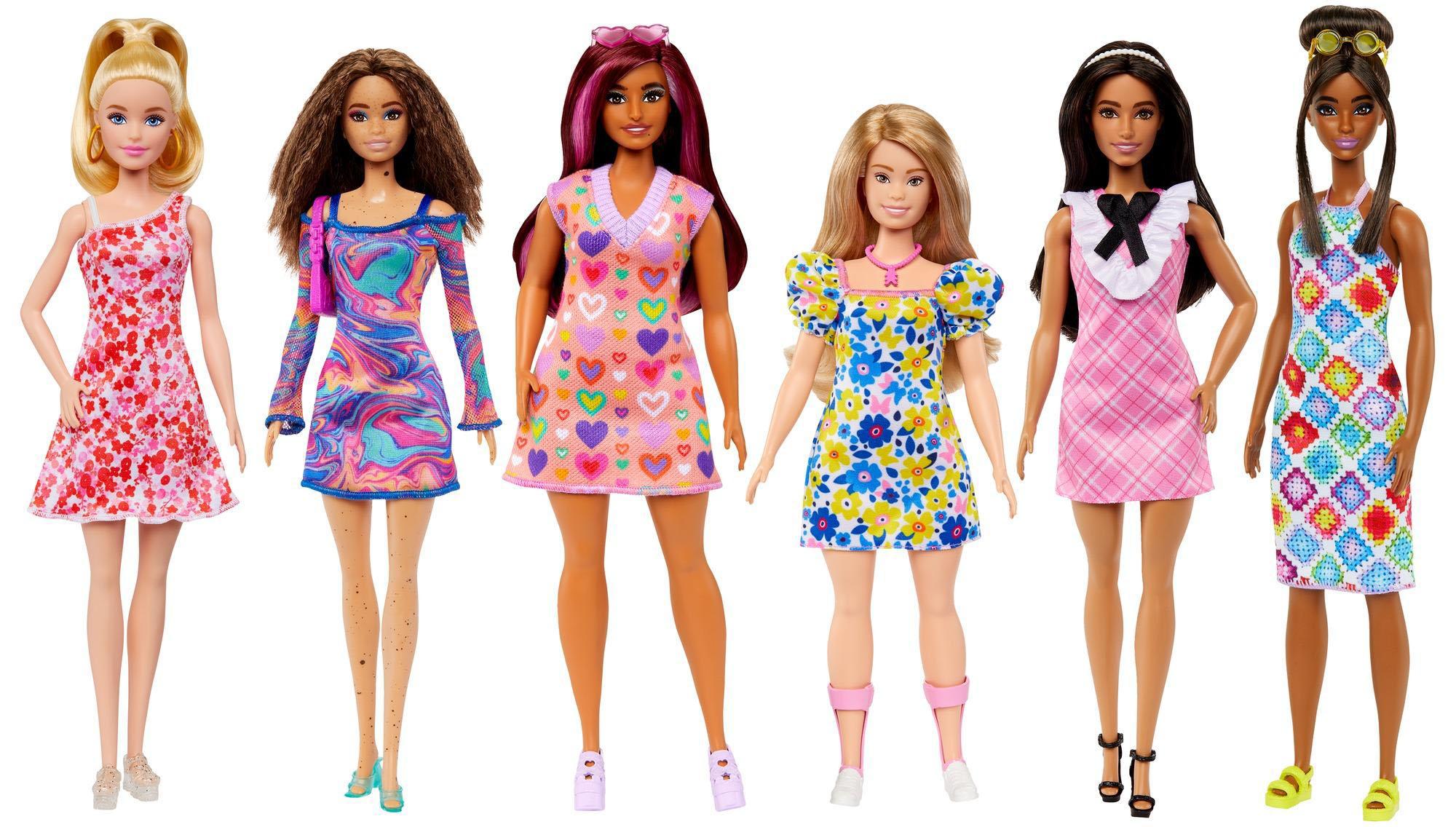
The 21st-century Barbie no longer insists on being solely a perfect blonde white woman.
This is a result of recognising the potential harm inherent in uniform standards of beauty. Since 2016, Mattel has introduced Barbies with realistic body proportions, including curvy figures, petite and tall sizes. Furthermore, the range has been expanded to include a Barbie with vitiligo, a Barbie in a wheelchair, and a Barbie with Down’s syndrome.
Now, Barbie no longer serves as a tool for imposing a specific aesthetic, but rather acts as a mirror reflecting the diverse realities of humanity as they are.

Popular Culture Enters the Museum
The reason why Barbie is now held in the archives of the world’s leading design museums is clear. It is because the standards of beauty, gender identity and the historical dynamics of feminism that each era grappled with so intensely are fully imprinted within her perfectly crafted plastic body.
Caught between criticism for mass-producing artificial beauty and praise for being the most astute reflection of the changing times, Barbie remains by our side as a fascinating barometer for interpreting human culture.