Museums of the World ⑪ Silence and Contemplation: ‘Glenstone’ in the United States
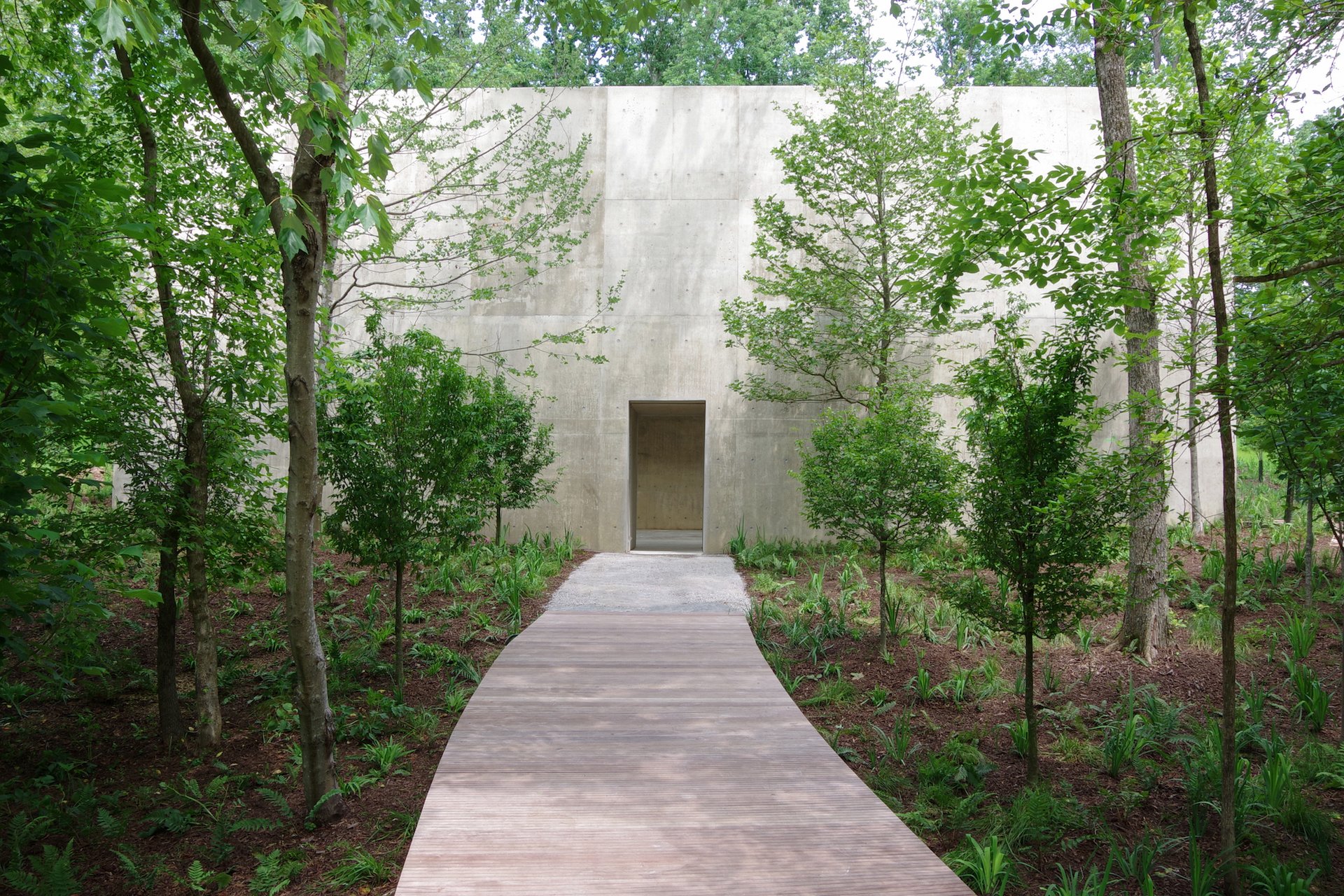
A 40-minute drive from Washington, D.C., as you drive through the gently rolling hills of Potomac, Maryland, you come upon a discreet entrance so unobtrusive that even the sign is hard to spot. Set on a vast 230-acre (approximately 280,000 pyeong) estate, Glenstone is a private art museum that exemplifies the most elegant balance achievable between modern architecture, landscaping and contemporary art.
The museum strictly limits visitor numbers and encourages ‘silence’, offering a tranquil experience where one can focus solely on art and nature.

From business magnate to patron of the arts
Glenstone is the result of the dedication and philosophy of billionaire entrepreneur Mitchell Rales and his wife, the curator Emily Wei Rales.
Mitchell Rales is a wealthy businessman who, together with his brother Stephen Rales, built the global science, technology and industrial group ‘Danaher Corporation’. Danaher amassed a vast fortune through a strategy of acquiring and efficiently managing numerous companies, and Mitchell has used this wealth to establish himself as one of the world’s most influential art collectors.
Mitchell does not simply chase fame; rather, he focuses on the ‘spiritual resonance’ inherent in the artwork. Together with his wife, Emily—a curator—he has spent decades building his collection, prioritising direct engagement with the artist or the context in which the work first came into the world, rather than relying on auctions.
A defining feature of their approach is their commitment to in-depth collecting that spans an artist’s entire career, allowing visitors to witness that artist’s artistic evolution within a single space.

In the mid-1990s, after miraculously surviving a helicopter crash, Mitchell began to reflect deeply on the value of life.
He hoped that the masterpieces he had collected would inspire people under natural light rather than remain in storage. Consequently, in 2006, he opened Glencestone’s first gallery on the grounds of his estate, and following a major expansion in 2018, it reached its current vast scale.
The Rails couple prioritise ‘slow viewing’ over commercial success or flashy marketing. Although admission to the museum is free, it adheres to a strict booking system that limits daily visitor numbers to around 400–500. It encourages conversation with docents rather than the use of artwork description cards. This reflects their firm belief that art should be a tool for spiritual reflection, rather than a mere consumer good.
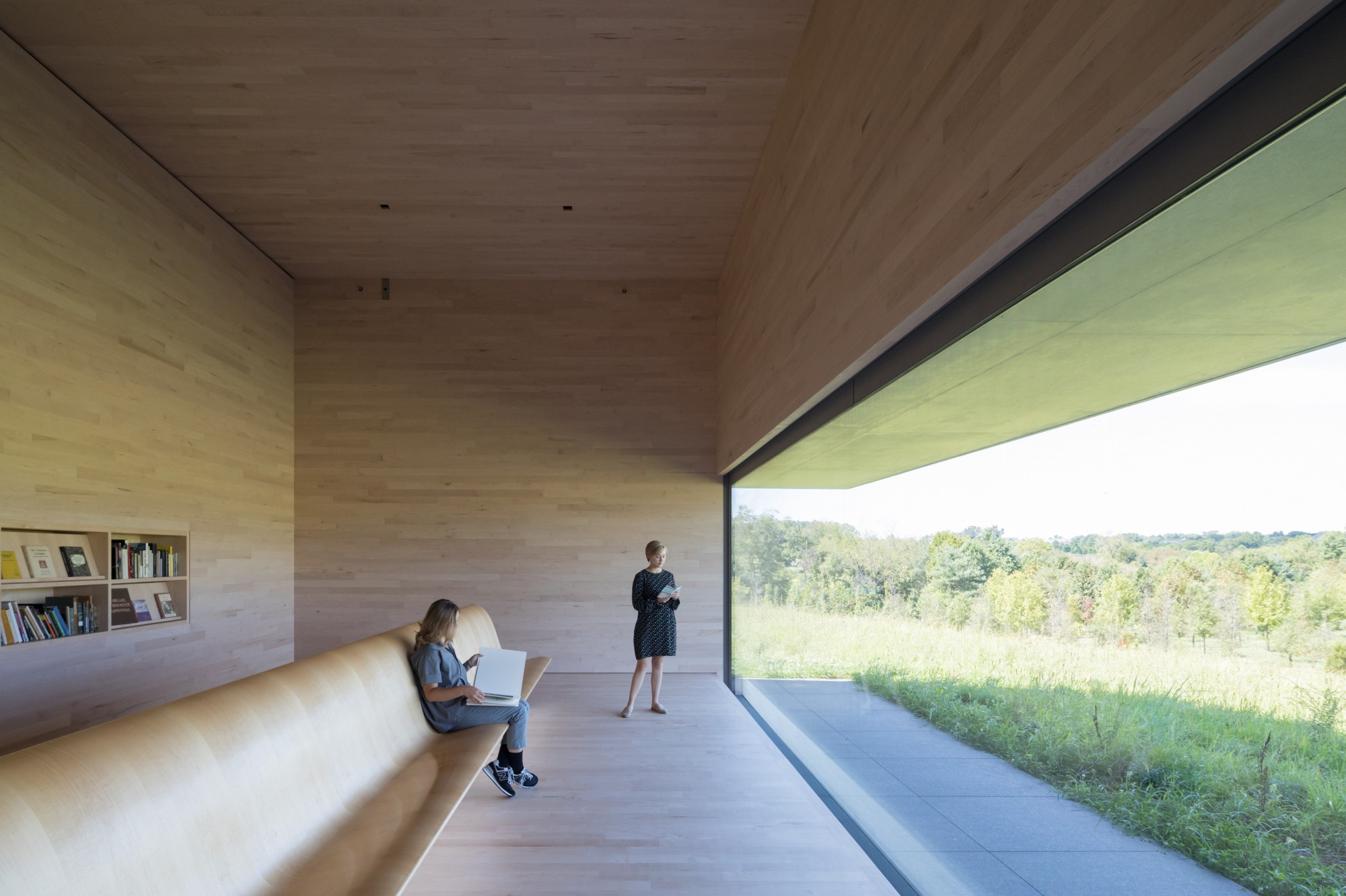
‘The Pavilions’, blending into the landscape
Completed in 2018, ‘The Pavilions’—designed by architect Thomas Phifer—is the museum’s iconic landmark.
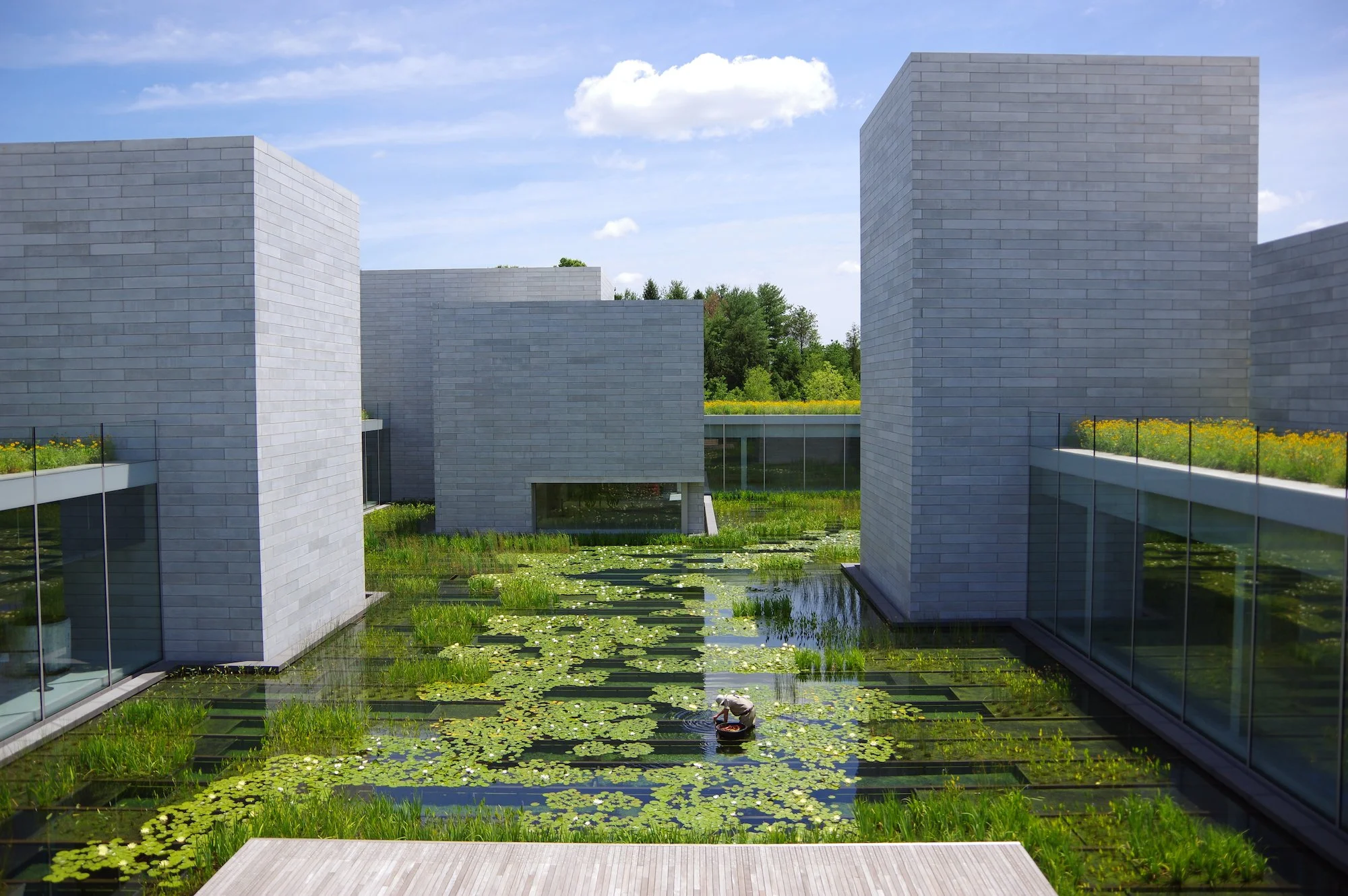
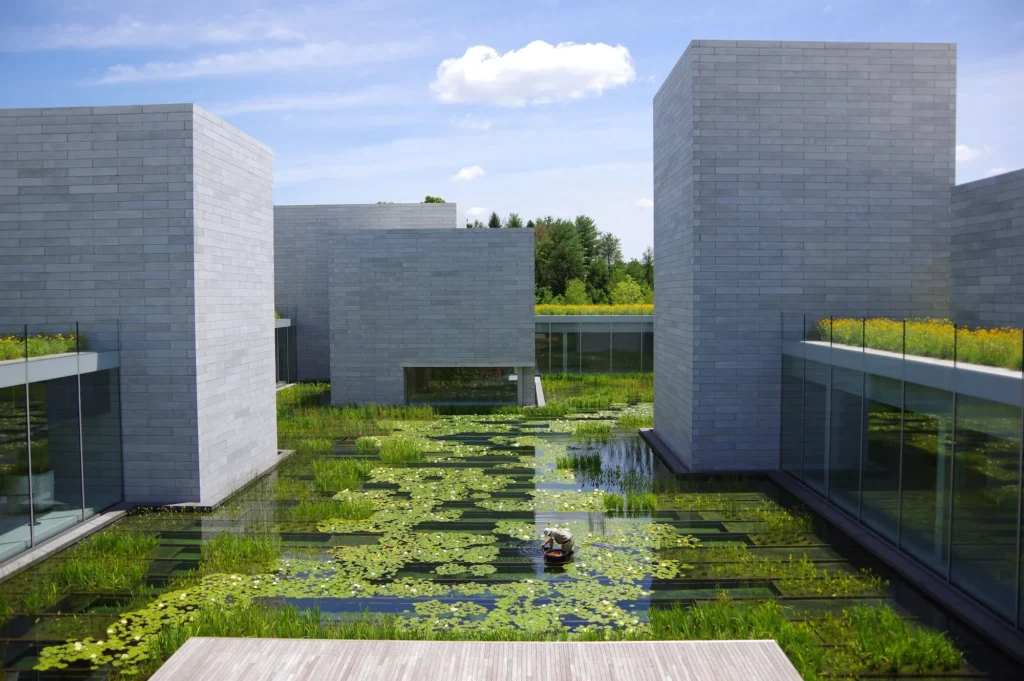
Phifer, who was influenced by Richard Meier and Steven Holl, demonstrates exceptional skill in the sophisticated control of light and the handling of minimalist materials. The façade, composed of thousands of light grey concrete blocks stacked upon one another, resembles a colossal minimalist sculpture. The eleven exhibition spaces, each existing as an independent pavilion, surround the central ‘Water Court’ and are meticulously designed to allow natural light to pour in vertically through the ceiling.
‘The Gallery’ is the building that marked the beginning of Glaston in 2006, prior to the construction of the pavilions. Designed by architect Charles Gwathmey, this building is situated along a ridge and possesses the elegance of a more classical ‘white cube’. It is currently used primarily for special exhibitions and to showcase the early collection.
Where the Spirit of the Wilderness Meets Art
The true highlight of Glencestone is the garden of overwhelming scale, created by landscape architects Peter Walker and Gwen Falconer.
On land that was originally a golf course and pasture, they planted over 6,000 trees and native wildflowers to restore a natural landscape free from artificial intervention. Footpaths winding through silver grass and wildflowers, which change colour with the seasons, guide visitors into a state of contemplation.

Hidden throughout the vast fields are monumental sculptures. Jeff Koons’ flower-covered colossal sculpture, ‘Split-Rocker’, blooms with different flowers each season, taking centre stage in the garden, whilst Richard Serra’s massive steel sculptures contrast with the curves of the ridgeline, lending a sense of majestic weight. In the water garden at the centre of the complex, water lilies float on the water, reflecting the clouds and the sky. Gazing at this garden from inside the pavilion, one experiences a mysterious sense of oneness, as if the boundary between indoors and outdoors were dissolving.

A Timeless Masterpiece
Glensstone houses works that represent the most significant milestones in the history of modern art from the post-Second World War era to the present day. Works by masters such as Mark Rothko, Jackson Pollock, Cy Twombly and Louise Bourgeois are displayed in their own dedicated pavilions.
- Mark Rothko: His meditative colour-field abstractions, bathed in flooding light, overwhelm the viewer. It is a space of tranquillity where only the artwork and the viewer’s breath exist.
- Cy Twombly: His major works, characterised by free brushstrokes and a strong sense of lettering, are rhythmically arranged beneath high ceilings and natural light.
- Louise Bourgeois: Her iconic sculptures, set within architectural frames, engage in a profound dialogue on life, death and trauma.
- Charles Ray: His hyper-realistic sculptures interact with the pavilion’s geometric space, creating a surreal sense of tension.
The practice of dedicating an entire space to a single artist in order to shed deep light on their creative world is a luxury afforded only to Glenstone. Simply by breathing in the air here, one realises just how deeply the human soul can be purified when art and nature come together.