Museums of the World ⑩ The Revival of a City Through Art: Spain’s ‘Guggenheim Bilbao’
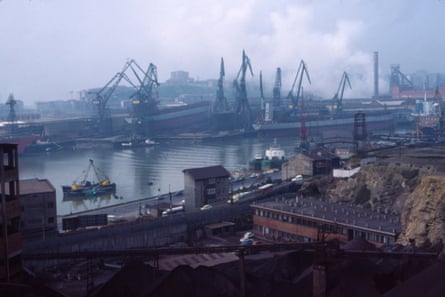
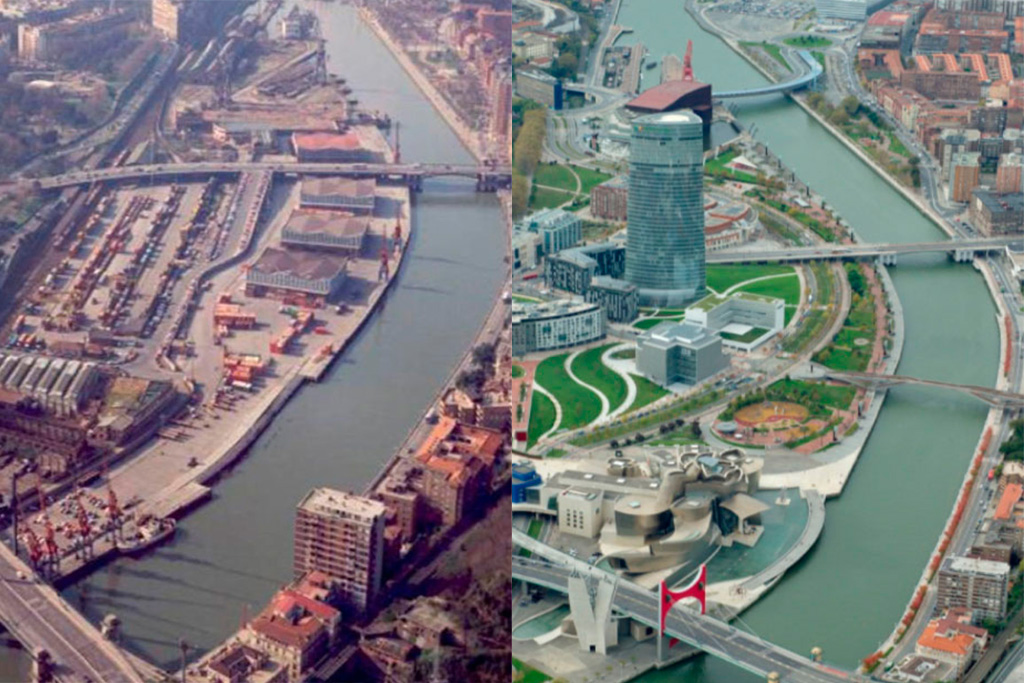
Bilbao, the heart of the Basque Country in northern Spain. Once a thriving centre of the steel and shipbuilding industries, the city had become a ghost town, in decline following the triple blow of industrial decline, flooding and terrorism in the 1980s.
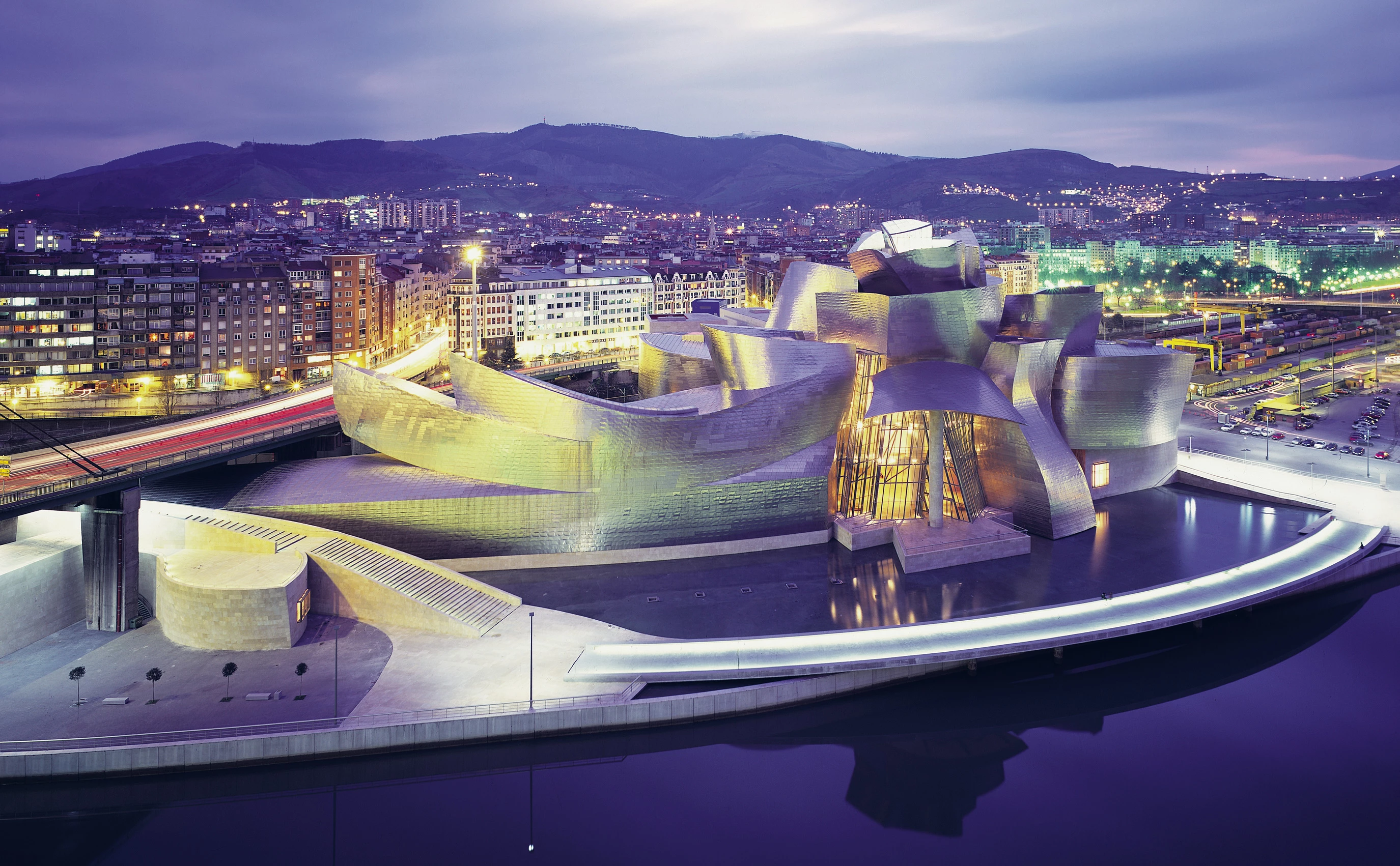
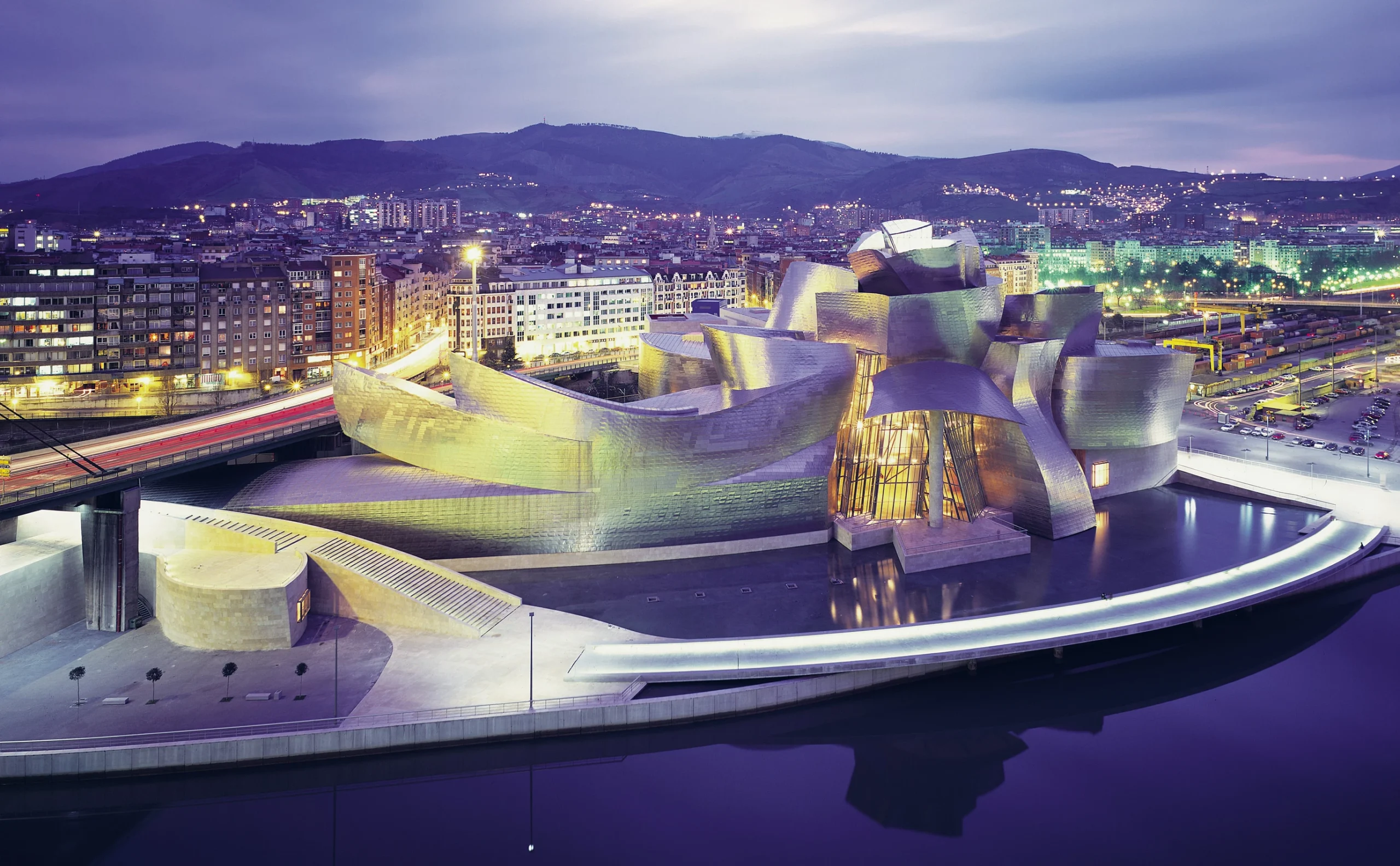
However, in 1997, everything changed when a silvery building with an unusual shape was erected on the site of an old riverside wharf. Designed by the architectural maestro Frank Gehry, the Guggenheim Museum Bilbao became more than just an exhibition space; it became a symbol of an artistic revolution that transformed the destiny of a city.
From a Declining Industrial City to an Art City
In the early 1990s, the Basque Government chose ‘culture and the arts’ as a last resort for urban regeneration. It was an unprecedented decision at the time. The Basque Government persistently persuaded the Guggenheim Foundation in New York and succeeded in attracting a branch museum. The government agreed to cover the entire construction cost, amounting to approximately 100 million dollars, and to draw on the Guggenheim’s brand power and expertise in managing its collections.
At the time, Bilbao was in a dire state: the Nervión River, the city’s lifeblood, was being polluted by industrial waste, and the unemployment rate exceeded 25 per cent. To make matters worse, frequent terrorist attacks by Basque separatists had branded it a ‘city without hope’. Politicians and planners recognised that this massive crisis could not be overcome through the traditional approach of rebuilding factories. They resolved to erect ‘inspiration’ in place of chimneys.
It was a bold gamble: to clean up the city’s image by creating a stunning ‘cultural landmark’ capable of attracting people from all over the world, and to completely transform the economy towards the service and tourism sectors.
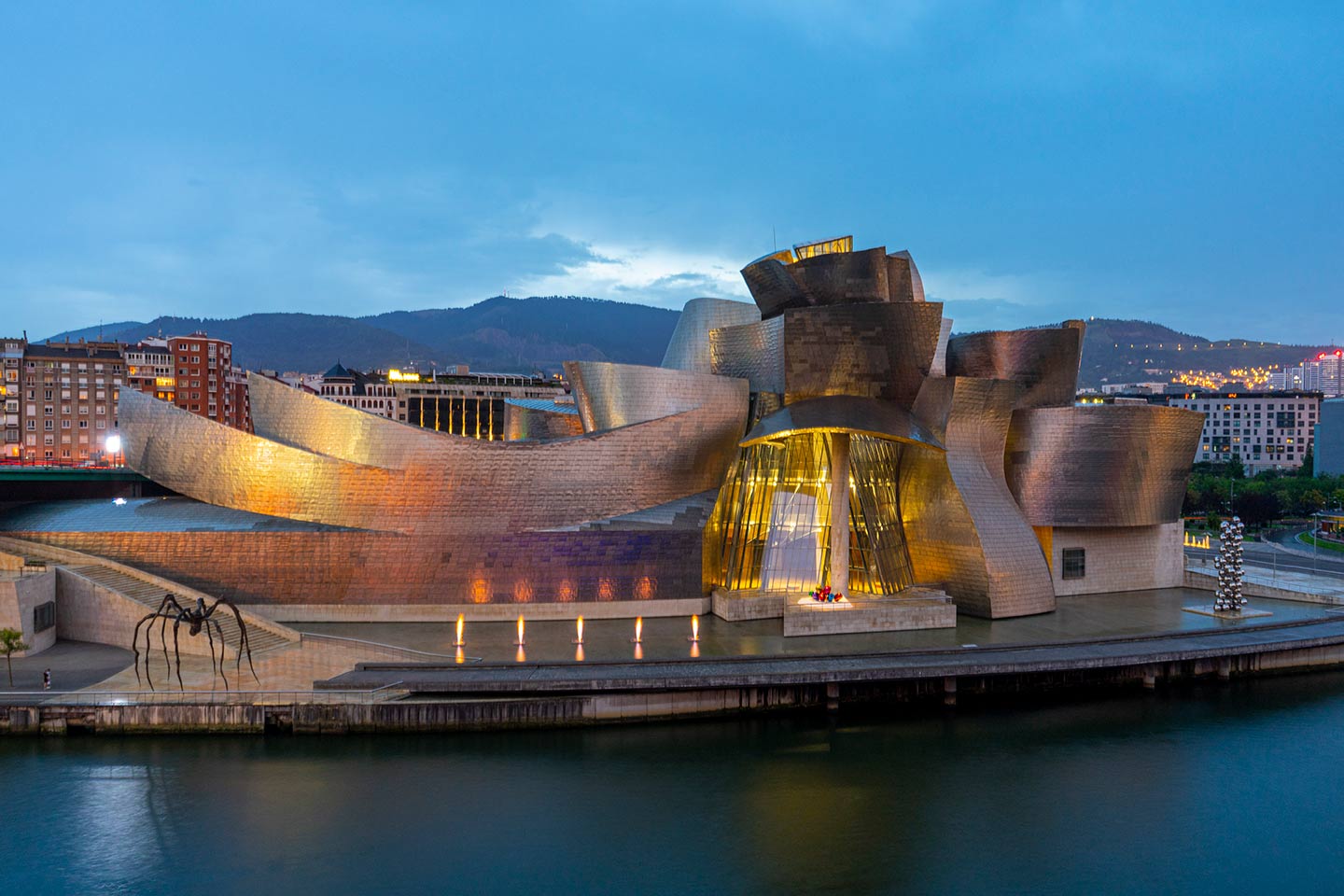
Architect Frank Gehry: A titanium flower born of deconstructivism
Frank Gehry conceived a building that would harmonise with Bilbao’s turbulent past whilst offering hope for the future.
Geri drew inspiration from his childhood memories and the fluid movements of fish. The non-geometric curved surfaces, designed using the aerospace design software ‘CATIA’, completely deconstructed the grammar of traditional architecture.
Furthermore, the 33,000 thin titanium panels enveloping the museum’s undulating exterior respond to Bilbao’s weather. Shifting from golden on clear days to silvery on overcast ones, this façade feels like a vast, living organism. Geri paid tribute to Bilbao’s history as a steel city, whilst expressing the city’s new splendour through titanium—a material that is corrosion-resistant and emits a luminous sheen.

‘The Bilbao Effect’
The success of the Guggenheim Bilbao gave rise to a new economic term: the ‘Bilbao Effect’. This refers to the phenomenon whereby a single building can raise the profile of an entire city, attract tourists and completely revitalise the local economy.
In its first year alone, the museum welcomed over 1.3 million visitors, and the construction costs were recouped through tourism revenue in just three years. Since the museum opened, tens of thousands of jobs have been created, and the city’s overall infrastructure—including the metro and airport—has been upgraded through the integration of artistic design.
The Bilbao Effect extended far beyond mere economic benefits. It bestowed a new identity of ‘art and peace’ upon the Basque Country, which had been tarnished by images of terrorism and violence, and restored a sense of pride in their city among local residents.
An Artistic Stroll Along the Nervión River
Not only the interior of the museum, but also the outdoor spaces form a vast art park.
- Jeff Koons’ ‘Puppy’: the giant floral puppy guarding the entrance has now become Bilbao’s mascot.
- Louise Bourgeois’s ‘Maman’: the giant spider sculpture standing tall on the riverbank blends with the museum’s geometric curves to provide an overwhelming visual experience.
- Anish Kapoor’s ‘Tall Trees and Eyes’: this work, composed of stacked silver spheres, reflects the light from the titanium walls and the river, adding depth to the space.

Bilbao is no longer on the periphery of Spain. It is a sanctuary that demonstrates how art can heal the world and transform the very breath of a city. As you stroll amongst Frank Gehry’s titanium sculptures, you will witness the immense power of human creativity.
[Travel Info]
- Location: Abandoibarra Etv. 2, 48009 Bilbao, Spain
- Architect: Frank Gehry
- Operated by: A collaboration between the Guggenheim Foundation and the Basque Government
- Tip: A stroll around the museum’s outdoor spaces is the best way to observe how the colour of the titanium changes throughout the day. After visiting the museum, we recommend enjoying ‘pintxos’—a distinctive Basque culinary tradition—in the nearby Old Town.