A signpost guiding the soul: the scallop shell of Santiago
There is a journey that spans thousands of kilometres, guided solely by a single symbol. The ‘Camino de Santiago’ leads across Spain’s rugged mountain ranges and vast plateaus towards the final resting place of Saint James.
The yellow ‘scallop shell’ signposts found along the entire route are more than mere guides; they are a force that leads lost souls to a single destination.

A Myth from the Sea
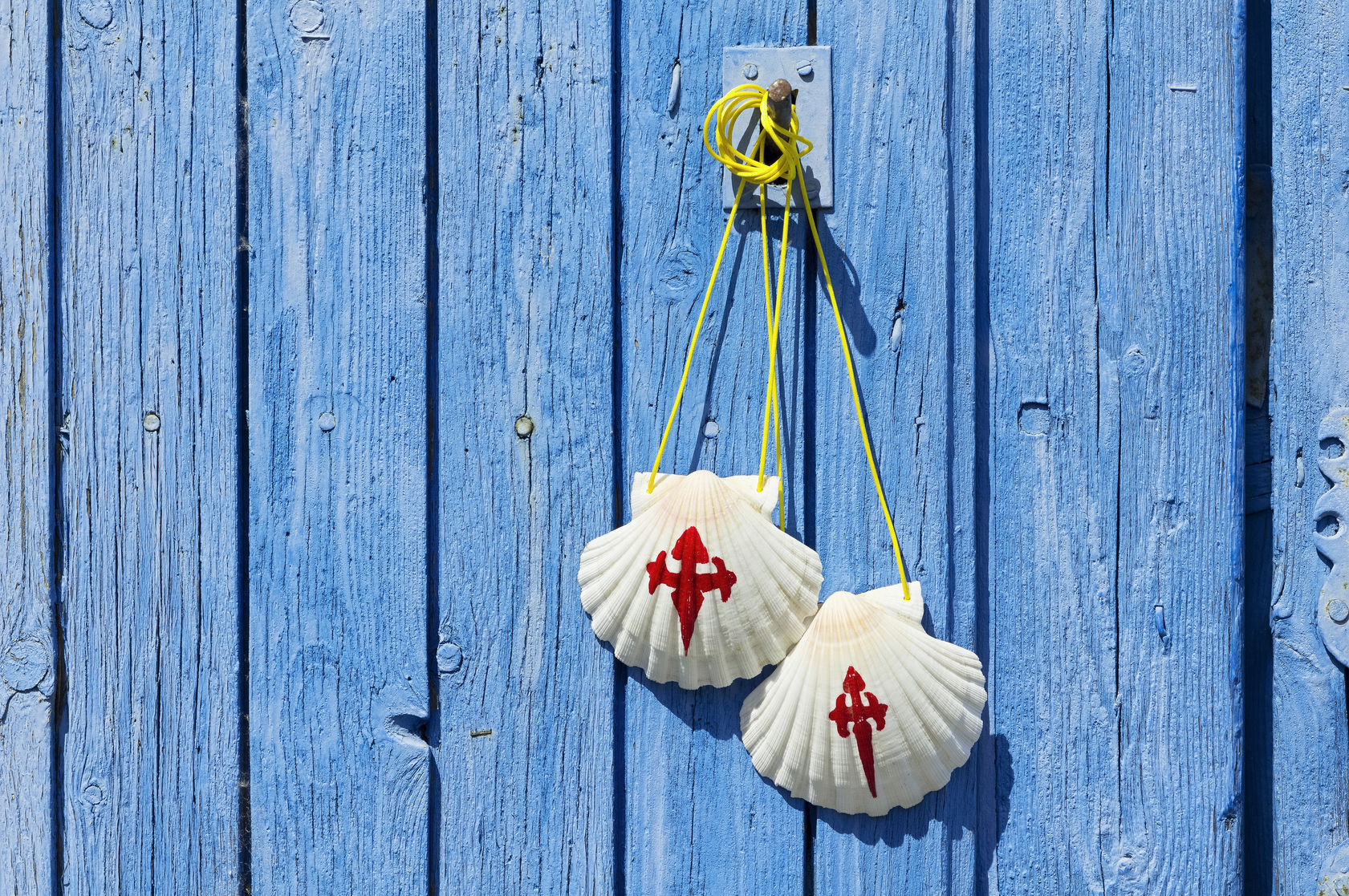
An intriguing legend lies behind the scallop shell’s status as the symbol of the pilgrimage route. Saint James was one of Jesus’s three chief disciples and the first to be martyred. It is said that when the ship carrying his remains was wrecked, his body was found intact, covered by a scallop shell. Medieval pilgrims began collecting scallop shells from the nearby coast and attaching them to their rucksacks as proof that they had arrived in Santiago.
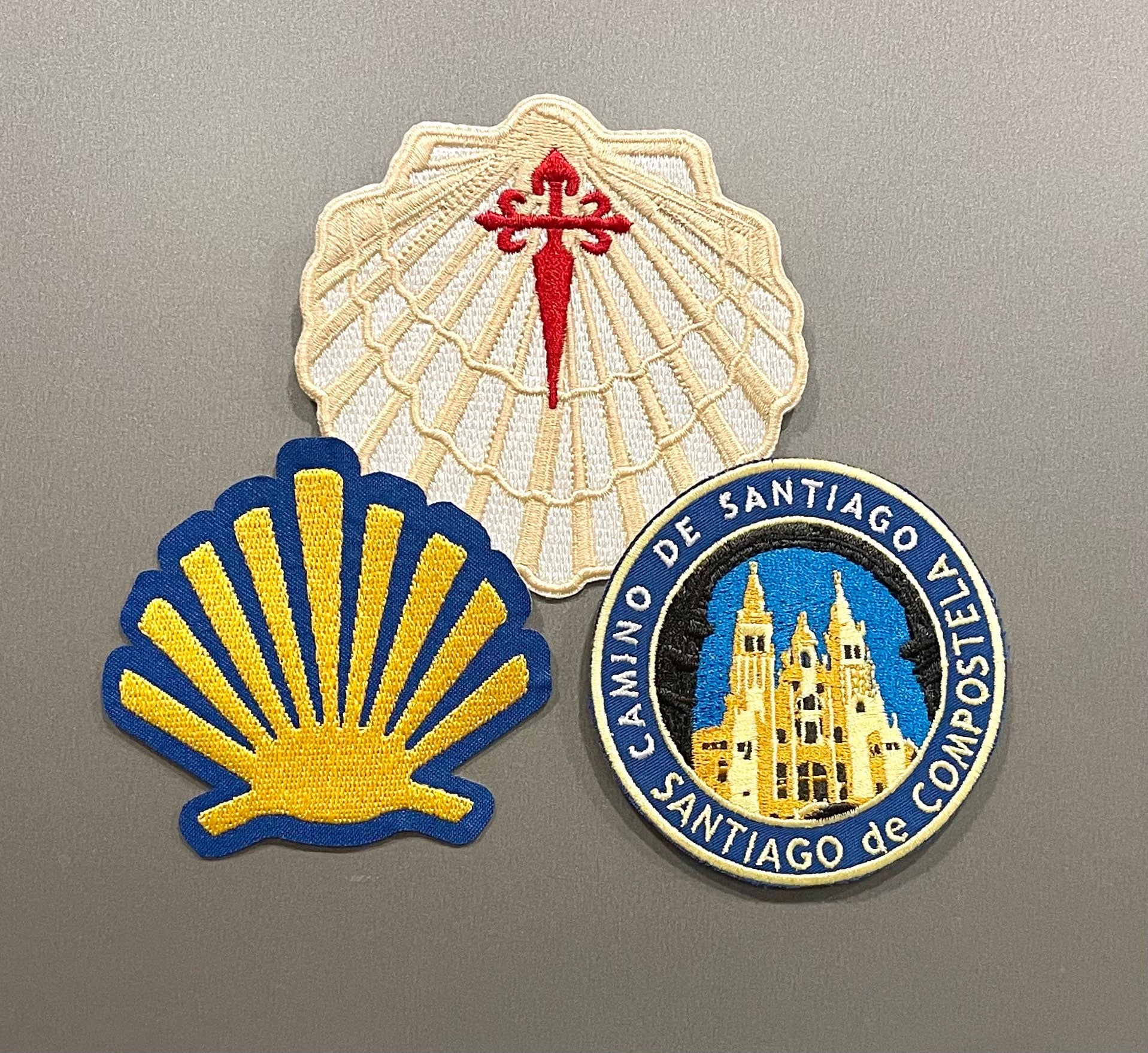
Over time, this humble natural object became an ‘identity badge’ proving one’s status as a pilgrim, as well as a ‘community emblem’ symbolising solidarity with those met along the way. In modern times, this motif has evolved into an abstract design, reborn as a universal visual language shared by pilgrims across the globe.

All roads lead to one
If you look closely at the scallop shell design on the Santiago signposts, you will see that it embodies a modern design philosophy.
The shape, formed by multiple lines fanning out in a fan-like pattern and converging at a single point, symbolises how pilgrimage routes starting from different points across Europe ultimately converge at a single destination: the Cathedral of Santiago. The golden hue, which contrasts sharply against the blue background, not only enhances legibility but also symbolises the spiritual light that awaits at the end of dark trials. This striking colour combination serves as a psychological support, enabling pilgrims to take their next step even in moments of exhaustion and despondency.
At some signposts, the direction of the scallop shell is depicted differently; this reflects variations in local traditions and interpretations of the design. The method of guiding the way through curved symbols rather than straight lines emphasises that the ‘journey’ is just as important as reaching the destination.

Cross-border connections
The scallop shell signpost is now managed as a standardised public design by the European Union (EU). Erected at crossroads throughout Europe—from Spain to France, Portugal and Germany—this motif serves as a prime example of a ‘transnational design system’ that breaks down the barriers of borders and language.
Whereas signposts of the past were crude carvings etched into stone, modern signposts are reimagined as sleek tiles, metal plates or brass inlays in the pavement, blending harmoniously with the urban landscape. This serves as an excellent example of how traditional religious symbols can retain their vitality by blending with modern urban branding.