An icon of feminism: Judy Chicago
‘Women’s history will not be forgotten’ – Judy Chicago, championing feminism through art
“We shall not be forgotten. We shall record our existence and ensure that it is remembered.” There is a woman who brought this statement to life through art.
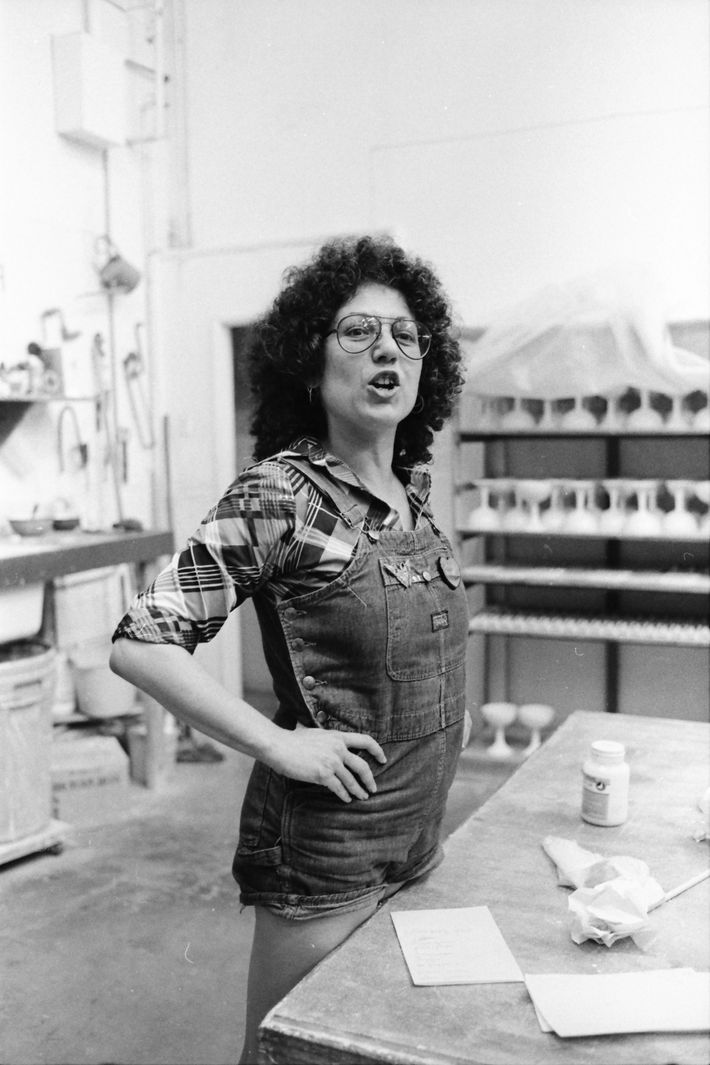
Judy Chicago: a revolutionary who shook up the male-dominated art world and gave a voice to women through her works.
In the history of 20th-century art, women artists were completely excluded. From the Renaissance to modernism, the major artistic movements treated women as if they did not exist. Judy Chicago would not tolerate this. She made the decision to “record women’s history through art!”, which led to the historic work *The Dinner Party*, which shook the entire world.
🍽️ ‘The Dinner Party’: the greatest performance in the history of art that restored women’s names
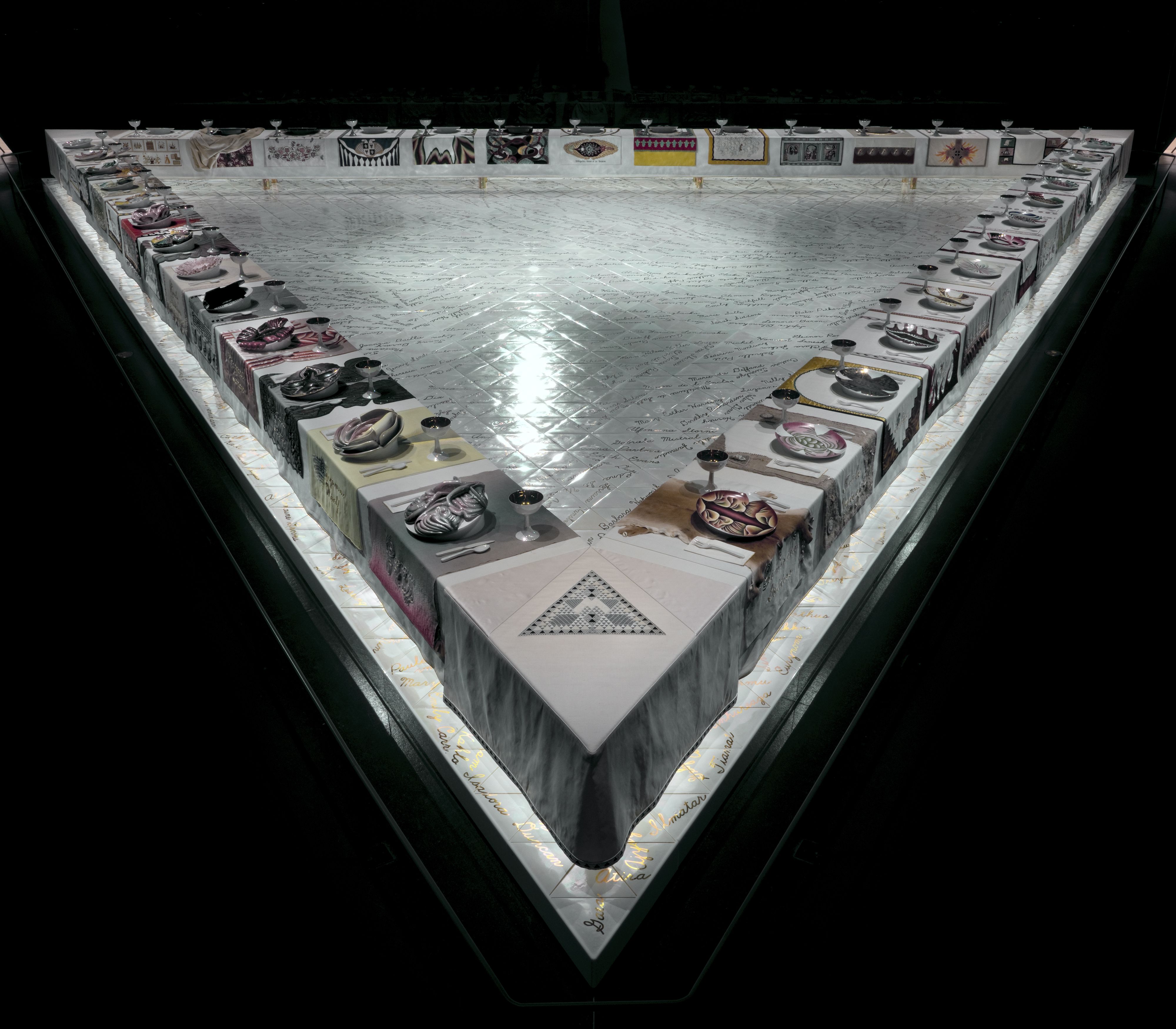
In 1979, the most provocative and revolutionary art installation in the history of world art appeared. ‘The Dinner Party’: just from the name, one might think of an ordinary dinner party. However, the moment this work was unveiled, the whole world was left stunned.
It is an installation featuring 39 places set for historical women at a gigantic triangular table 14 metres long. At each place setting there is a plate symbolising a woman, an embroidered tablecloth and gold-plated cutlery.
But the problem lay precisely with those plates.
Plates shaped like genitals
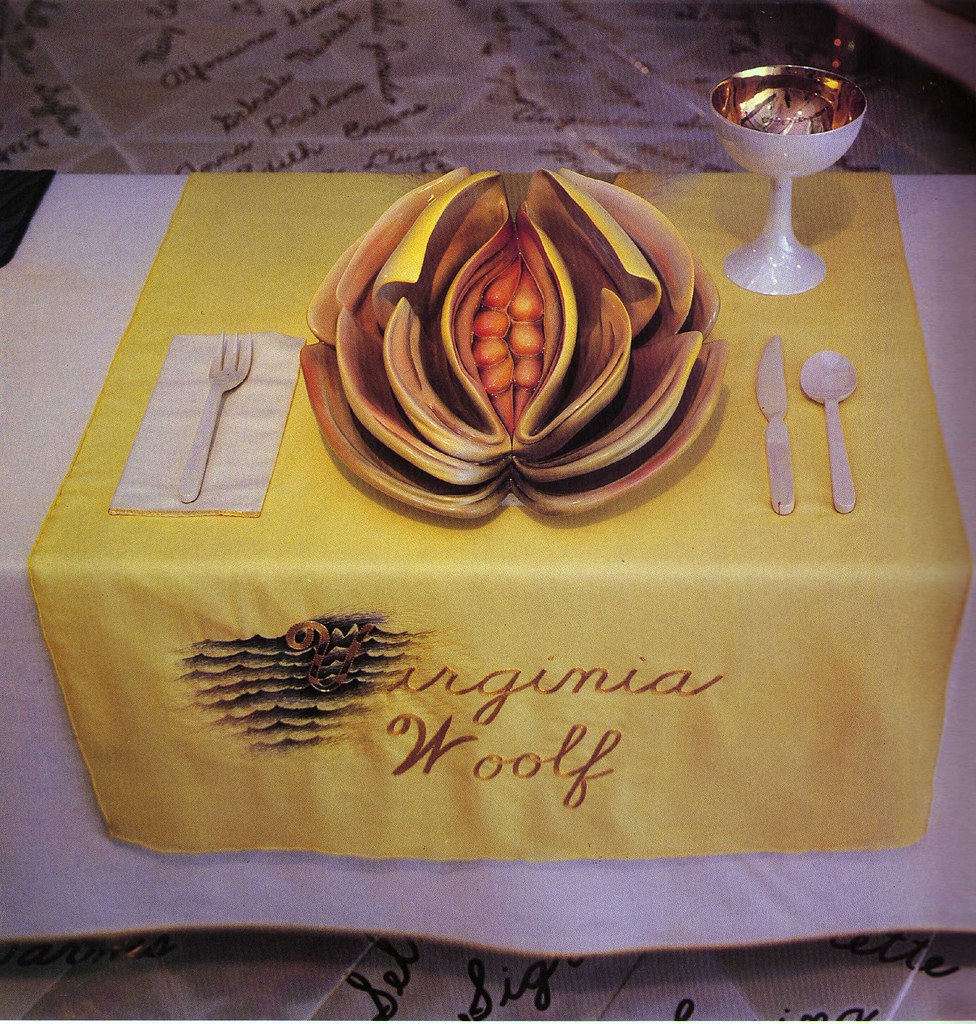
The most controversial aspect of ‘The Dinner Party’ was the imagery engraved on each plate. This was no mere decoration. Each plate was shaped to symbolise female genitalia. Until then, patriarchal art had treated the woman’s body as an object of consumption and objectification. However, Judy Chicago saw the woman’s body as an identity and a history worthy of pride.
“A woman’s body is nothing to be ashamed of. We will not hide it.”
This was a revolutionary attempt to reclaim the woman’s body, not as a tool, but as a symbol of history and rights.

Inscribing the names of forgotten women
There are a total of 39 women on the table. They are women who left an exceptional legacy in the history of humanity, but who were forgotten by a male-centred society.
I shall introduce you to some of them.
- Hypatia (4th century): a mathematician and philosopher from Ancient Greece. She was murdered by Christian fanatics and vanished from history.
- Sojourner Truth (1797–1883): an African-American activist for the emancipation of slaves. She campaigned for women’s right to vote, but was marginalised by a feminism centred on white women.
- Virginia Woolf (1882–1941): a writer who championed the need for ‘a room of one’s own’. She persevered at a time when it was impossible for a woman to earn a living as a writer.
Their names were placed on a tablecloth embroidered with striking motifs, and through this work they were brought back into history.
But that was not all.
The meaning of the name
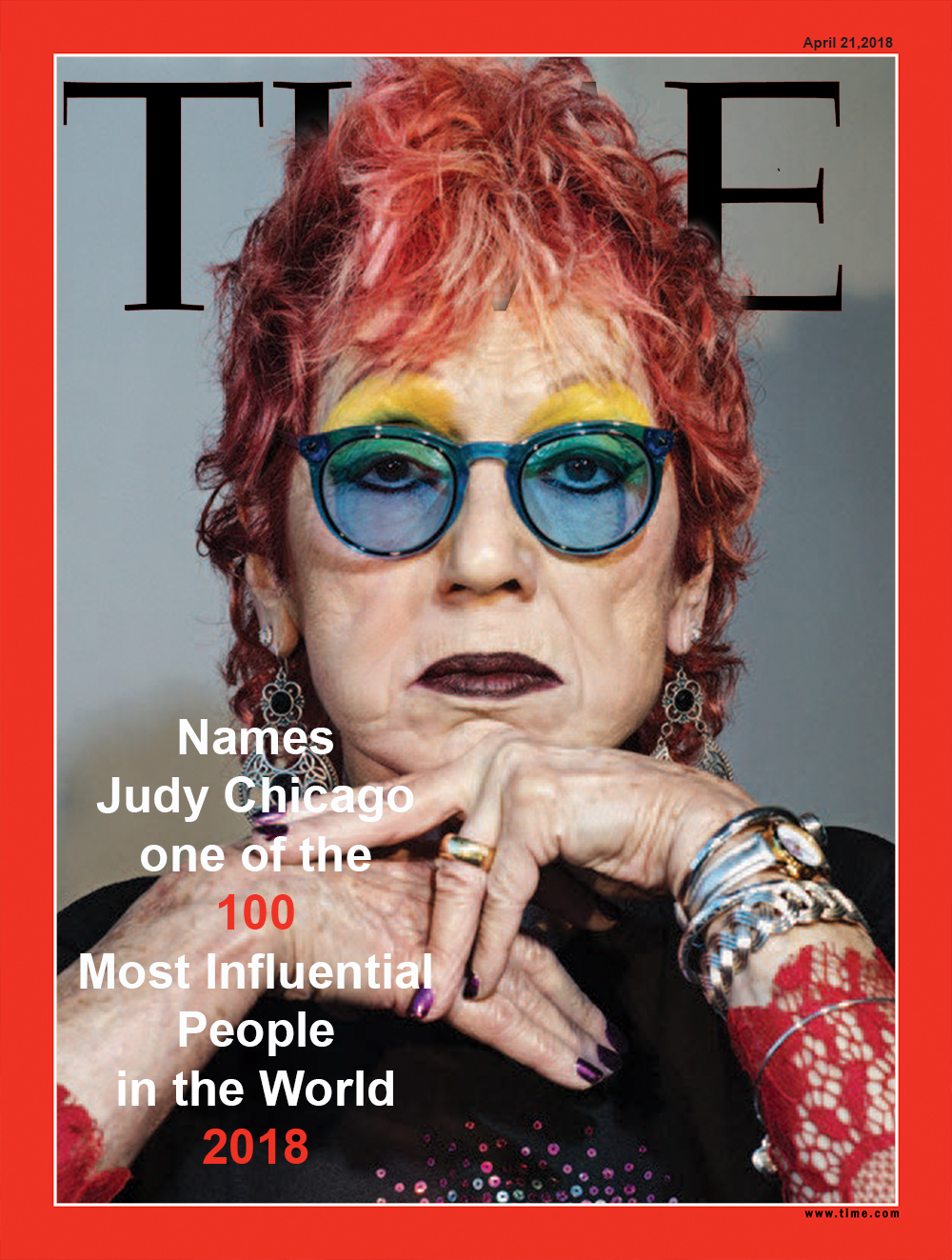
Judy Chicago was originally called ‘Judith Sylvia Cohen’. However, she rejected the tradition of taking her husband’s and father’s surname, and chose a new surname for herself. She decided to break with the patriarchal tradition of belonging to her father before marriage and to her husband afterwards.
‘I will no longer use a man’s surname. I will create my own name.’
Taking the name of the city where she was born, Chicago, she called herself ‘Judy Chicago’ and enshrined in her art and her life a firm determination to free herself from patriarchy.
Controversy, censorship and victory
‘The Dinner Party’ sparked huge controversy as soon as it was unveiled.
‘Is it art to depict female genitalia on a plate?’ ‘This is obscene!’ ‘What have women contributed to history?’
The male-dominated art world tried to banish this work from museums. However, women saw things differently. Countless artists and feminists defended *The Dinner Party* as a historic work that reclaims women’s history and offered it their active support.
Finally, in 2007, the Brooklyn Museum of Art in the United States decided to include this work in its permanent collection, and Judy Chicago made history by becoming the first female artist to have her work permanently exhibited in a major art museum.
Judy Chicago went beyond simply being an artist who created works; she expanded feminist art into a major movement. In the 1970s, Judy Chicago founded an educational programme exclusively for women artists, providing opportunities for those who had been marginalised by a male-dominated art education system. Furthermore, she encouraged women artists to proudly express their own stories, which definitively cemented women’s presence in the art world.