A beautiful dissonance rather than perfect harmony: Steve Reich’s <Clapping Music>
Encountering a perfect repetition that sounds different every time
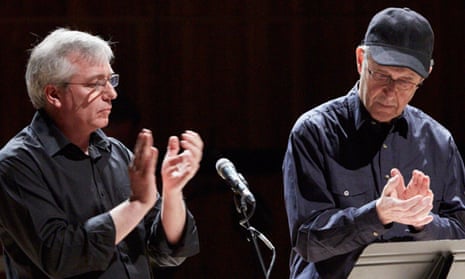
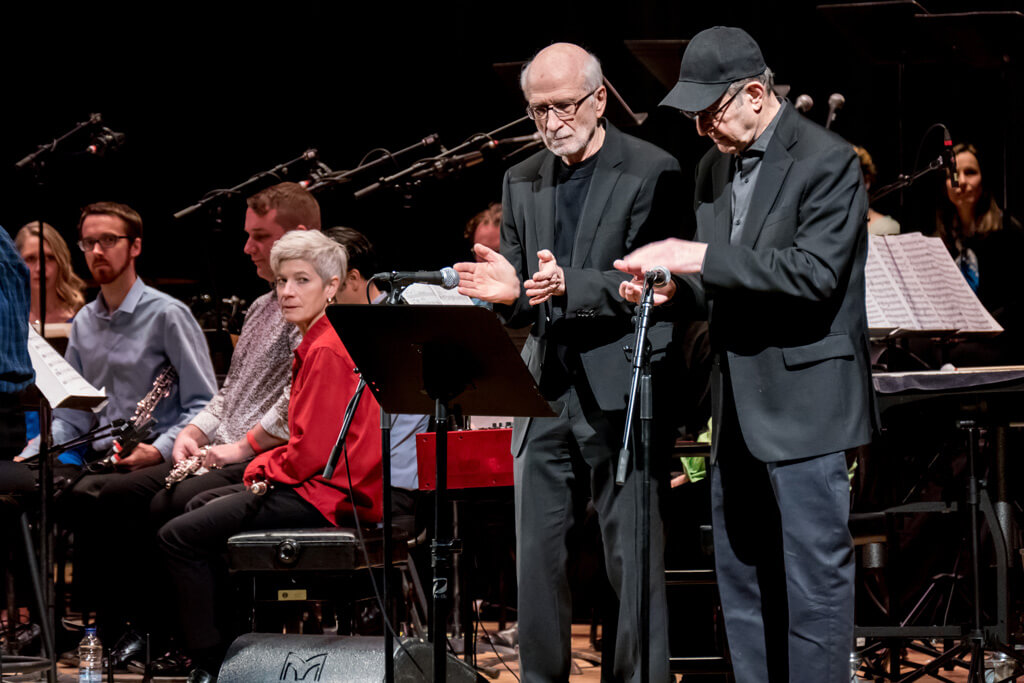
In the concert hall, with no instruments, just two performers take to the stage and begin to clap. What’s more, the rhythm they keep is absolutely identical.
Yet, strangely enough, as time passes, the sound you hear continues to change. This mysterious experience, where the same rhythm repeats infinitely, yet the result sounds different every time. <Clapping Music>, released in 1972 by Steve Reich, the master of American minimalist music, is a work of contemporary aesthetics that explores the essence of music in a simple yet radical way.
Steve Reich: The Innovator Who Changed the Rules of Sound
Born in New York in 1936, Steve Reich is a pioneer of Minimalism—a movement that, alongside Philip Glass and Terry Riley, left an indelible mark on the worlds of contemporary music and visual art. He spent much of his childhood travelling by train between New York and Los Angeles; the regular friction sounds and rhythms of the railway tracks he heard during this time would later become a major source of inspiration for his musical grammar.
He did not follow a musical path from the very beginning. Having majored in philosophy at Cornell University, he became deeply immersed in the philosophy of Wittgenstein; this philosophical approach—refining complex thought into clear language—was directly carried over into his compositional philosophy. Having subsequently studied composition in earnest at the Juilliard School and Mills College, Reich began to question the vast and complex harmony of Western classical music. Instead, he turned his attention to the primal, repetitive sound structures inherent to humanity, such as traditional percussion rhythms from Ghana in Africa, gamelan music from Indonesia, and Hebrew chants.
He went on to produce avant-garde works that deconstructed the ‘melodic centrality’ long upheld by Western music, bringing ‘rhythm and time’—the most minimal units of sound—to the forefront.

From tape loops to the discovery of ‘phase shifting’
The most crucial concept defining Steve Reich is ‘phase shifting’. This original technique was born out of a purely accidental technical experiment.
In the mid-1960s, Reich was working on creating tape loops (repeat playback devices) by recording everyday sounds such as the voices of street preachers or the sound of rain. One day, he inserted the same recording tape into two playback devices and played them simultaneously; due to subtle differences in the machines’ performance, the speeds of the two sounds began to drift ever so slightly out of sync. It was the moment when the two voices, which had been perfectly in sync, gradually began to drift apart, creating a strange echo and generating a completely new rhythmic waveform.
Reich extended this serendipity into the realm of human performance. He transferred a concept that could have remained confined to electronic music into the physical performance of actual musicians. Following works such as <Piano Phase> (1967), in which two pianos are played with a slight time lag, the culmination of this process—where even the mediating role of machines or instruments is eliminated, leaving only the human body—is <Clapping Music>.
*Clapping Music*: Waves built from simple elements
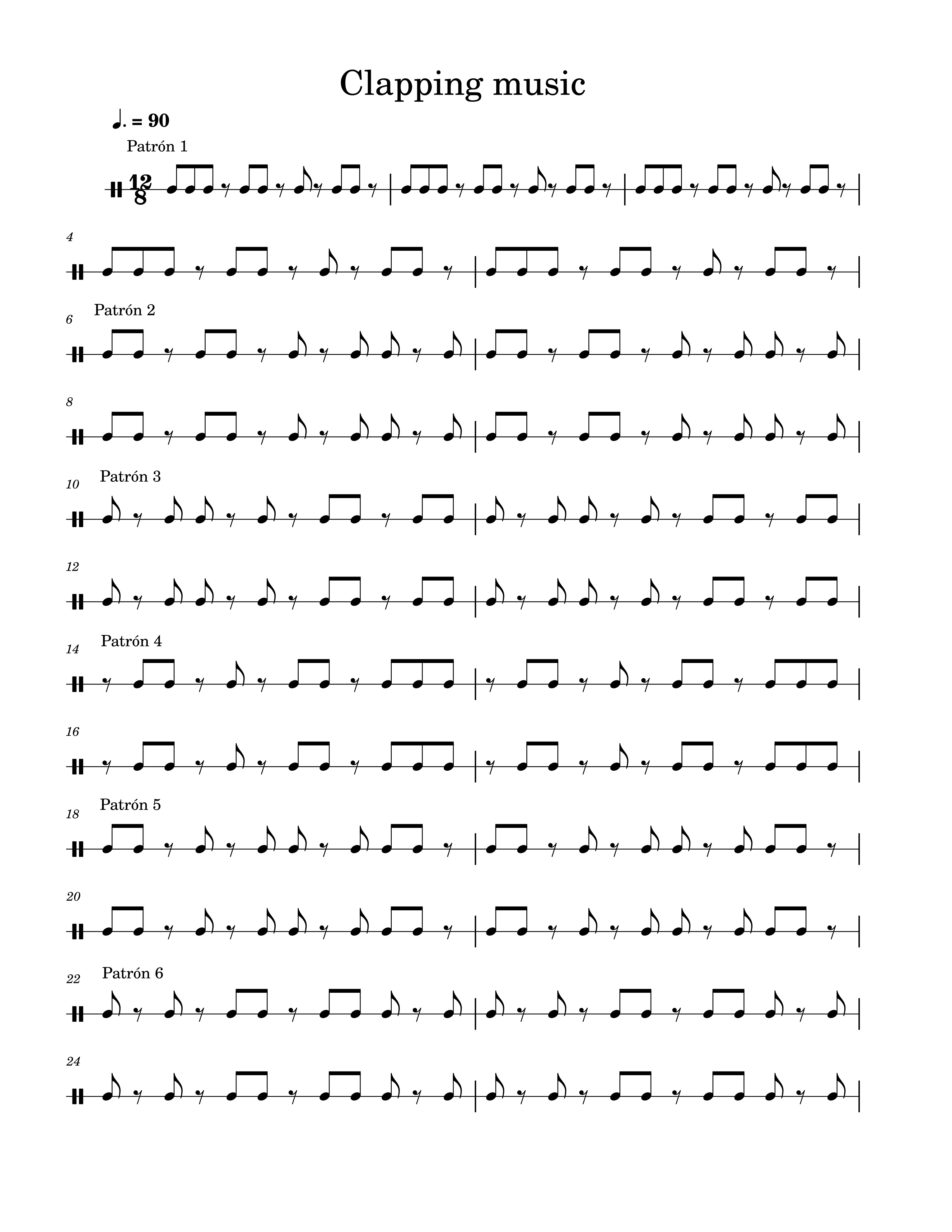
The rules of <Clapping Music
> are almost ruthlessly intuitive. There are only two performers on stage, and all they share is a single African-style rhythm pattern consisting of 12 beats.
The first performer maintains this rhythm pattern from start to finish at a constant tempo, without the slightest wavering. Meanwhile, the second performer, standing right beside them, plays the same pattern but, at regular intervals, shifts the starting point of the rhythm forward by one beat (an eighth note).
In the first stage, when both musicians were playing the exact same rhythm, the moment the second musician moves the starting point forward by one beat, an auditory phenomenon occurs, akin to the ‘moiré effect’ in visual art (a geometric distortion that occurs when two repeating patterns overlap). Even though we know full well that both are clapping in unison, an immense, unexpected polyphony blossoms from the gap created by this slight misalignment.
Having shifted by one beat at a time, the rhythm undergoes a total of 12 stages of three-dimensional relational change; finally, upon reaching the 13th stage, it returns to its initial state of synchronisation, completing a circular trajectory.

Steve Reich, a favourite of the visual arts and contemporary dance
Steve Reich’s work did not remain confined to the world of music alone; it provided immense inspiration to the conceptual artists of the ‘White Cube’ era and to contemporary dancers. Minimalist visual artists such as Richard Serra and Sol LeWitt, who interpreted the repetition and dissonance of rhythm through the superimposition of visual layers, engaged in close collaboration with him.
In particular, the world-renowned Belgian contemporary dancer Anne Teresa De Keersmaeker revolutionised the dance world by presenting choreographies in which she meticulously calculated the dancers’ movements based on Reich’s <Clapping Music> and <Fase>, thereby revolutionising the dance world.
The awe of the moment when noise becomes art
Steve Reich’s life and his masterpiece <Clapping Music> demonstrate that it is possible to construct an avant-garde aesthetic through human action alone, without the need for elaborate equipment or stage sets. When the everyday sound of clapping meets philosophical and intricate rules to become a conceptual work of art, we experience a new sense of liberation within the noise we are so familiar with.