The ‘Pink Masks’ that shook the Venice Biennale: Pussy Riot’s feminism
The powerful sound of resistance that shattered the tranquillity of Venice
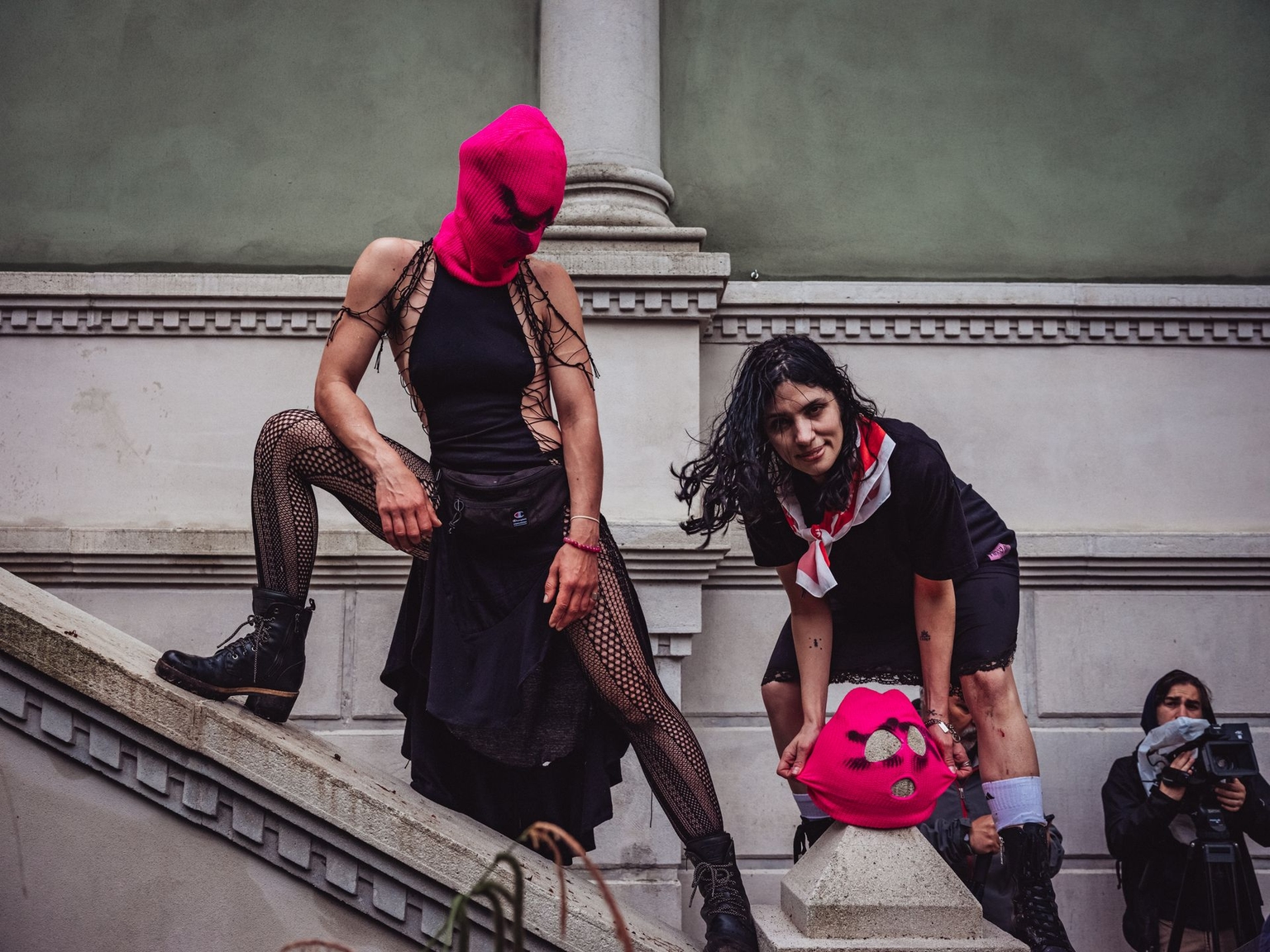
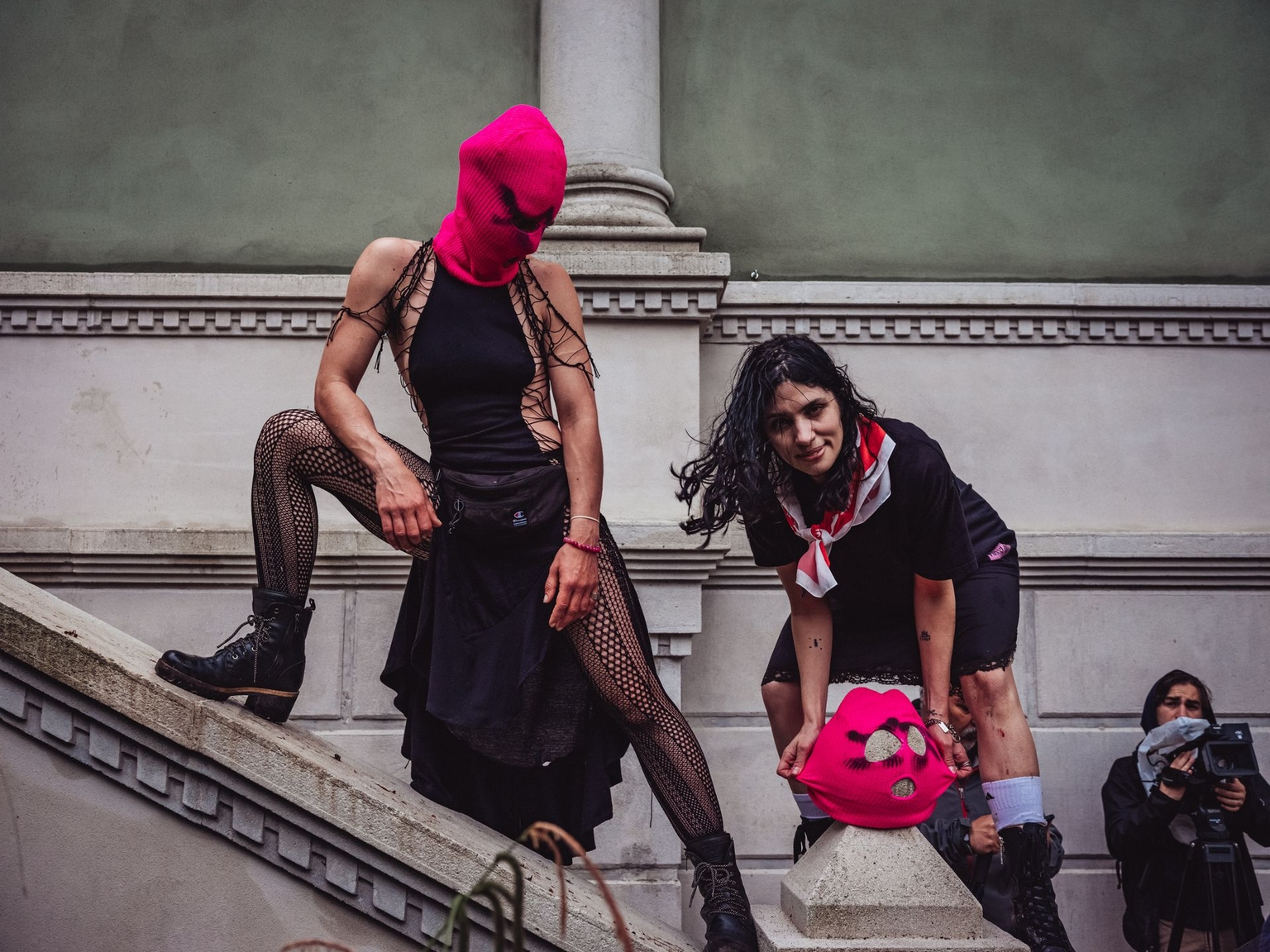
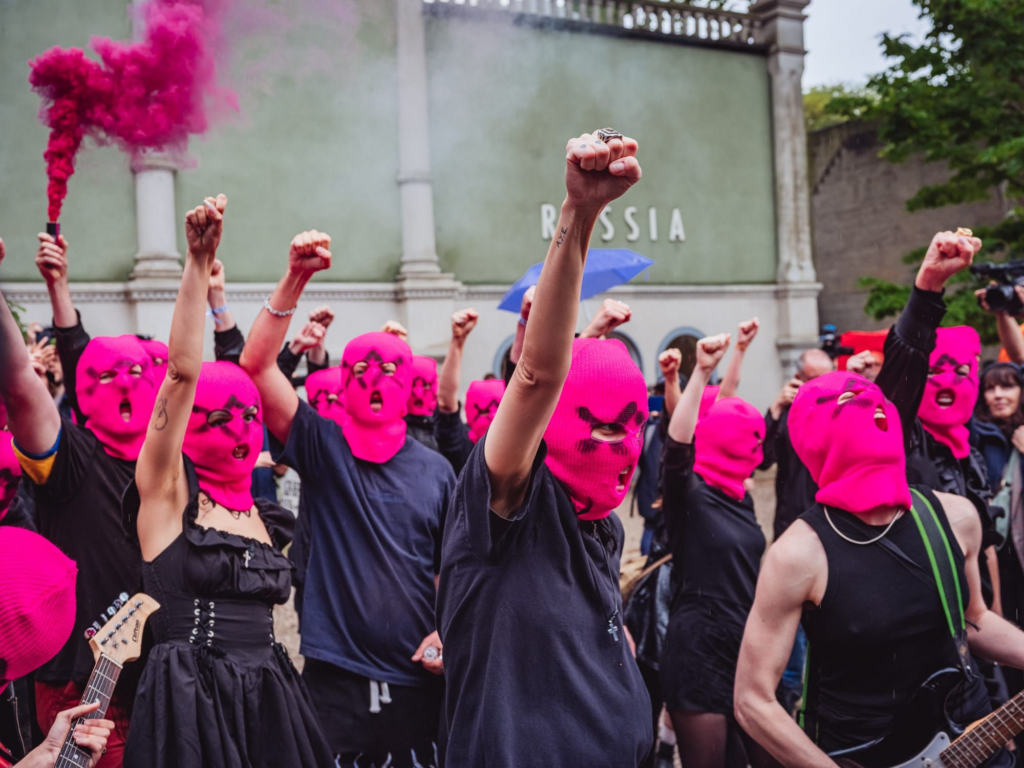
The Giardini park in Venice, Italy, is currently hosting the Venice Biennale, the world’s most prestigious art festival. On 6 May 2026, the area in front of the Russian Pavilion was filled with an unusual sense of tension and excitement. This was because around 50 activists from the Russian feminist punk rock collective ‘Pussy Riot’ and the Ukrainian radical women’s movement group ‘FEMEN’ had joined forces to stage a surprise protest.
At this Biennale—the first to be held since the full-scale invasion of Ukraine in February 2022—they transformed the firmly closed doors of the Russian Pavilion into a site of struggle.
Pussy Riot: Radical Guerrillas Bridging Art and Politics
The stars of the day, Pussy Riot, have been regarded as one of the world’s most influential resistance art collectives since their formation in Moscow in 2011. They are famous for their ‘guerrilla-style’ approach, appearing in unexpected public spaces wearing brightly coloured balaclavas to stage punk performances.
For them, art is not merely an object of appreciation but a weapon to crack open the structures of power. Feminism, the defence of LGBTQ+ rights, and relentless criticism of the Putin regime’s authoritarian system lie at the heart of their activities.
Founder Nadezhda Tolokonnikova and the history of resistance
Nadezhda Tolokonnikova, an iconic figure of Pussy Riot, is an artist who studied philosophy. who garnered global attention after leading the ‘Punk Prayer’ performance in Moscow’s Cathedral in 2012, calling for Putin’s resignation, for which she served a two-year prison sentence.
Having exposed human rights abuses within Russian prisons through a hunger strike whilst incarcerated, she has continued her struggle across the realms of art and journalism since her release, including by establishing a media platform. This protest in Venice was also an extension of the ‘art of action’ she has consistently championed.

FEMEN: Ukraine’s warriors confronting dictatorship with their bare hands
FEMEN, which lent its support to this protest, is a radical women’s rights group formed in Kyiv, Ukraine, in 2008.
They are well known for their ‘Sextremism’ tactics, in which they wear flower crowns, go topless, write messages on their bodies and protest to resist patriarchy, dictatorship and religious oppression. By transforming the female body from a sexual object into a tool of struggle, they demonstrated their most primal rejection of authoritarian power in Venice, protesting against the invasion of Ukraine.

Bodies against war, and artistic solidarity
The protesters broke the silence of the pavilion by dousing themselves in red liquid symbolising ‘Russian blood’ or performing acts honouring those who have fallen victim to the war. Shouting that “Russian art must not become a tool of state propaganda”, they transformed the pavilion itself—where the exhibition had been suspended—into a sculpture proving the failure of power.
This moment, where the masks of Pussy Riot met the bare bodies of Femen, served as proof that the solidarity of female artists across borders is stronger than state violence.
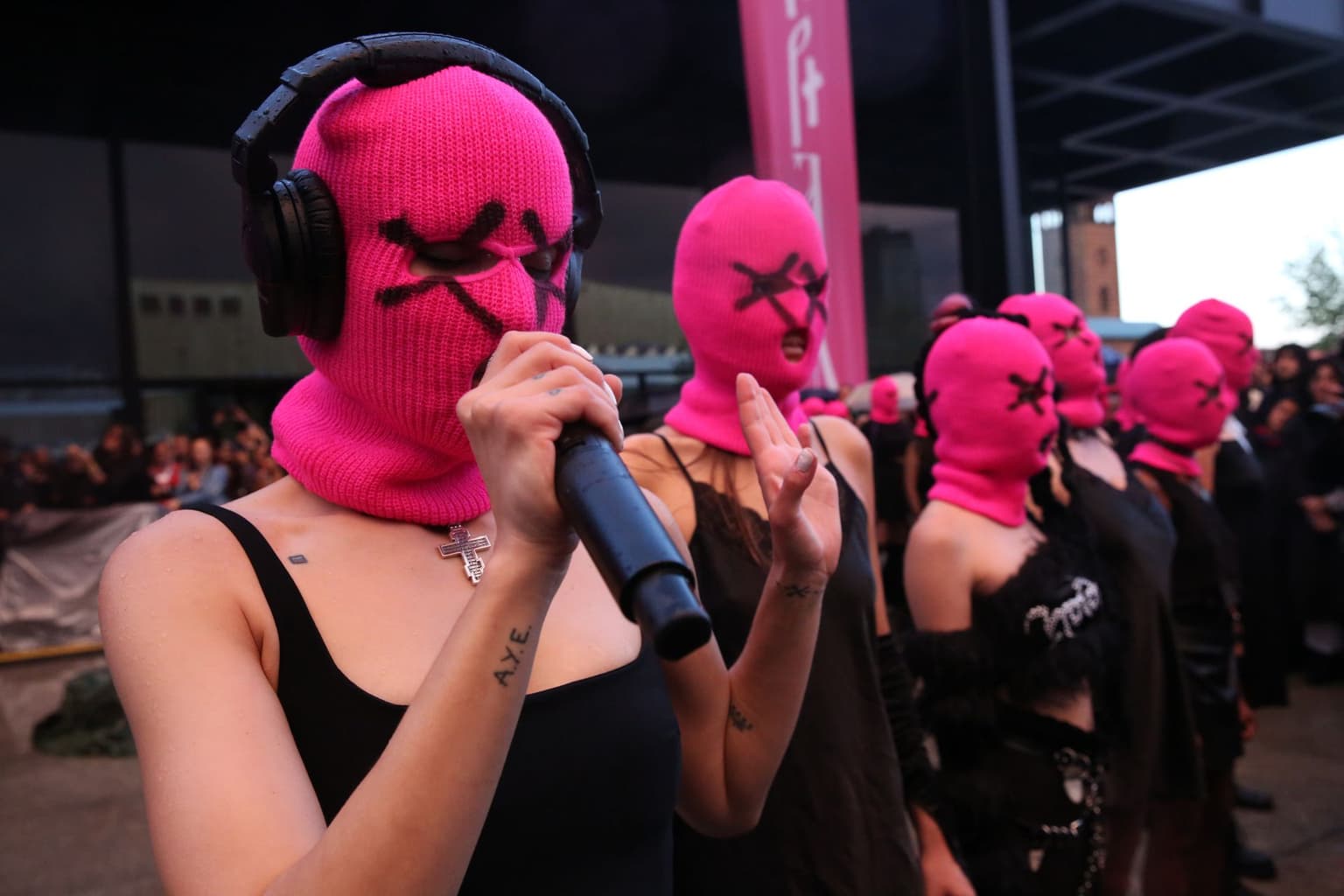
A question thrown through the closed door
This protest by Pussy Riot and Femen posed a weighty question regarding the very raison d’être of art. In a sense, it offered an answer to the question of what stance an artist should take when a state is waging war. The energy they radiated beneath the Venetian sun extended beyond mere visual shock to become a message of solidarity for all those who are oppressed.
Although the firmly shut doors of the Russian Pavilion remained closed, the wave of resistance that swept past it has already been etched into the hearts of people worldwide as the most powerful ‘Biennale exhibition’ of all.