How much are you? – Santiago Sierra
In the centre of the exhibition hall, drug-addicted homeless people stand in a line, having indelible tattoos inked onto their backs. The money they receive in return is barely enough to buy a single packet of heroin. The audience reacts with horror and debates ‘ethics’, but the artist who conceived this tragic production responds nonchalantly.
“This is the true face of the world that you turn a blind eye to every day.”
Santiago Sierra, a contemporary artist from Spain, is one of the most dangerous and controversial figures in today’s art world. His works are not merely objects of appreciation; they instil a sense of unease and guilt in the audience, forcing us to confront head-on the social structures and the value of labour that we have striven to turn a blind eye to.
A chronicle of deprivation and struggle
Born in Madrid in 1966, Sierra grew up witnessing Spain’s political upheaval and economic inequality from an early age. After studying art at the Complutense University of Madrid, he moved to Mexico City in the early 1990s—a decision that proved to be a decisive turning point in his artistic career.
The extreme poverty, corruption and the instinct for survival among the underprivileged that characterised the vast metropolis of Mexico City allowed Sierra to witness first-hand how ‘labour’ can destroy human dignity. Whilst borrowing the formal language of Minimalism, he began to imbue those geometric forms with ‘the suffering of living human beings’.
For him, art was not an act of creating beauty, but rather a form of ‘on-site verification’ that re-enacted the way power treats human beings.

Slavery Tattooed on the Back – The 160-centimetre Line and the Commodification of Labour
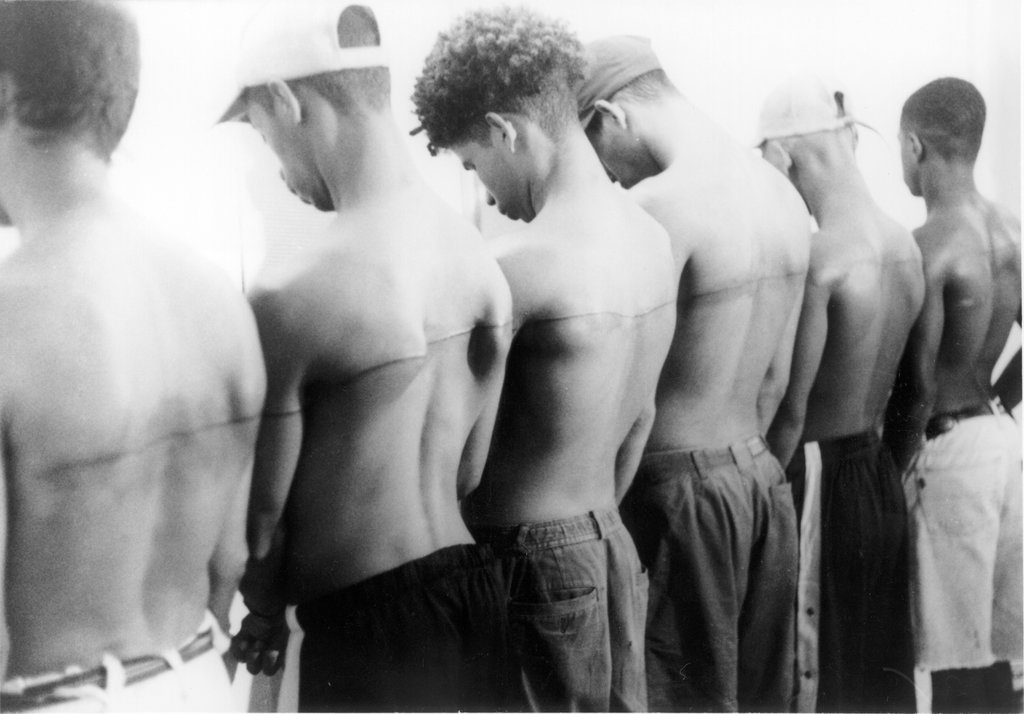
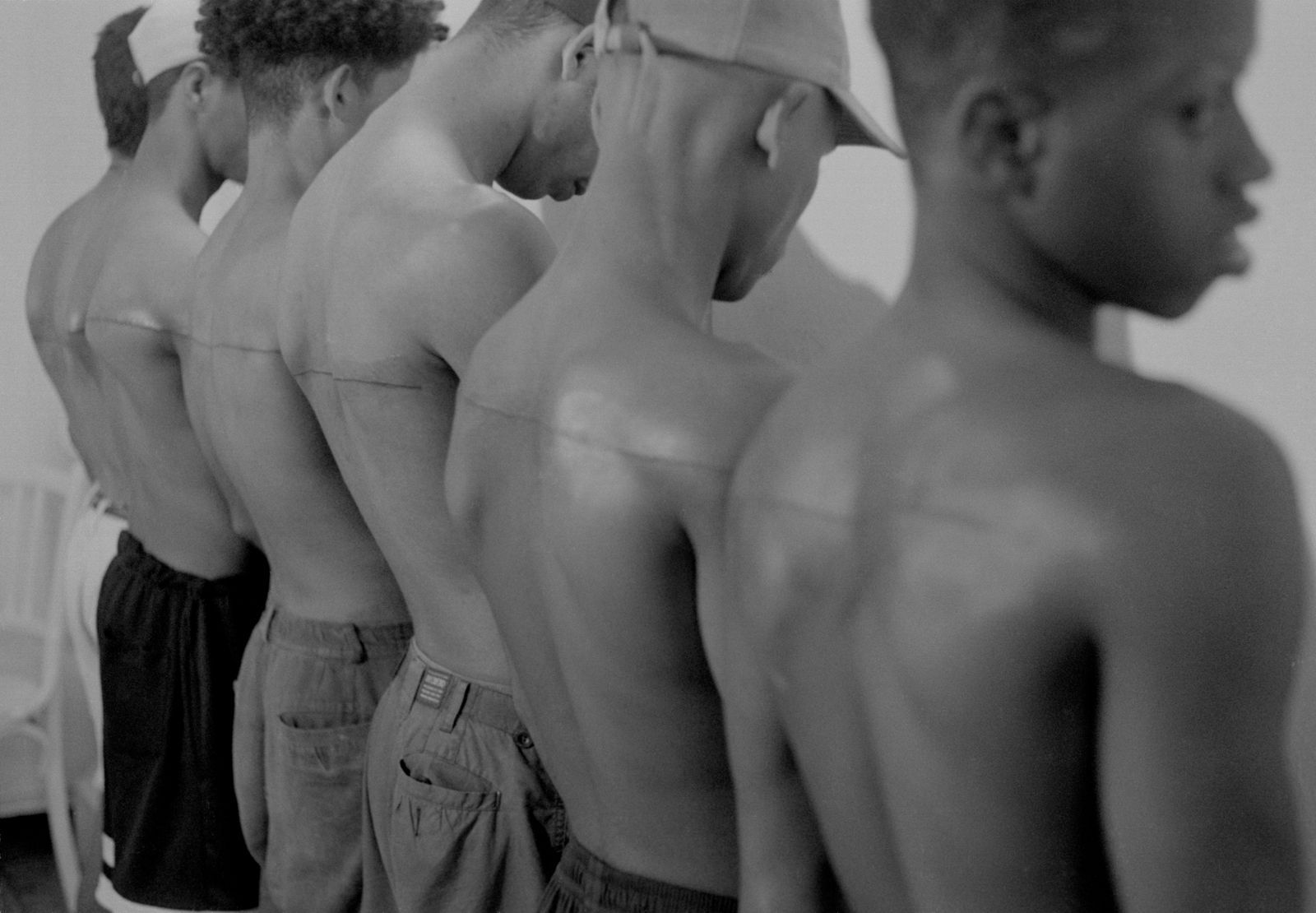
The work that propelled Sierra onto the world stage whilst simultaneously subjecting him to the fiercest criticism was ‘160cm Line Tattooed on 6 Paid People’.
He hired six young men, who were wandering the streets without jobs, for around $30 each. The artist lined them up in a row and tattooed a straight line across their backs. Although he had never tattooed anyone before and had no intention of doing so in the future, he sought out ‘people who would agree to have a tattoo that would remain on their bodies forever in exchange for money’ and tattooed the straight line.
He promised those pushed outside the social safety net a very small reward and packaged the act of permanently disfiguring their bodies as art. The public was outraged, asking, ‘How can you exploit human suffering?’, but that was precisely Sierra’s intention.
We wear Nike trainers without giving a thought to the suffering of child labourers in South-East Asia, and we turn a blind eye to the tears of emotional labourers hidden behind cheap services. By bringing the mechanisms of exploitation directly into the closed space of art, Sierra demonstrated that the ‘low cost’ we routinely enjoy is, in fact, exchanged for someone else’s ‘physical mutilation’.


Labour and Dignity in the Korean Context
Sierra’s unconventional approach continued in South Korea. At the 2000 Busan Biennale, she presented a work entitled ‘68 People Paid to Block a Museum Entrance’.
At the opening ceremony of the Busan International Contemporary Art Festival (PICAF), 68 people were hired to sit in an orderly fashion in front of the main entrance to the venue. They remained in the same spot for three hours, barely moving. They were paid 3,000 won per hour, which was double the minimum wage in South Korea at the time—1,500 won. This was by no means a small sum, particularly when one considers that staff at the museum in question earned 120,000 won for working over ten hours a day, including their commute.
However, they were treated not as ‘human beings’ but as objects for Sierra’s artwork, forced to become a spectacle for onlookers. Five of those hired for the performance held signs in English and Korean reading: ‘I am being paid 3,000 won per hour to do this job’.

The Barricade Called Nationality
The ‘Wall’ at the Venice Biennale
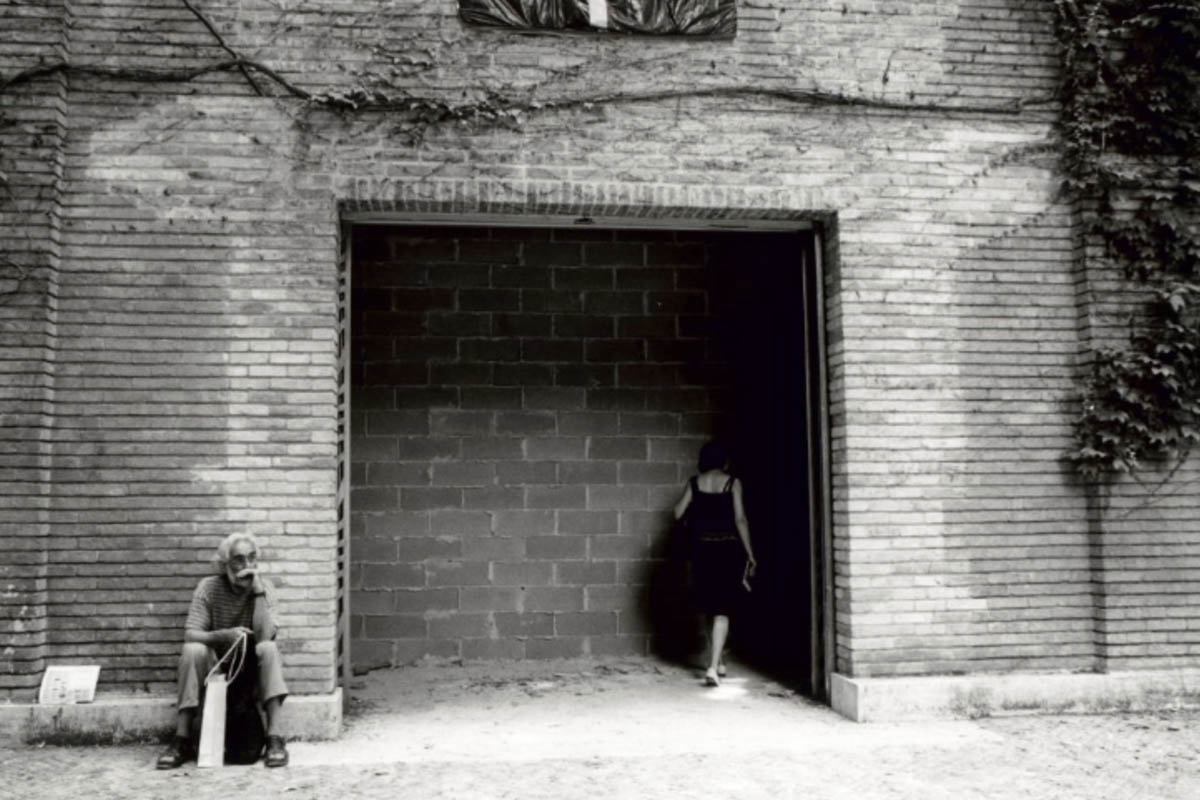
In 2003, at the Spanish Pavilion of the Venice Biennale—the world’s most prestigious art festival—Sierra presented a performance that directly challenged national pride.
He completely blocked the main entrance to the lavish exhibition hall with bricks. He then stationed armed security guards at the back door and allowed entry only to ‘those in possession of a Spanish passport’. Foreigners without passports were unable even to view the interior of the exhibition hall, whilst the Spanish nationals who managed to gain entry were met with nothing but an empty space and dust.
This work visualised how national borders discriminate against and exclude people. Sierra re-enacted, in the most unsettling way possible at an arts festival, the reality that the arbitrary fate of ‘nationality’ becomes a source of power for some and a barrier for others.
Why is ‘discomfort’ called art?
Criticism of Sierra’s work invariably centres on the point that ‘artists are not morally superior’. Yet Sierra himself refuses to cast himself as a saint. He states:
‘I do not seek to solve problems. I merely visualise problems that already exist. An artist is not a saviour, but a witness who acknowledges that they are part of this ugly system.’
His art does not seek to offer moral lessons or solace. Instead, through ‘discomfort’, it drives home the fact that the peaceful daily lives we enjoy are precariously built upon the sacrifice of others and cheap labour. The unbearable discomfort and anger one feels when standing before his works may, in fact, be the self-loathing that arises when we realise that we ourselves are accomplices in this vast system of exploitation.