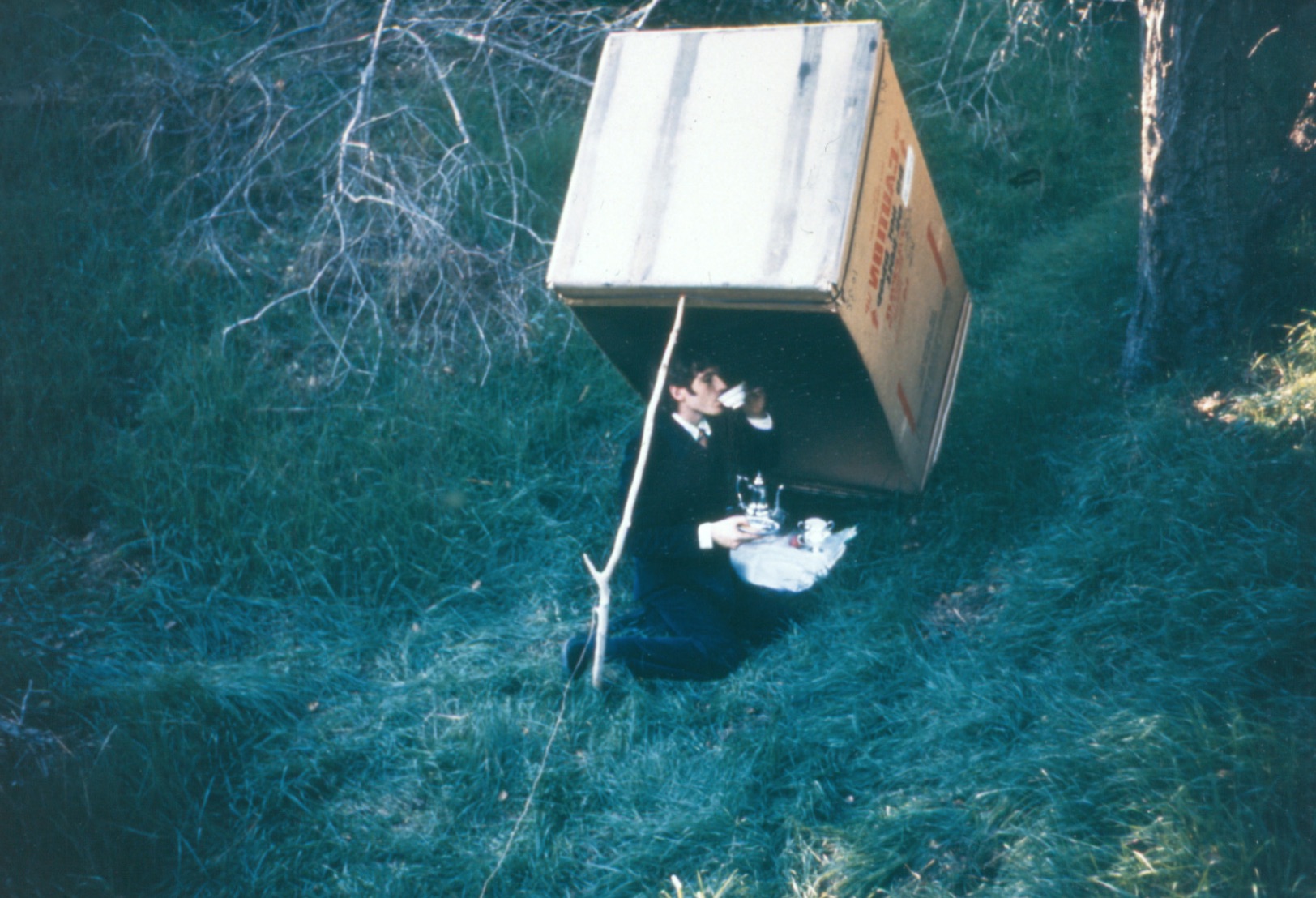
We All Fall, Bas Jan Ader (1942–1975)
In the history of art, there are figures whose legacies were only truly realised through their disappearance. The Dutch conceptual artist Bas Jan Ader (1942–1975) is one such figure.
Throughout his life, he surrendered himself to gravity and fell; he wept endlessly before the camera; and ultimately, he vanished forever across the Atlantic in a small sailboat. In a world where efficiency and success are the only virtues, what kind of aesthetic salvation were the ‘failure’ and ‘loss’ to which he clung so tenaciously?

We all fall
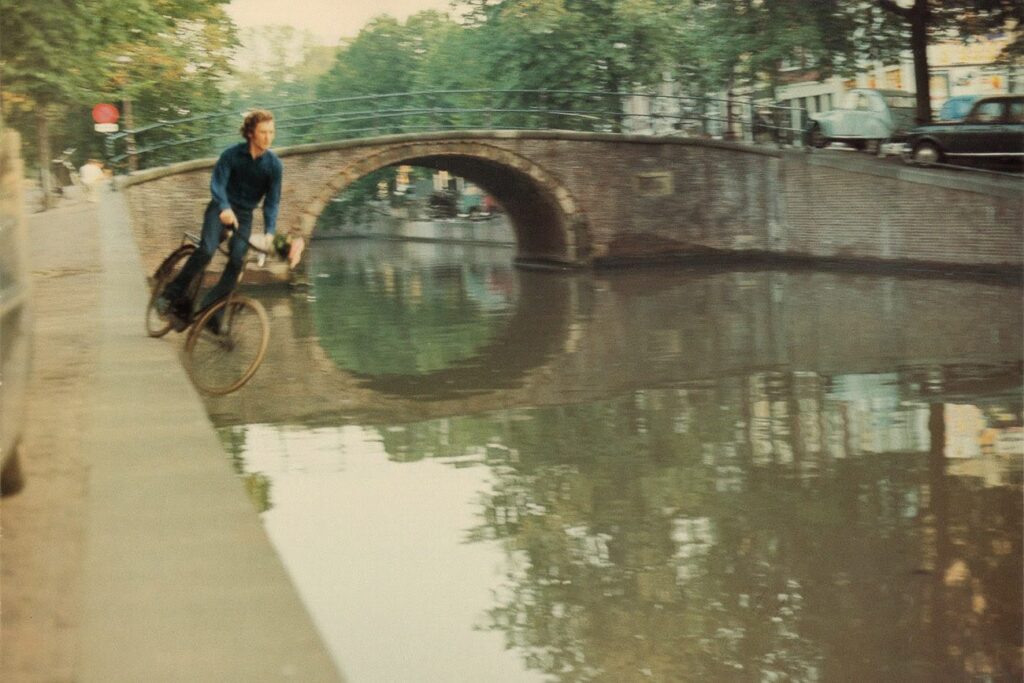
Arder’s most iconic work is the ‘Fall’ series. He tumbles from rooftops, ploughs into canals on his bicycle, and clings to trees before finally plummeting into the river.
For Ader, gravity was not merely a physical phenomenon but a limit to human existence. He believed that ‘when gravity rules me, I am finally at my most honest’. His falls were the most fragile yet powerful way of mocking the ‘perfect control’ and ‘heroic subject’ that Western modern art has pursued.
After setting up the camera in a perfect composition, he very earnestly performs the ‘failure’ of the fall. This scene, both comical and poignant, offers the viewer an existential sorrow alongside a strange sense of liberation—the realisation that ‘one need no longer hold on’.

Things too sad to put into words
In 1970, he released the video ‘I’m too sad to tell you’, in which he stares intently into the camera and weeps for about three minutes. At a time when conceptual art was mired in cold, intellectual logic, Arder brought the most subjective and intense ‘emotion’ to the very heart of art. By visualising the pure energy inherent in sorrow itself, he set off a massive wave in the hearts of the audience.
Arder is regarded as an artist who restored ‘Romanticism’ in the era of cold Minimalism. His tears were a brief yet intense tribute to the fundamental loneliness of human existence and the ineffable sorrow that defies communication.

In Search of the Miraculous, Becoming a Miracle Himself
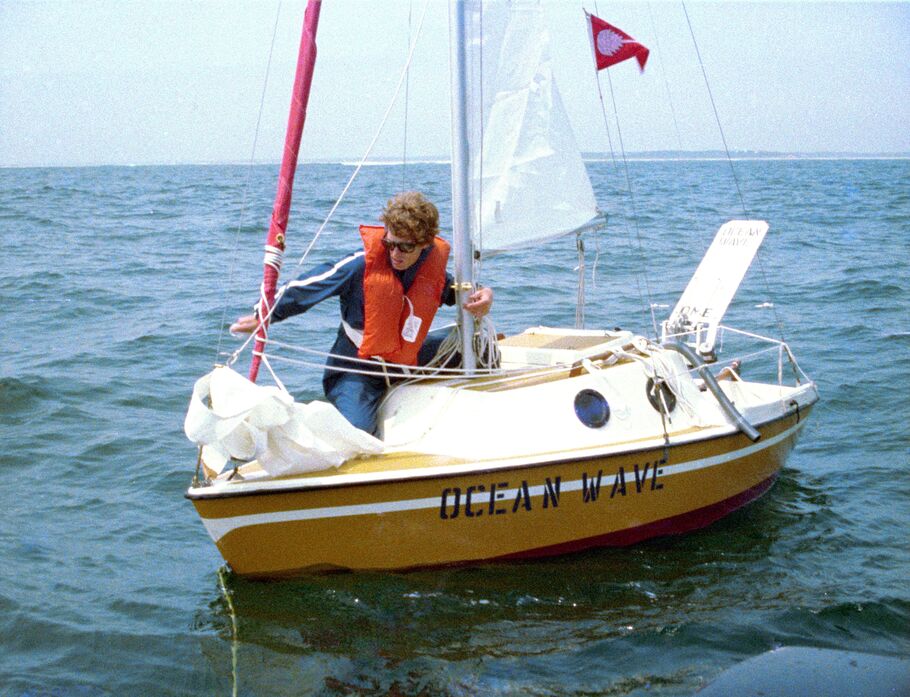
On 9 July 1975, he set sail to undertake ‘In Search of the Miraculous’, which would become both the most ambitious and the final project of his life.
He set out on a solo crossing of the Atlantic in a small sailing boat, barely four metres long, named ‘Ocean Wave’. This was both an artistic performance and an attempt to prove, with his very being, the seemingly impossible ‘miracle’. Before setting off, he hinted to his students that he ‘might never return’.
Nine months after setting sail, only his empty boat, which had capsized off the coast of Ireland, was found. The artist’s body was never recovered. His disappearance was a tragic yet perfect conclusion: in the process of seeking a ‘miracle’, as the project’s title suggested, he himself had become a miracle or a myth.
Death or another form of art: the unending survival theories
The fact that Ader’s body was never found has given rise to countless speculations and theories of his survival. Some argue that his disappearance was not a death, but a deliberate retreat into ‘complete anonymity’.
The view is that the cryptic words he left for his wife before setting sail, along with the project title ‘In Search of a Miracle’, suggest he had prepared to turn his back on the world and live under a new identity. The interpretation is that the very act of the artist completely erasing his past and living as another person is the true destination of this project.
Some followers believe that he was rescued by another vessel during his voyage, or that he landed on shore via a pre-planned route and is now growing old as an ordinary citizen somewhere in Europe. To them, Arder is not a dead hero, but a living master who continues to practise the ‘art of disappearance’ right here among us.

Epilogue: The Freedom to Fail, the Right to Disappear
Although Bas Jan Ader’s life officially ended after a brief 33 years, his ‘disappearance’ remains one of the most enigmatic chapters in the history of modern art. It matters not whether he sank beneath the waves or is living somewhere as an anonymous old man.
By choosing failure over success, and departure over staying put, he demonstrated the most sublime frontier that art can reach. He staked his entire life to prove that a miracle is perhaps not something to be sought, but something one becomes by throwing oneself into it.