The YBA: Transforming the Value of Contemporary Art ③ – Making London the Mecca of Contemporary Art
The YBA phenomenon that swept through the 1990s is now a part of history. Yet the ripples they created remain deeply ingrained in the very way we enjoy, consume and invest in art today. Part 3 highlights their ultimate achievements and legacy, as well as the key figures behind the

The 1997 ‘Sensation’ Exhibition: A Global Phenomenon
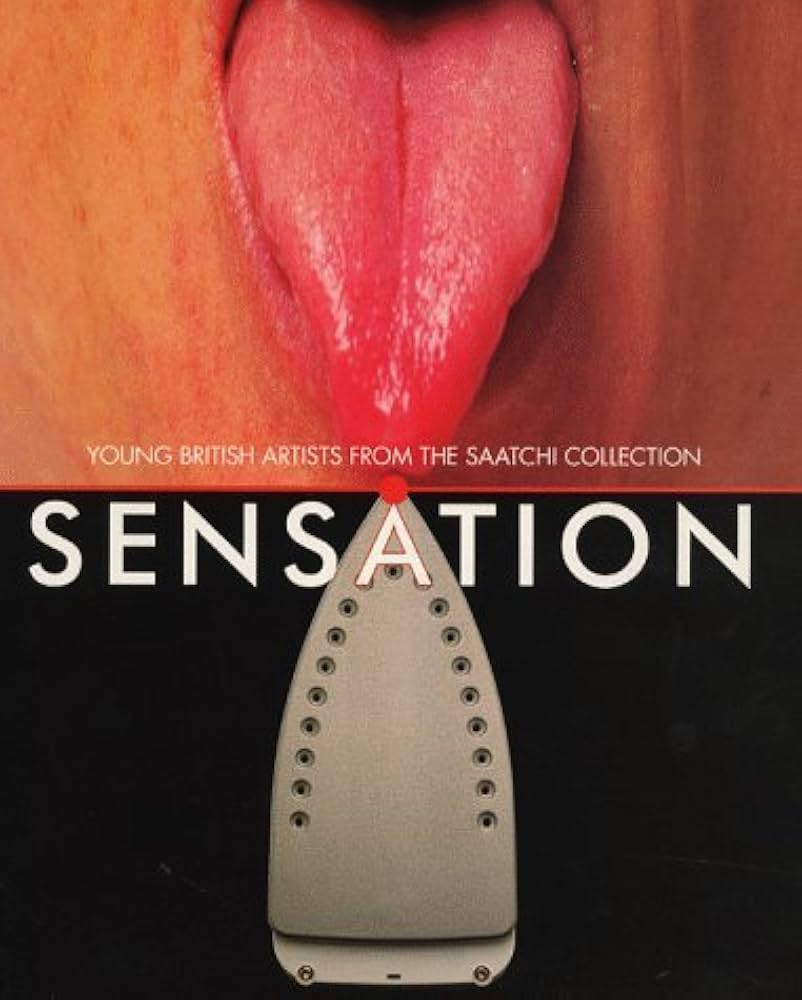
In 1997, Charles Saatchi organised the
However, it ultimately drew hundreds of thousands of visitors, and the YBA rose from a local British group to become a global ‘cultural phenomenon’. From this point onwards, London established itself as a mecca for contemporary art, rivalling New York.
The Stars of ‘Sensation’: Masterpieces by Five Artists Who Turned Controversy into Art
This exhibition was more than just a viewing; it was an ‘experience’. Here, we introduce the key artists who dominated the atmosphere of the exhibition at the time, along with a detailed look at their artistic worlds.
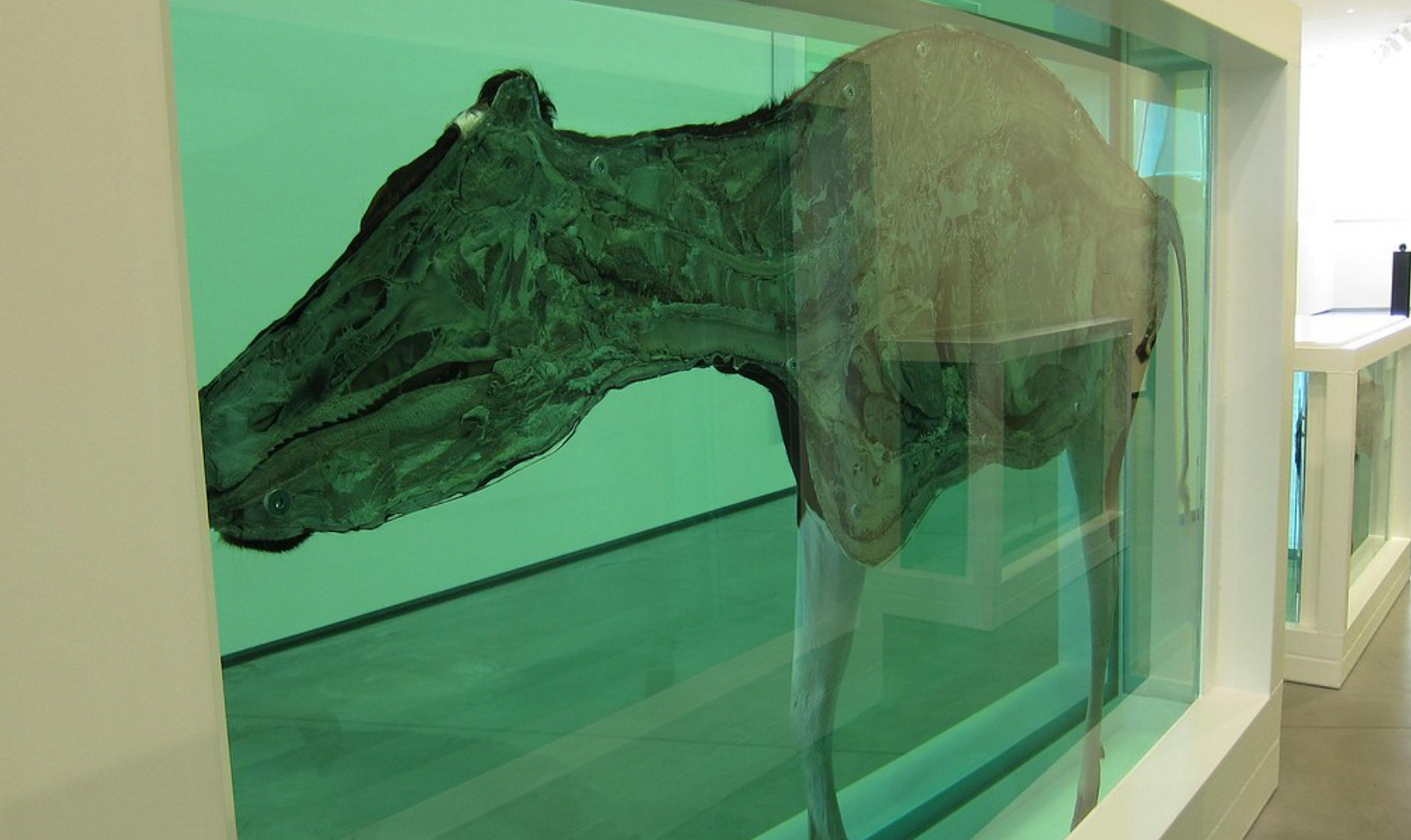
① Damien Hirst –
Following his shark, Hirst greeted visitors with a work featuring a cow’s carcass split in half and placed in a formaldehyde tank. He meticulously dissected a mother cow and her calf vertically, arranging them across four tanks. Visitors walked past the cow’s internal organs and bones, confronted with them in all their raw, unvarnished reality. By brutally deconstructing the biblical ‘mother and child’ narrative, he allows viewers to physically experience the birth and death of life, and the rupture in between. This work earned him the 1995 Turner Prize and cemented his position as the leader of the YBAs.
② Tracey Emin –
Commonly known as ‘The Tent’, this work represents the pinnacle of Emin’s confessional art.
She embroidered the names of 102 people with whom she had shared a bed over 32 years onto the lining of the tent. These included not only lovers but also aborted children, family members and friends. Although the public misinterpreted this as a sexual scandal, the work is in fact a record of ‘intimacy’ and ‘memory’. Preserving the history of human relationships within the most private of spaces—the tent—this work has acquired a tragic narrative of its own, having been lost in a warehouse fire in 2004 and now surviving only in photographs.

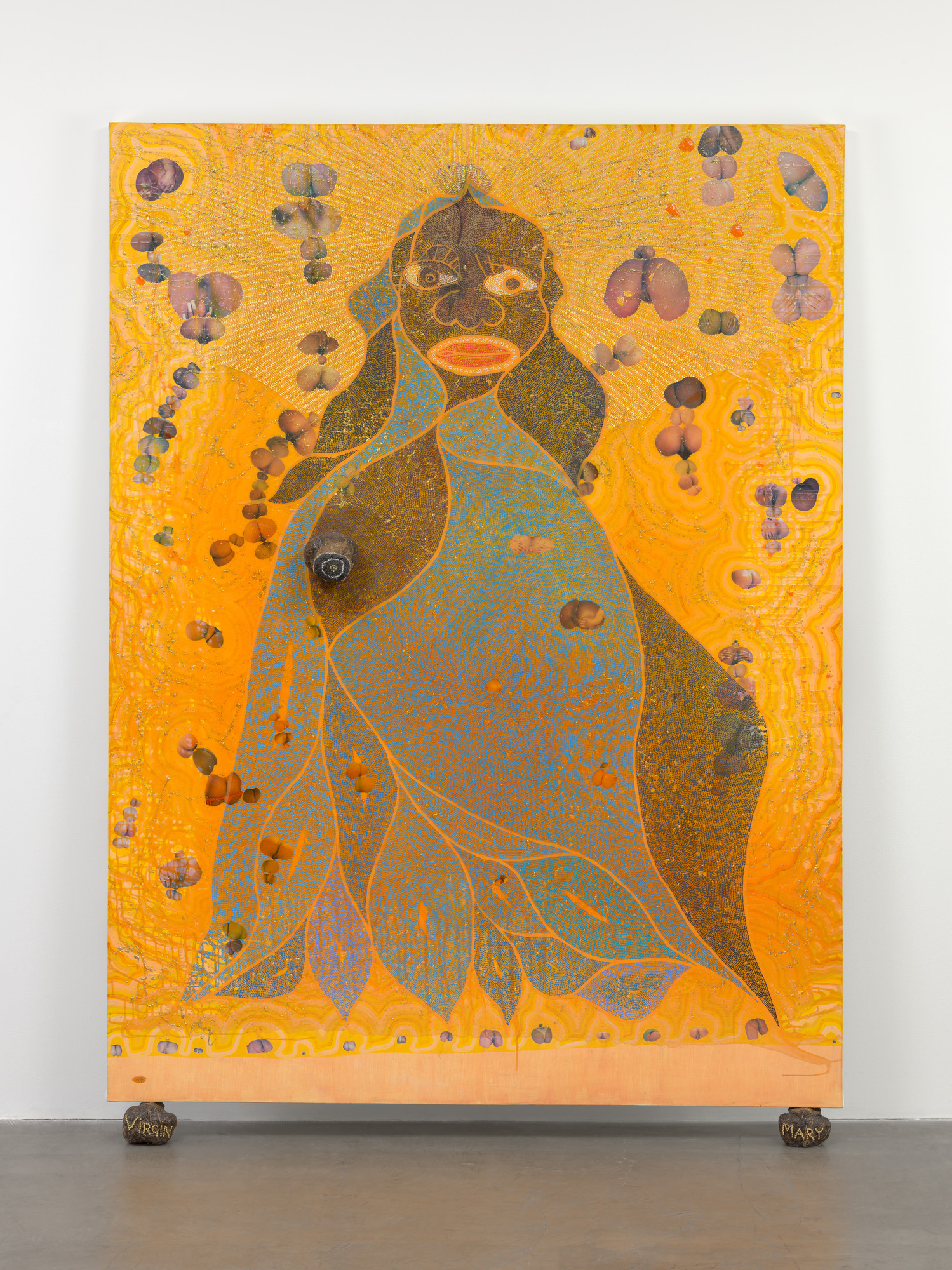
③ Chris Ofili –
This was the ‘centre of the controversy’ that led Mayor Rudolph Giuliani to order the closure of the exhibition during its run in New York. Depicting a Black Virgin Mary, he applied elephant dung to the canvas and decorated the surrounding area with images of angels cut out from pornographic magazines. Ofili combined the meanings of abundance and sanctity associated with ‘elephant dung’ in African tradition with Western religious iconography. Paradoxically, this controversy, born of a cultural clash, catapulted him to the status of a world-renowned star artist.
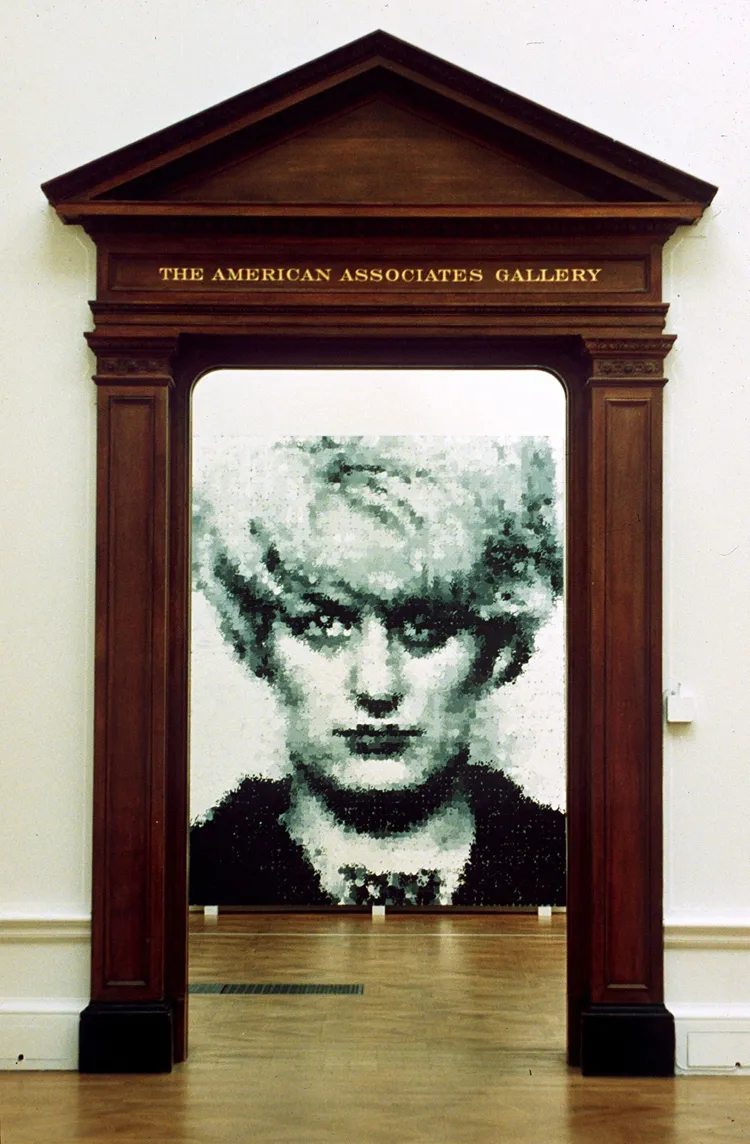
④ Marcus Harvey –
This was the work that drew the most vehement protests during the exhibition, even being pelted with eggs at the gallery entrance. It consisted of a giant portrait of the infamous British child serial killer ‘Myra Hindley’, created using children’s handprints. This contradiction—reconstructing the image of a murderer through the hands of children—stirred public outrage. Harvey visualised the way the media consumes villains and the chilling process by which their images become etched into the public consciousness.
⑤ Ron Mueck –
This work, showcasing the essence of hyperrealist sculpture, leaves the audience in a state of solemn reverence. It is a sculpture of the artist’s late father, rendered slightly smaller than life-size, with even the finest skin textures and hairs perfectly reproduced. The cold texture of the corpse and its reduced size intensify the sense of futility and sorrow associated with death. It is regarded as the work that delivered the most ‘static shock’ amidst the YBA’s ‘provocation’.

The Changing Criteria for Determining Artistic Value: The Legacy of the YBA
The success of the YBA proved that artistic value lies not in ‘the artist’s technical skill’ but in ‘the originality of the concept’ and ‘branding’.
- Shift in Market Leadership: Whereas critics once determined the value of art, following the YBA, major collectors (such as Saatchi) and auction houses began to dictate market prices.
- Damien Hirst’s 2008 Sotheby’s Auction: Hirst bypassed galleries and put his new works directly up for auction, generating over 200 billion won in revenue. This was a historic event demonstrating that an artist could become a business model in their own right.
- Art as modern luxury: The fact that we now see collaboration products with contemporary artists in Louis Vuitton stores, or encounter unconventional sculptures in the lobbies of luxury hotels, is all thanks to the path paved by the YBA. They demonstrated just how powerful art can be when it is not confined to lofty halls, but actively intertwines with mass media, fashion and capitalism.