The YBA: Redefining the Value of Contemporary Art ②– Artistic Value Discovered in Ugliness
The works of the YBA group posed a profound question to the public. The criticism asking, ‘Why is this art?’ was, in fact, the highest form of praise for them. Controversy soon turned into money, and shock soon became value. In Part 2, we provide an in-depth analysis of the key artists representing the YBA and their controversial works.
Damien Hirst: The Director Who Taxidermied Death
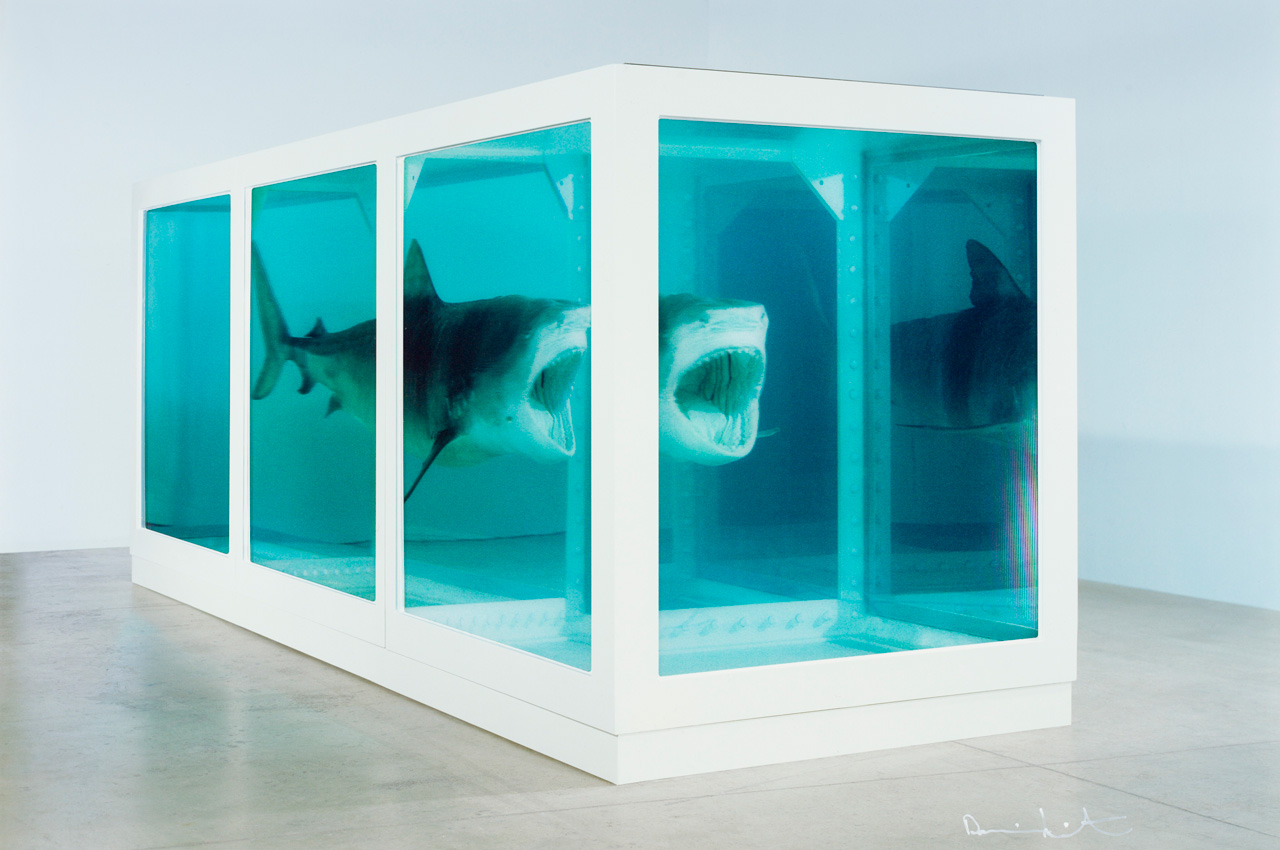
Hirst interpreted ‘death’, a fear common to all humanity, through a modern aesthetic.
Created in 1991, this work—featuring a giant shark preserved in a formaldehyde tank—has become an icon of contemporary art. The shark strikes an aggressive pose, as if alive, yet it is in fact merely a preserved carcass, fixed to prevent decay. Through this, Hirst has brought the ‘physical reality of death’—which we strive to ignore—right into the centre of a gallery with its luxurious marble floor.
Spin Painting and Spot Painting
He had his assistants dot thousands of dots or spray paint from a rotating machine. In response to the controversy over whether ‘art is art even if the artist does not paint it themselves?’, he declared the triumph of conceptual art, asserting that ‘the idea is the art’.

Tracey Emin: The confessional artist who sells her wounds
In stark contrast to Hirst, Emin exhibited her most private sphere.
(1998), a Turner Prize nominee, was a direct reproduction of the bed where she had lain for four days, suffering the pain of a broken heart. Worn sheets, stockings, half-empty bottles of alcohol and condoms offered the audience an unsettling, voyeuristic experience. This shattered the stereotype that ‘art must be perfect’ and illuminated the authenticity of humanity’s most vulnerable moments.

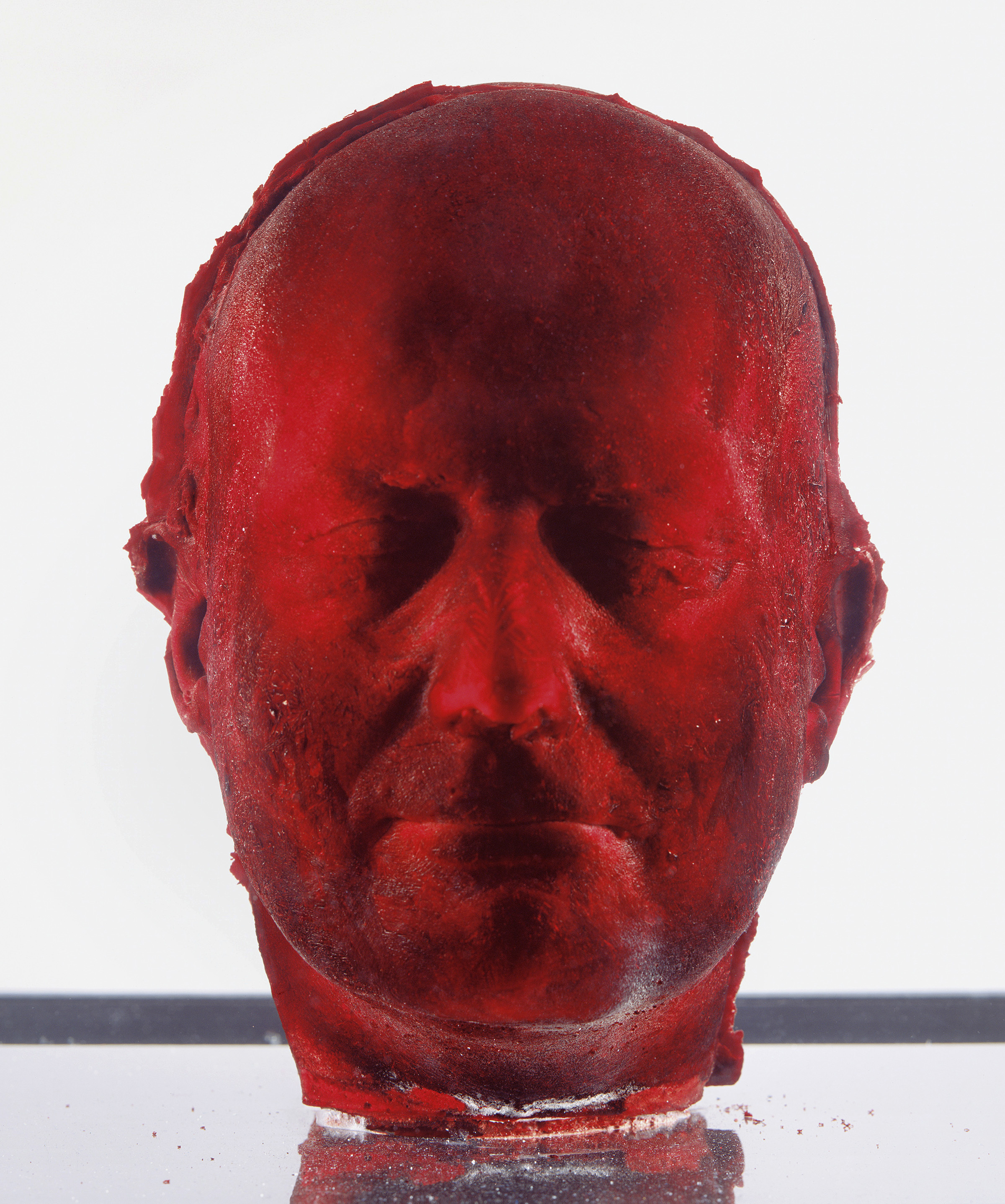
Marc Quinn: A Self-Portrait Made from My Own Blood
Quinn drew small amounts of his own blood every five months, collecting a total of 4.5 litres. He poured this into a mould of his own face and froze it to create a bust. This work will melt unless kept in a special freezer maintained at sub-zero temperatures. It is regarded as a masterpiece that metaphorically expresses the finiteness of life and how modern people rely on social systems (electricity, machinery) to prolong their lives.
Sarah Lucas: Mocking the Male Gaze
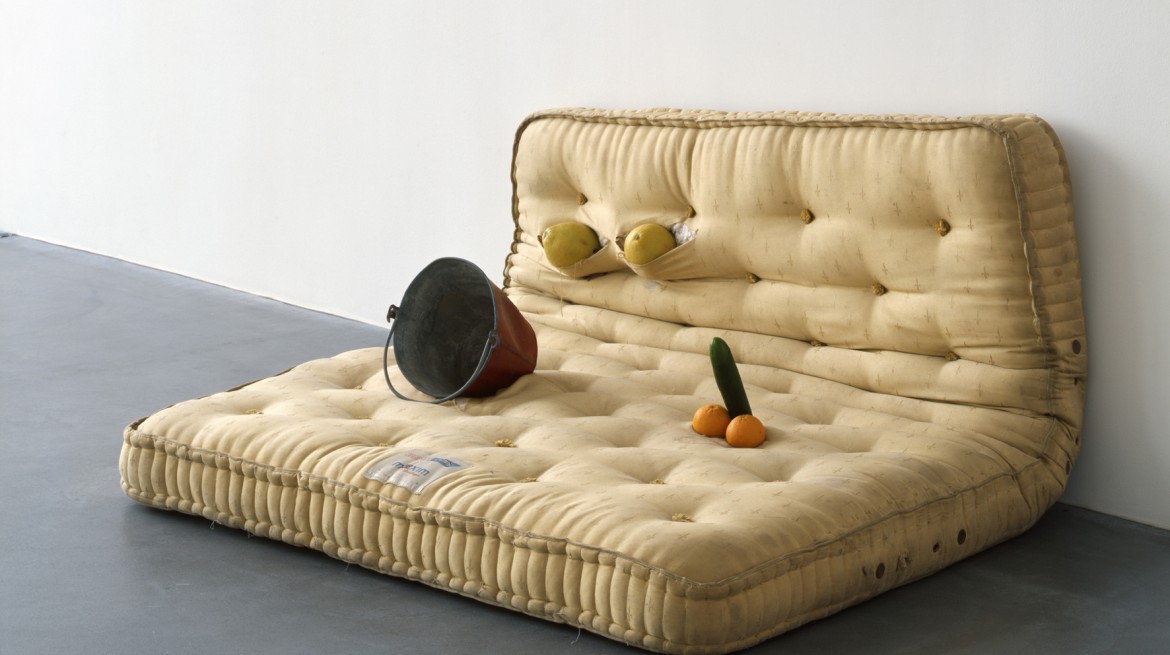
Lucas delights in sexual satire using old furniture and foodstuffs.
She arranges two cucumbers and a melon on a mattress to symbolise the male body, or stretches stockings taut to create grotesque forms. Her work is rough and crude, yet it contains sharp insights and humour regarding gender identity. This presented a unique feminist perspective amidst the YBA movement, which was dominated by male artists at the time.
The common thread running through this YBA cohort is their ‘unconventional use of materials’ and ‘direct style’. They did not hide behind metaphors or symbols. By throwing themes such as death, sex, violence and alienation directly into the audience’s faces, they expanded the realm of contemporary art into a more provocative and intuitive sphere.