Museums of the World ⑧ A Mountain Paradise: Japan’s ‘Miho Museum’
Amidst the rugged mountains of Shigaraki in Shiga Prefecture, Japan, as you walk along a mist-shrouded forest path, you are met with a surreal landscape.
This is the Miho Museum, designed by the world-renowned architect I.M. Pei. It is a space that embodies the ‘Peach Blossom Spring’—a utopian paradise described in the ‘Record of the Peach Blossom Spring’ by the Qin Dynasty poet Tao Yuanming—through modern architecture. More than simply an art museum displaying artefacts, this place is akin to a vast world that embodies the utopia of which humanity dreams.
Mihoko Koyama: A Female Leader Who Healed the World Through Art
Mihoko Koyama (1910–2003), founder of the Miho Museum, was a Japanese religious figure, entrepreneur and one of the foremost female art collectors of her time. Her life story runs parallel to Japan’s modern and contemporary history.
Having studied at the prestigious Jiyugakuen (Free Academy) in Japan, she was brought up under an educational philosophy that emphasised ‘art in daily life’ and ‘harmony with nature’. This later became the foundation for her art collecting and the establishment of the museum.

In 1970, Mihoko founded the Shinji Shumeikai, a new religious organisation. This group gained immense influence both within Japan and abroad by propagating the doctrine that ‘the souls of humanity are saved through art and natural farming methods’. She believed that engaging with the finest works of art, as part of religious practice, elevated human dignity; and through the devotion of her followers and the management of the foundation’s assets, she acquired the financial resources to build a collection unrivalled in the global art market.
She wished for the ancient artefacts from both the East and West that she had collected to be housed in the most beautiful of locations, not merely as personal possessions but as a shared heritage of humanity. Accordingly, in 1990, she established the Shumei Culture Foundation and marked the beginning of this monumental project by making a request that seemed almost impossible to the veteran architect I.M. Pei: ‘Build a modern Utopia’.
Shumei Culture Foundation: ‘Art is the Flower of Religion’
The Shumei Culture Foundation, which operates the Miho Museum, is an intellectual and cultural hub that carries on the philosophy of Mihoko Koyama. The Foundation defines art as “a universal language that transcends religion and ideology to unite humanity”.
Going beyond the mere management of artefacts, the Foundation has provided substantial funding for the conservation and restoration of ancient sites around the world. The reason the Miho Museum’s collection is recognised for its value by the world’s leading museums is that the Foundation has focused on historical rarity and artistic purity rather than commercial value in its acquisitions. Even today, they continue to convey a message of ‘Purification’ to society as a whole through the promotion of natural farming methods and the sponsorship of culture and the arts.

The Tunnel and Suspension Bridge Leading to Dohwawon
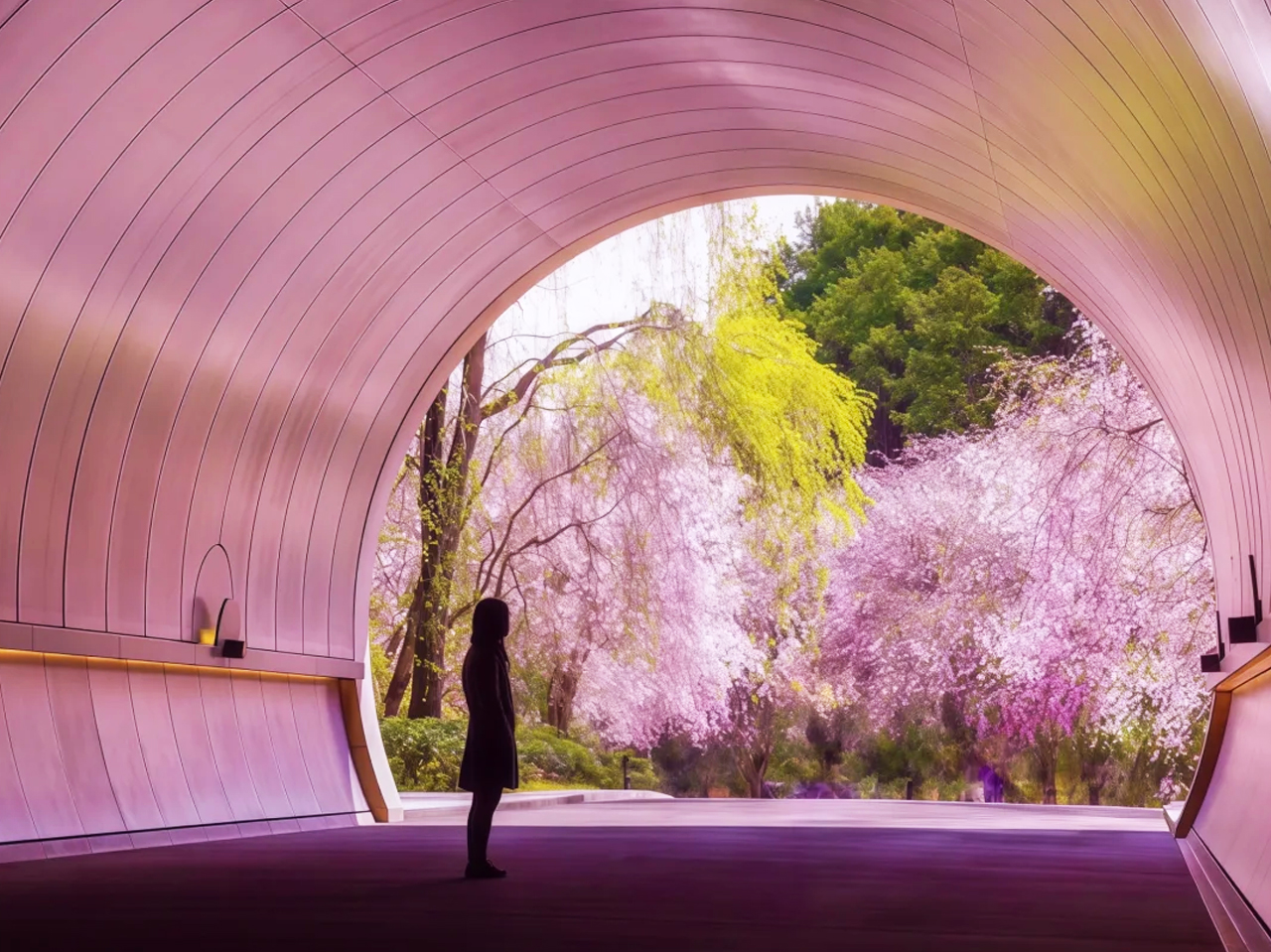
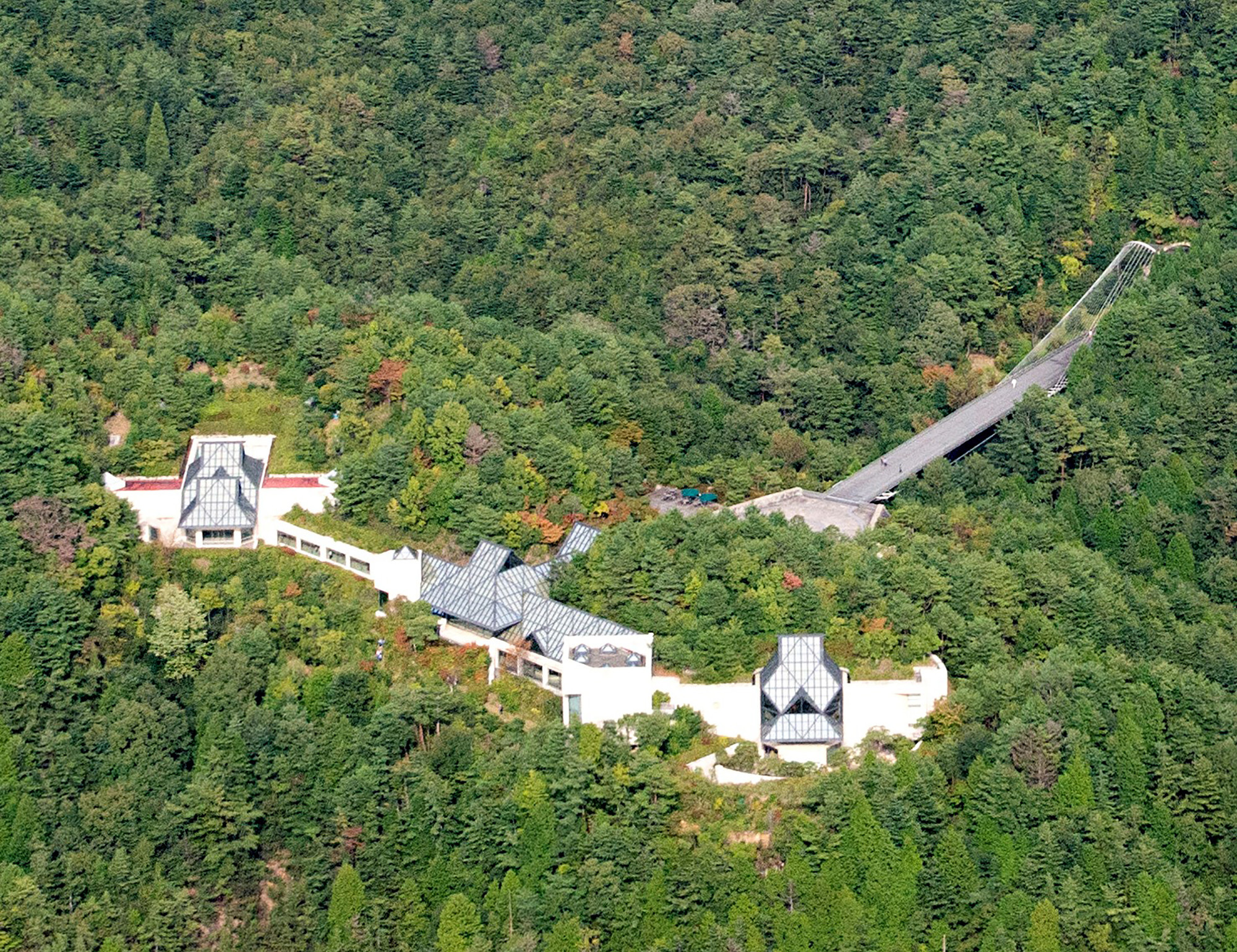
The most dramatic architectural feature of the Miho Museum is the journey from the entrance to the main gallery building. Visitors must first pass through a long, silvery stainless-steel tunnel. This tunnel softly reflects light, signifying a separation from the outside world. Upon reaching the end of the tunnel, the view suddenly opens up to reveal a massive suspension bridge spanning a deep valley—a modern reinterpretation of the wonder felt by the fisherman who sought the entrance to the Land of Eternal Spring.
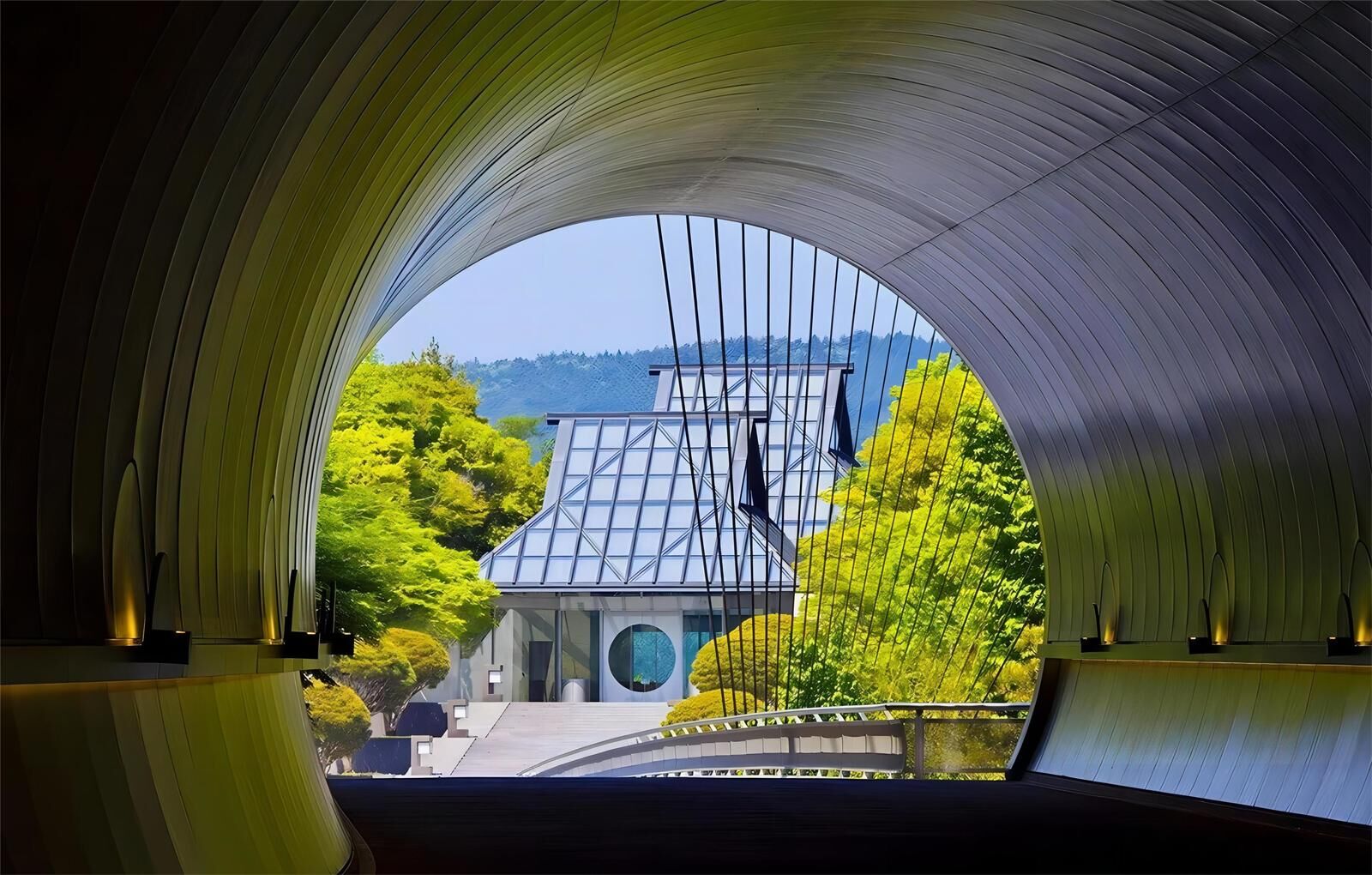
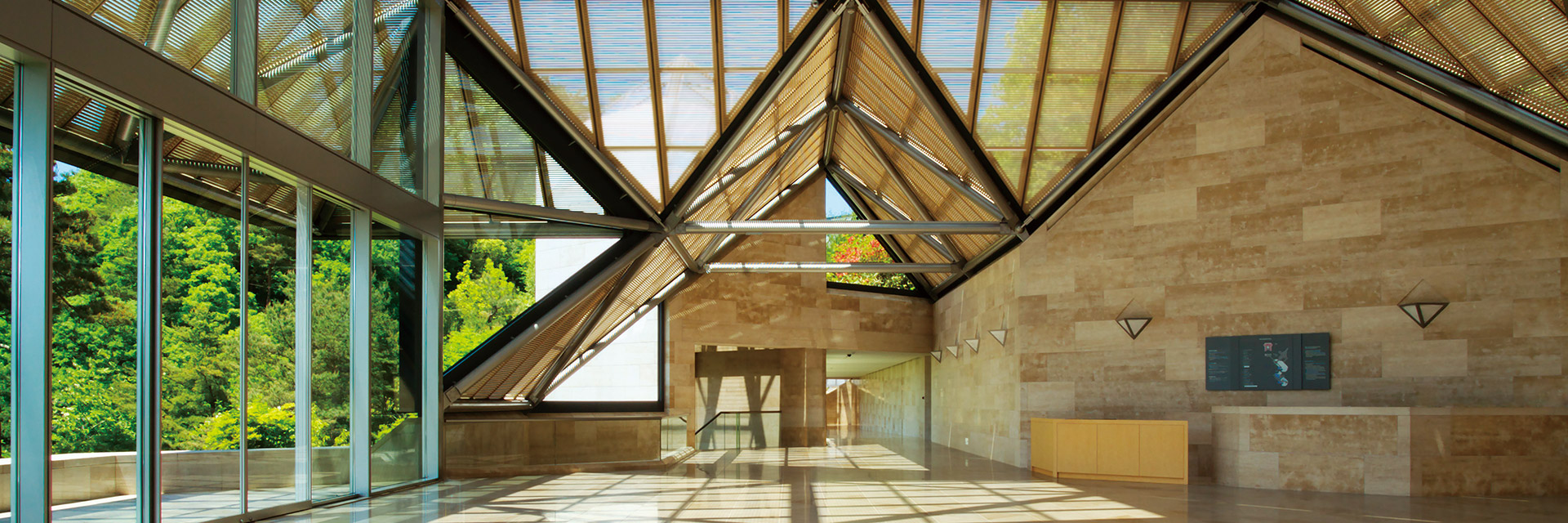
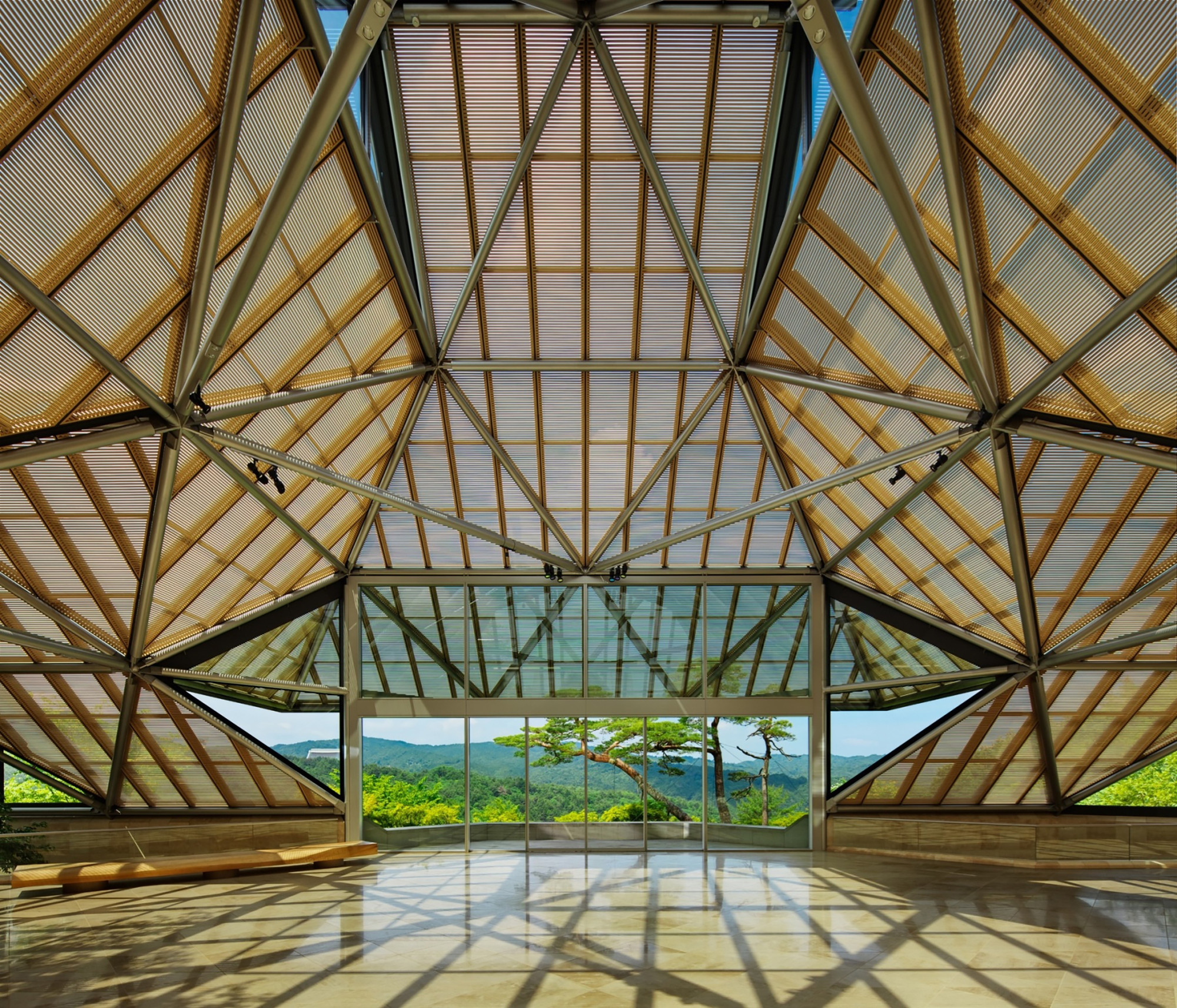
I.M. Pei has applied his signature geometric glass structures—first showcased in the glass pyramid at the Louvre—to this site as well. The glass roof, reminiscent of the rooflines of traditional Japanese houses, forms a gentle rhythm with the surrounding mountainous landscape whilst drawing warm sunlight into the interior. Although more than 80 per cent of the building is buried underground, the interior feels anything but cramped, thanks to the natural light pouring in vertically through this intricate glass ceiling. Whilst using cold materials such as metal and glass, he has combined them with the soft beige tones of the limestone walls to achieve a sense of classical elegance.
Concepts by Wing and Key Collections
The Miho Museum is broadly divided into the North Wing and the South Wing, each presenting the trajectory of human civilisation through distinct themes.
- North Wing – A Feast of Japanese Art: This wing centres on Japanese tea culture, ceramics and Buddhist art. In particular, it features a collection of ancient ceramics from the Shigaraki region, the founder’s hometown, alongside magnificent paintings from the Edo period. Visitors can experience the essence of delicate craftsmanship in a space that offers a modern reinterpretation of the aesthetics of traditional Japanese architecture.
- South Wing – A Treasure Trove of World Civilisations:
Masterpieces from civilisations along the ancient Silk Road, including Egypt, West Asia, Greece, Rome, Pakistan and China, are on display.
- Highlight: Gandhara Standing Buddha: Standing 2.5 metres tall, this colossal Buddha statue is renowned for being the best-preserved of all extant Gandhara Buddha statues and for its high artistic quality.
- Highlight: Silver Vase from the Sassanid Dynasty: This artefact, which showcases exquisite craftsmanship, bears witness to the splendour of ancient West Asian metalwork.
- Highlight: Statue of the Egyptian god Horus: This falcon-headed sculpture, adorned with silver and gold, demonstrates the world-class value of the Miho Museum’s collection.

The Final Touch to the Interior, Crafted by Nature
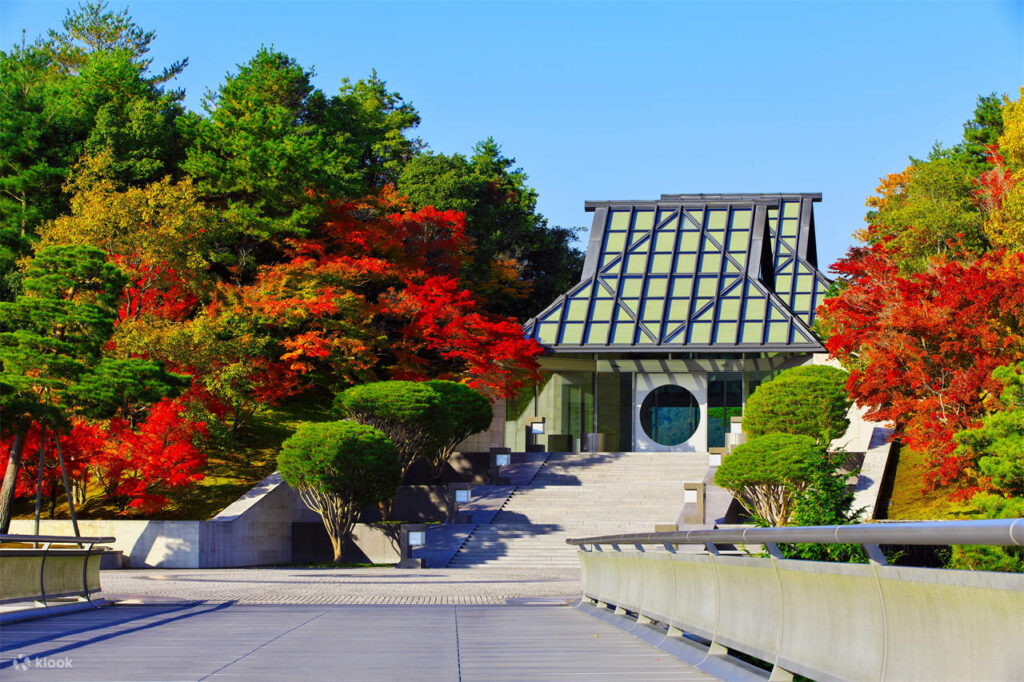
The Miho Museum takes on a completely different appearance with each passing season. In spring, the countless weeping cherry trees at the entrance to the tunnel create a pink mist, evoking the scenery of a true garden of paradise, whilst in autumn, the fiery autumn foliage creates a spectacular view through the glass roof. I.M. Pei perfectly demonstrated his credo that ‘architecture must be part of the environment’ here in these deep mountains.
![시가] [Sakura Season Limited Kansai Shiga Cherry Blossom Viewing] Miho Museum & Mii-dera Temple & Lake Biwa Canal Cherry Blossom One-Day Tour - LIVE JAPAN (일본여행정보사이트)](https://res.klook.com/image/upload/activities/aribszxfvejxkk0rsu83.jpg)
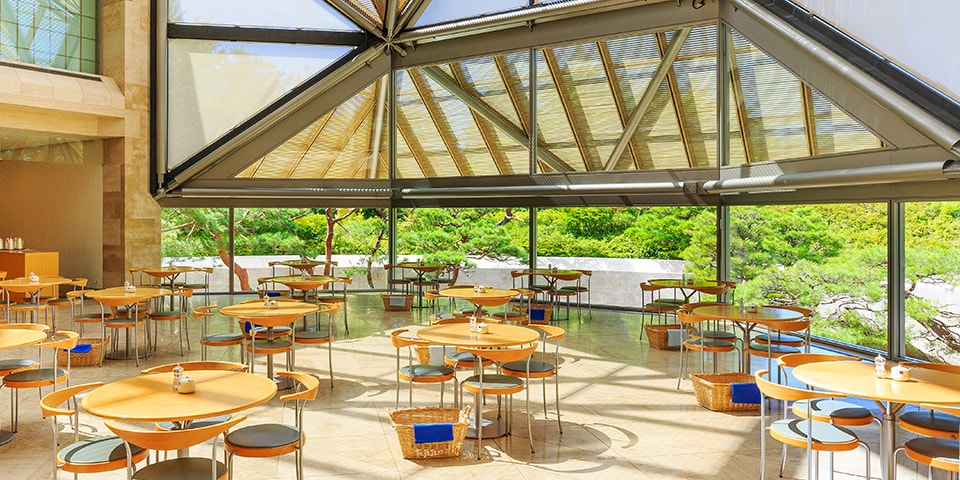
In keeping with the founder’s philosophy, the meals served at the museum’s café and restaurant are prepared exclusively with ingredients grown using natural farming methods, free from pesticides and fertilisers. A simple lunch enjoyed here extends the visual delight to the palate, completing a sense of true rest and purification. Completely isolated from the noise of the city, the Miho Museum will serve as the ultimate paradise on earth for those who wish to embrace the tranquillity offered by nature and art with their whole being.
[Travel Info]
- Location: 300 Momodani, Shigaraki-cho, Koka-shi, Shiga 529-1814, Japan
- Architect: I.M. Pei
- Operated by: Shumei Culture Foundation
- Tip: It takes approximately 50 minutes by bus from Kyoto Station. Bookings are extremely competitive during the cherry blossom and autumn foliage seasons, so be sure to check availability well in advance. As the centre is often closed during the winter months, it is essential to check the website before visiting.