'That very chair' in Paris
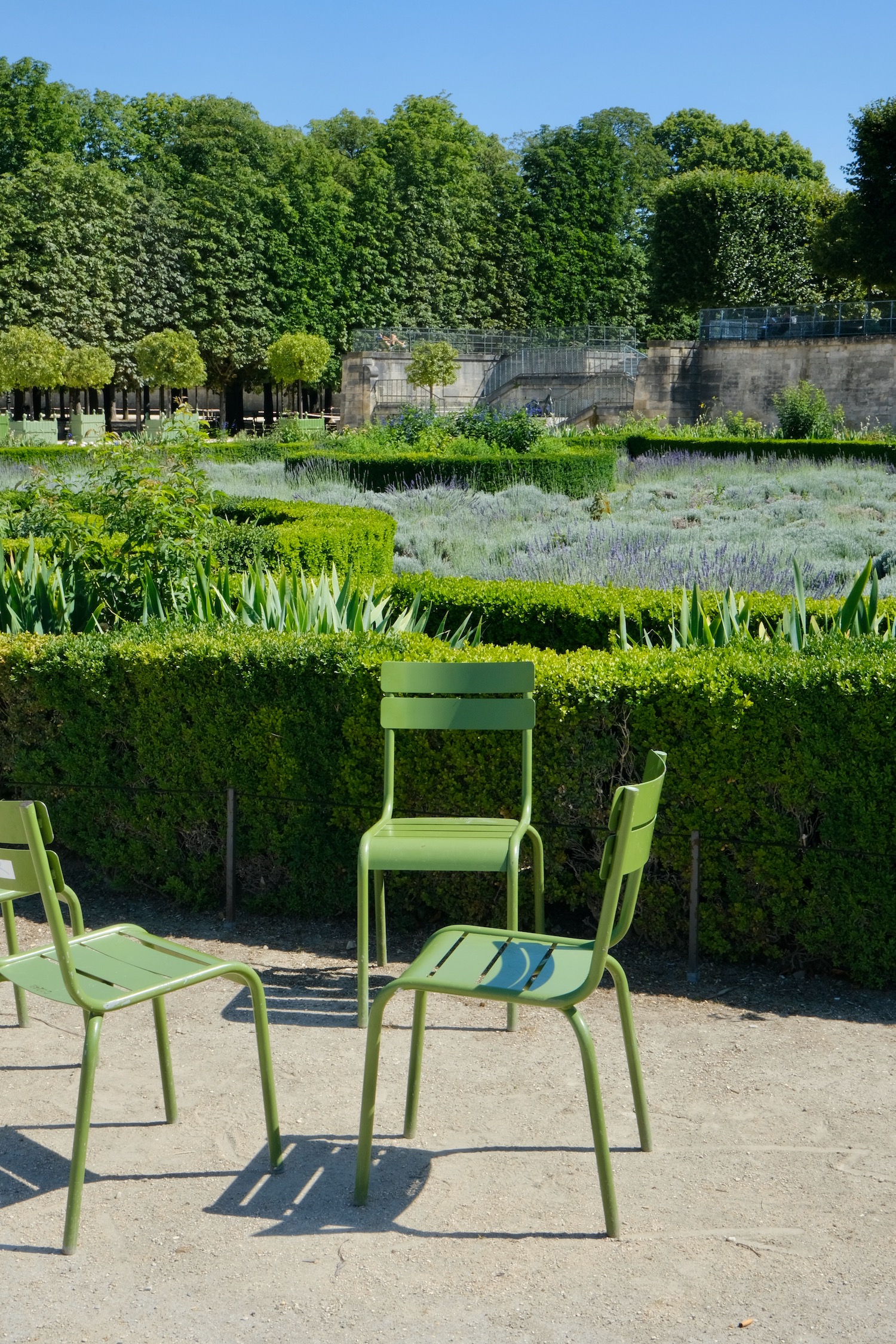
The Tuileries Garden (Jardin des Tuileries) makes people stop, sit down and, ultimately, relax. The air there seems to flow at a particularly slow pace, an illusion likely created by the green metal chairs dotted throughout the garden. Simply leaning back against the chair and basking in the gentle sunlight is enough to fully convey the romance of Paris.
Blended into the daily lives of Parisians, these green chairs transcend mere public furniture to occupy a significant place in design, nourishing the very souls of the city’s inhabitants.

1923: The Legacy of an Anonymous Master
The origins of this enchanting scene date back to 1923. Commissioned by the French Senate (Sénat), these chairs were first produced under the name ‘Sénat chairs’ and began to fill Paris’s public spaces. Interestingly, the identity of the original designer and manufacturer of this design, which has become the face of the city, remains shrouded in mystery. These iron chairs, left behind by an anonymous master, have quietly endured Paris’s four seasons over the past century, presenting travellers from around the world with the archetype of ‘the most Parisian of rests’.

RAL 6013: The Distinctive Colour That Defines Paris
By the 1990s, as the replacement of ageing chairs became urgent, Fermob, the renowned French outdoor furniture brand, stepped in as the saviour. They took over the production rights for the original Sena chair and perfected that distinctive green hue we are all familiar with. Known as ‘RAL 6013’, this sage green colour has become more than just a paint; it has evolved into a visual code symbolising the very essence of Parisian garden culture. Shining warmly in the sunlight and adding a calm depth when wet, this colour creates a perfect aesthetic harmony against the backdrop of Paris’s grey buildings.
Frédéric Sofia and the Birth of ‘Luxembourg’
The chairs we commonly see today in the Tuileries Garden and throughout the city are, in fact, a modern variation created in the early 2000s at the request of the Paris Parks Department. Designer Frédéric Sofia was tasked with reinterpreting the classic Sena chair for the modern user.
The result is the current ‘Luxembourg’ model. To enhance ergonomic comfort, Sofia designed new armrests and curved slats, thereby reducing the chair’s former bulkiness. Above all, the innovation lay in the adoption of lightweight aluminium instead of heavy iron, significantly reducing the weight. With enhanced functionality and comfort, this model has evolved to be even more sophisticated, perfectly suited to the vast spaces of the Tuileries Garden.

Sénat vs Luxembourg: How to Tell Them Apart
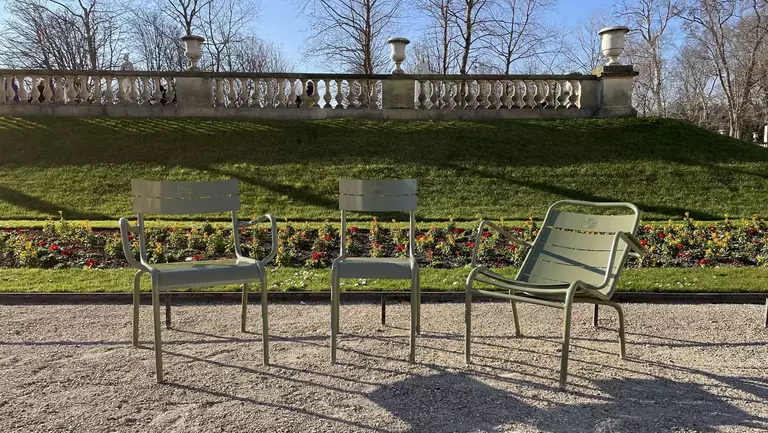
If you come across a chair in a Parisian park and wonder whether it is the original ‘Sénat’ or the refined ‘Luxembourg’ version, try lifting it slightly or checking its location.
Made of iron and boasting a substantial weight, the ‘Sénat’ is so sturdy that it is difficult to lift (standard chair 7.3kg, armchair 9.6kg, recliner 13.5kg). Conversely, if you can easily move it with one hand to catch the sun from your preferred angle, it is the aluminium ‘Luxembourg’ (chair 3.8kg, armchair 4.2kg, recliner 5.9kg).
The Sena chair, an early model, now retains its grandeur almost exclusively in the Jardin du Luxembourg. In contrast, the comfortable, curved chairs found in parks throughout Paris, including the Tuileries Garden, are generally modern Luxembourg models. If the Sena symbolises the classic authority and history of a century ago, the Luxembourg serves as a ‘tool for relaxation’ optimised for the human anatomy of the modern era.
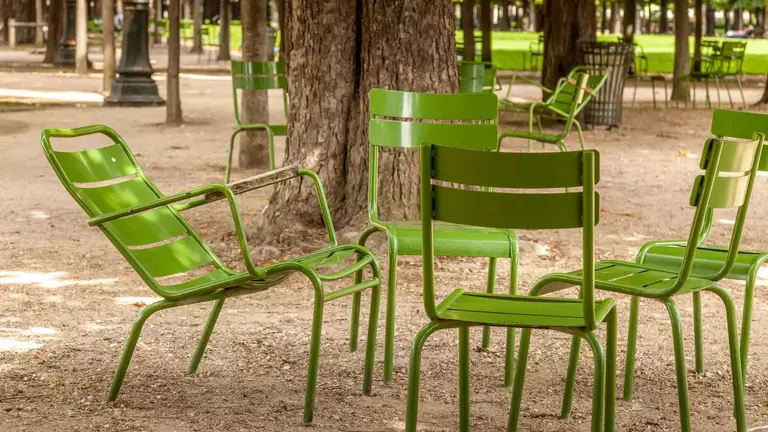
Perhaps travelling in Paris means simply surrendering oneself to these green chairs and watching time pass by. The next time you stroll through a Parisian garden, I invite you to pause for a moment and consider whether the chair you are sitting on embodies a century of history (Sénat) or a modern sensibility (Luxembourg). The moment you realise the difference, the romance of Paris will come alive in a whole new dimension.