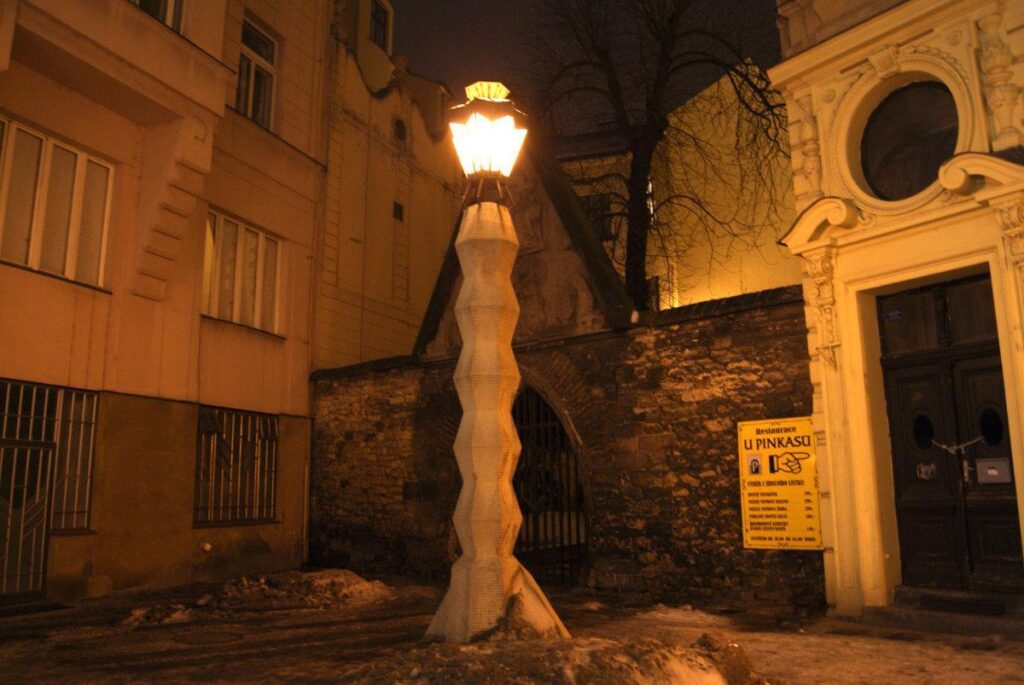
Cubist street lamps illuminating the city’s corners
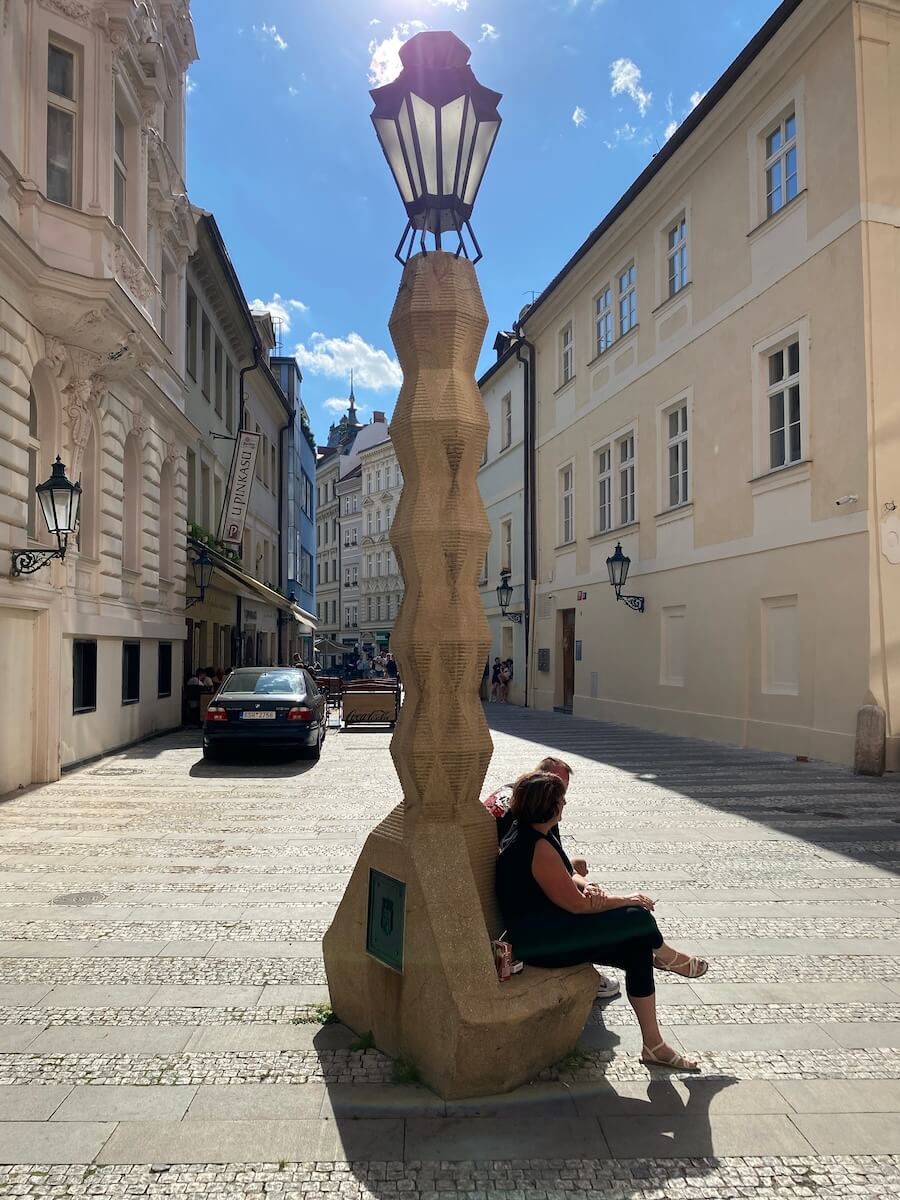
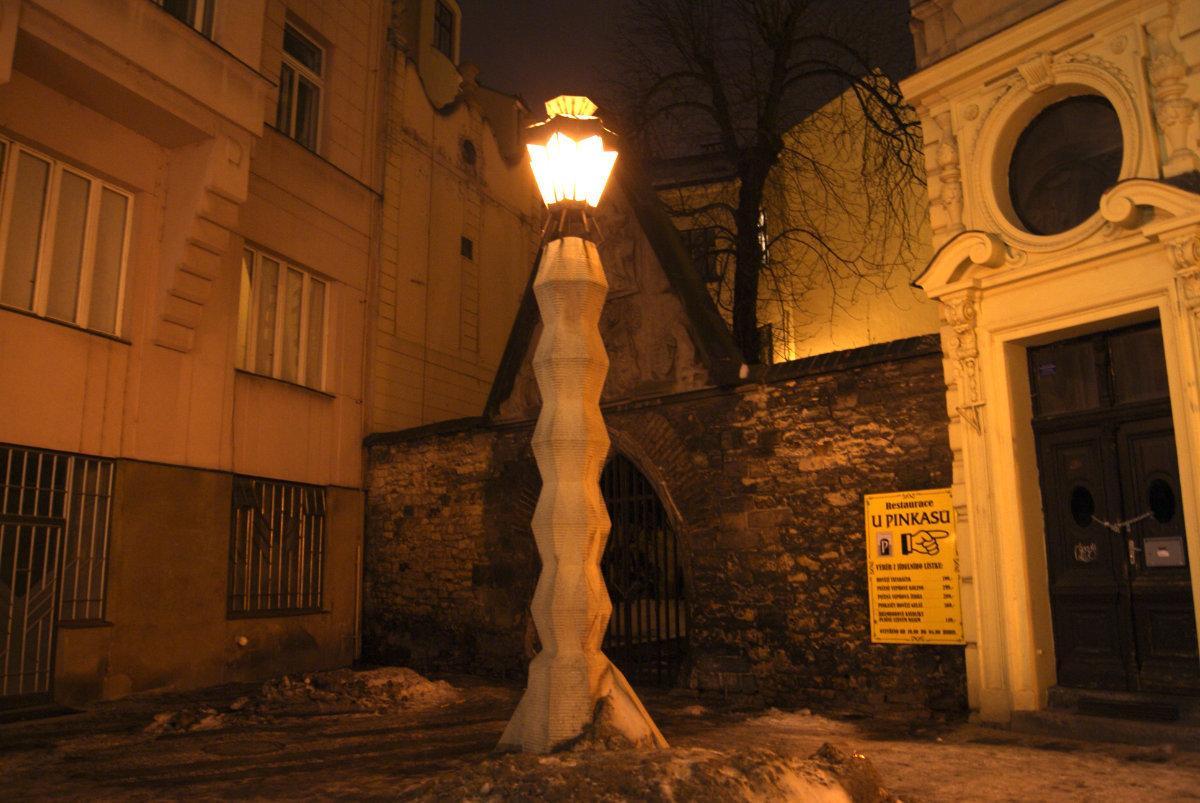
In the quaint streets of Prague, often referred to as the ‘Roof of Europe’, a structure of bizarre, avant-garde design stands on a corner of Jungmann Square. A place where Picasso’s geometric fragments, the sort one might expect to find only on a canvas, have become cold concrete pillars illuminating the night. Through the world’s only Cubist street lamps, we shed light on the eternal, angular traces left on the city by the briefest of artistic movements.

Prague: Bringing Cubism to the Streets
In the early 20th century, the Cubist movement, centred in Paris, was a revolution that deconstructed the flatness of painting. Yet Prague was the only place to extend this revolution to architecture and everyday objects. Around 1912, architect Vlastislav Hofman undertook an experiment to transplant the sharp angles and multifaceted structures found in paintings onto public fixtures.
The resulting street lamp was a ‘geometric manifesto’ that directly challenged the soft, Art Nouveau curves prevalent at the time. It was a landmark event that demonstrated how a city’s street lamp could transcend its role as a mere tool for dispelling darkness to become a three-dimensional sculpture in its own right.

The aesthetics of form and materiality shaped by concrete
This street lamp possesses a unique aesthetic value in the combination of its materials and form. The column features a zigzag cross-section that tapers as it rises. These serrated curves create a striking contrast of light and shadow when they intersect, evoking the illusion of rhythmic movement despite the object being stationary.
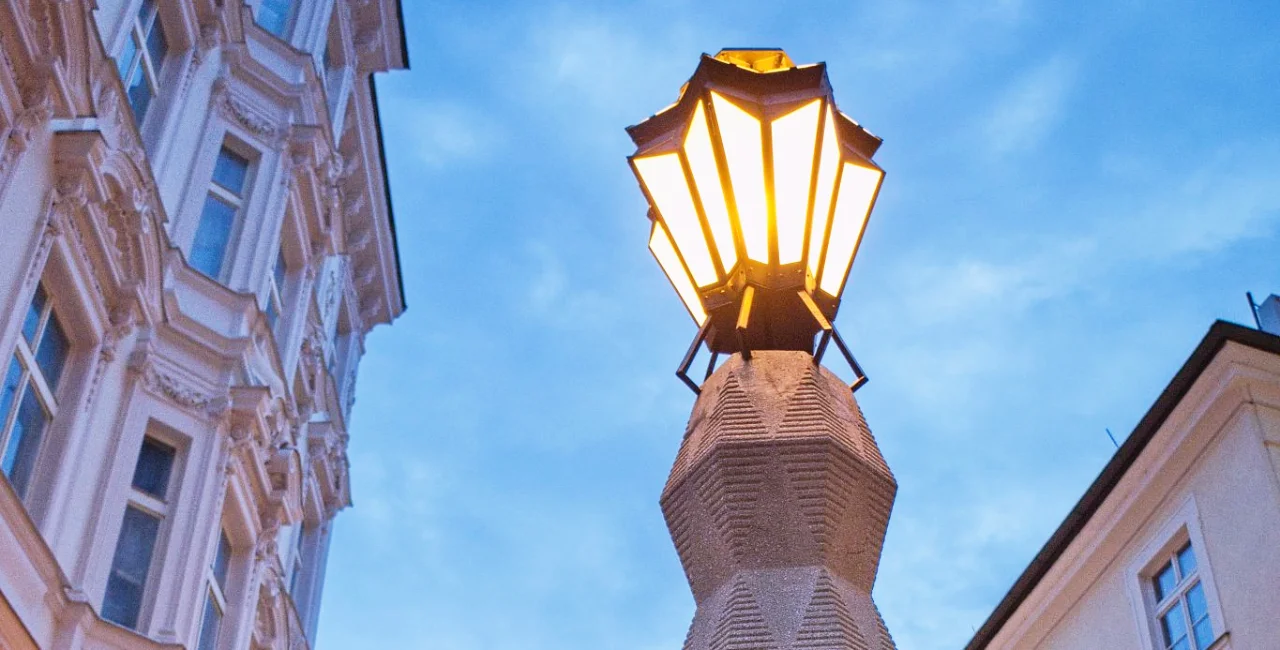
Utilising concrete—a material that was revolutionary for its time—the design embodies the sharp edges characteristic of Cubism. The primal yet modern energy that emanates when this raw material meets geometric sophistication remains avant-garde even a century later. Furthermore, the upper section supporting the light fixture evokes the cross-section of a finely cut crystal or gemstone. When night falls and the lights are switched on, the light filtering through the three-dimensional glass scatters angular fragments across the street, bathing the city in ‘Cubism of Light’.
The smallest yet most striking landmark
Although Prague is lined with majestic castles and magnificent cathedrals, the reason this small street lamp catches the eye of art lovers lies in its ‘condensation of artistic conviction’. Although the Czech Cubist architectural movement was short-lived, this street lamp speaks to the dignity that art bestows when it escapes the confines of museums and seeps into the everyday lives of citizens.
Comfort offered by an angular gaze
Prague’s Cubist street lamps ask us: how might the city’s character change if the soul of an artist were to inhabit the mundane public fixtures we encounter every day?
The order of clear lines and the three-dimensional tension that smooth curves cannot provide offer us, living in a complex modern society, a clear visual solace. Standing alone, shining upon Prague’s old paving stones, this angular pillar quietly demonstrates that luxury begins not with grandiose scale, but with an ‘uncompromising, original aesthetic’.