Miracles born of futile labour: Francis Alÿs
We live in an age of results and efficiency. We believe that the output must clearly justify the input, and that every effort should be met with a fair reward.
However, the Belgian artist Francis Alÿs (b. 1959) challenges this firmly held belief. Through the extremely simple acts of ‘walking’ and ‘repetition’, he poses the question of how a futile labour that leaves nothing behind can become a miracle that changes the world.
The question left by melted ice: ‘Sometimes Making Something Leads to Nothing’
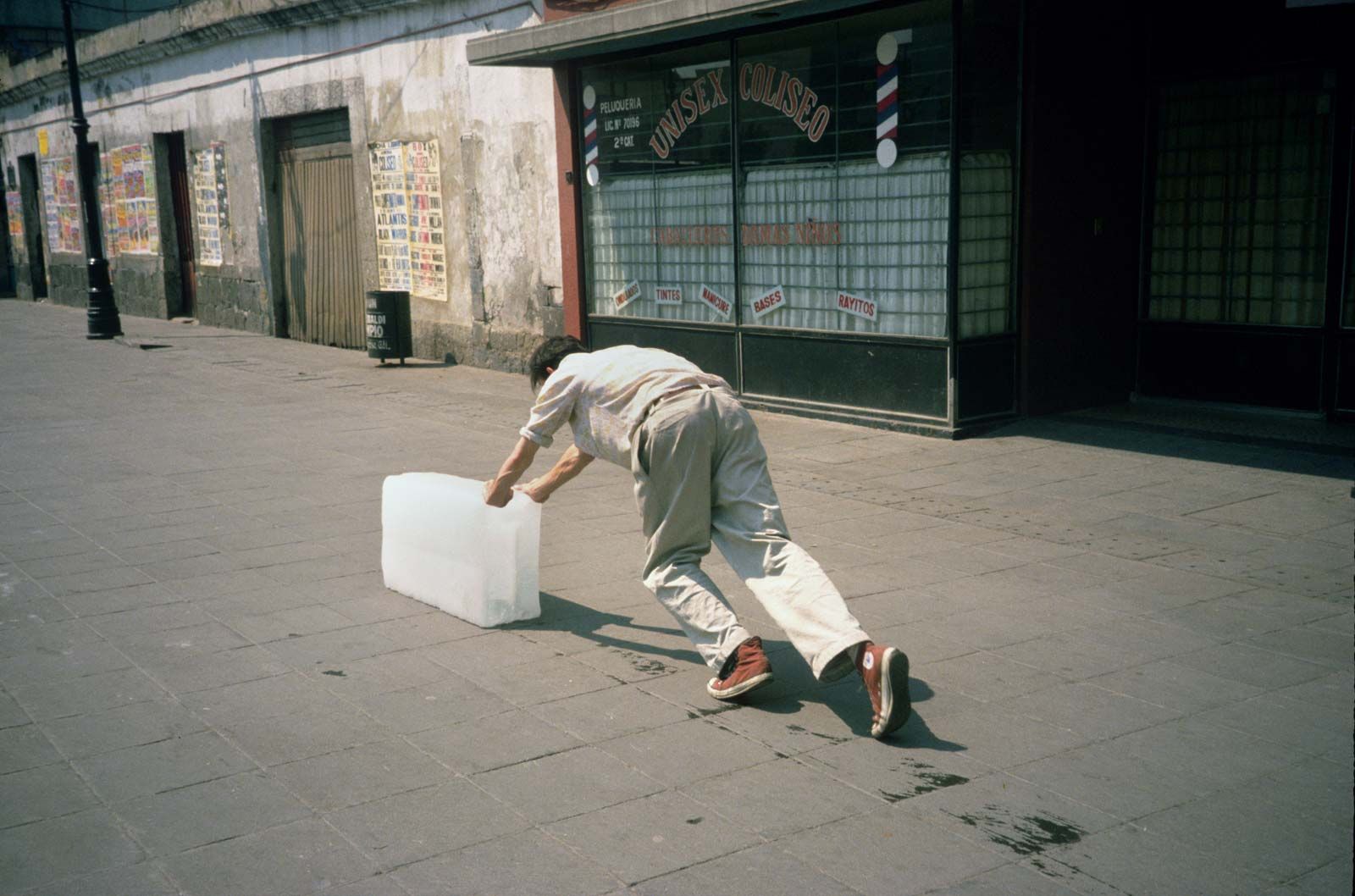
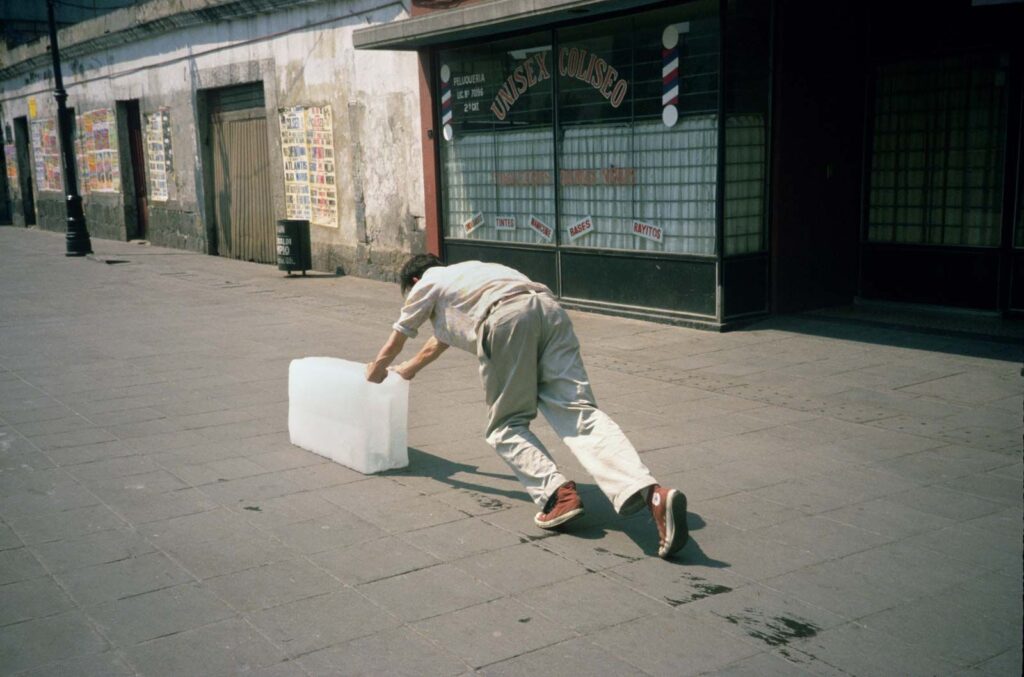
In 1997, on the sweltering streets of Mexico City, a man began pushing a massive block of ice. The title of this work is ‘Sometimes Making Something Leads to Nothing’.
He traverses the city for a full nine hours until the ice has completely melted, leaving not even a single drop of water behind. The process of the once-massive block of ice gradually shrinking and eventually vanishing without a trace is the most elegant yet poignant critique of the ‘productivity’ imposed by modern society.
The ice has melted away, leaving nothing behind. Yet, through this seemingly meaningless nine-hour journey, Alis emphasises the fact that ‘sometimes the act of creating something can ultimately amount to nothing’. To us, who are buried in goal-oriented lives, this serves as a reminder of the value of the ‘process of existing and moving’ itself, rather than the result.
When Faith Moves Mountains: The Myth of 500 People
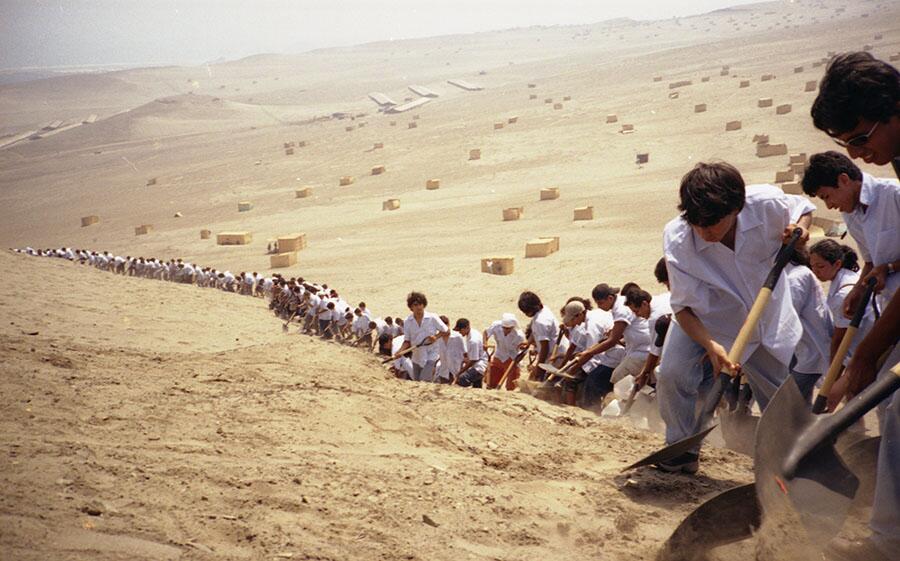
In 2002, on the outskirts of Lima, Peru, atop a massive sand dune, a performance took place that shook the global art world. It was ‘When Faith Moves Mountains’, inspired by a biblical passage.
Alis handed a shovel to each of the 500 volunteers and had them line up in a row. Their task was extremely simple: to scoop up sand from the massive dune with their shovels and move it one step backwards.
.jpg?sha=39a52408963dc46f)
After 500 people spent the entire day moving sand, the massive dune, 500 metres in diameter, had shifted a mere 10 centimetres from its original position. Although a physically insignificant change, this act signified the birth of a ‘social myth’.
To the cynical question, ‘Is all that effort really worth it just to move a mere 10 cm?’, Alis responds with art. The fact is that those 10 cm only shifted when the collective ‘belief’ of 500 people came together. The power of collective will, which can never be measured by the yardstick of efficiency, symbolises humanity’s hope—a hope that refuses to give up even amidst desperate social circumstances.
Steps that erase boundaries: The Green Line
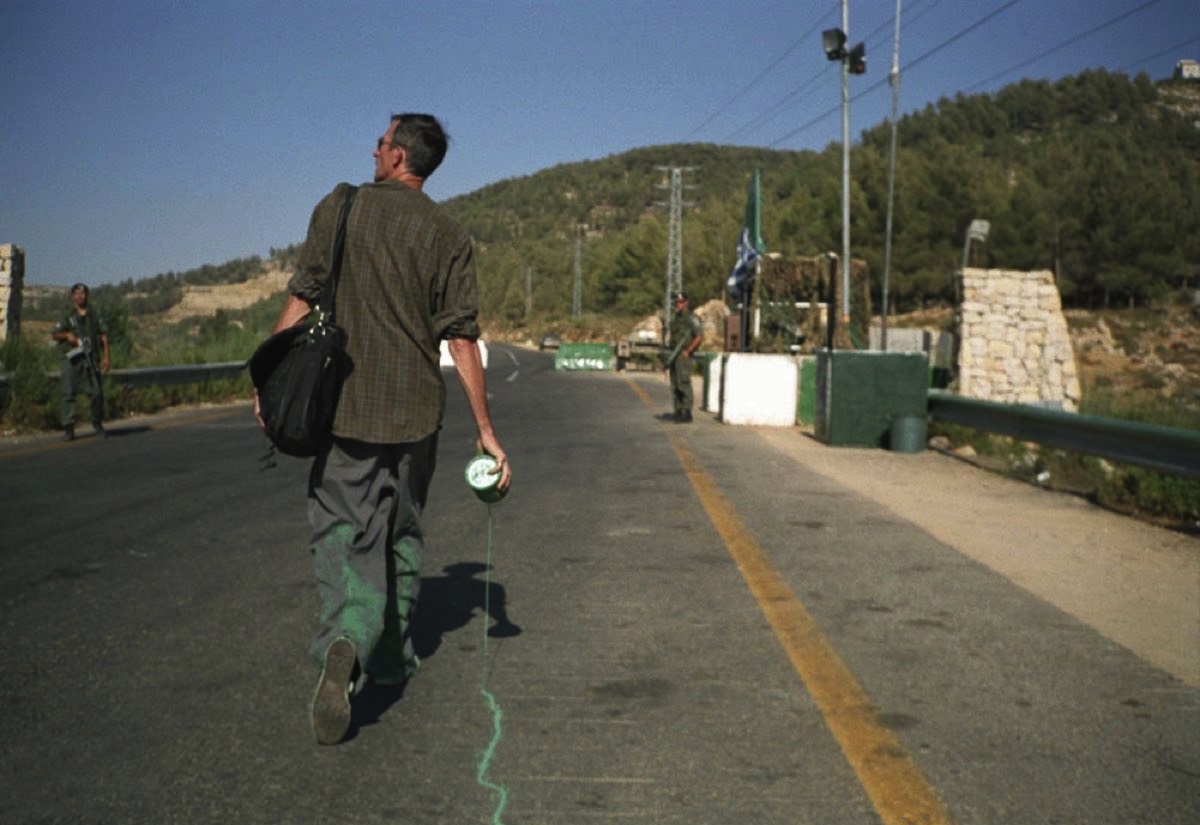
For Alis, ‘walking’ is not merely an act of movement, but the most primal artistic tool for observing the world and redrawing maps. In 2004, carrying a leaky paint can, she walked along the ‘Green Line’, the ceasefire line between Israel and Jordan. Wherever she passed, a line of green paint remained.
This simple performance transforms the cold political boundary, which existed only on maps, into the artist’s physical experience and a tangible line. Through walking, she visually exposed the tragedy of territorial disputes and the futility of man-made barriers.
Epilogue: Why Must We Move Mountains?
Francis Alÿs’ work asks us: ‘What sand are you moving today?’
While the world urges us to prove our worth through achievements and numbers, Alÿs focuses on the drop of sweat in the moment the ice melts away, and the 500 hands clasped together to move a sand dune by 10 centimetres. Just because the results are not visible does not mean our efforts are meaningless. For it is only when that ‘meaningless toil’ is repeated that we finally come face to face with a vast truth that was previously unseen and discover the most solid miracle that sustains the world.