An organic space designed by Peter Zumthor: the David Geffen Gallery at LACMA
A silent masterpiece rising beneath the California sky
The heart of Los Angeles, the city of light and modernism, has reached a monumental architectural turning point. This is because ‘The David Geffen Galleries’, the new heart of the Los Angeles County Museum of Art (LACMA), has finally opened its doors after a long wait.
The fact that this is the first public art museum on American soil designed by the Swiss master Peter Zumthor—hailed as the purest designer in the global architectural world—is enough to draw the attention of art collectors and architecture enthusiasts from around the globe to Wilshire Boulevard in LA.
A modest visionary builds a grand public art museum
Peter Zumthor is a figure who has primarily insisted on creating small-scale religious and non-commercial spaces that breathe in close harmony with nature, such as the Therme Vals spa in Vals, Switzerland, or the Bruder Klaus Field Chapel.
Given his traditional approach of exercising extreme restraint when it comes to large-scale commercial art museums or massive public projects, this LACMA project is viewed as a highly unusual and radical endeavour. Within a mega-project entangled with vast capital and complex public circulation patterns, the key point of interest for the global architectural community was how Peter Zumthor managed to maintain his characteristic phenomenological immersion and pure materiality.

David Geffen, the Hollywood titan with the world’s most valuable collection
David Geffen, whose name graces the museum, is a legendary American entertainment mogul and entrepreneur who founded Asylum Records and Geffen Records, and co-founded DreamWorks SKG with Steven Spielberg and others. Building on his unparalleled success in the cultural industry, he is renowned as an art lover who has amassed one of the most remarkable art collections currently owned by a single individual.
His private collection, which encompasses masterpieces by modern art giants such as Jackson Pollock, Willem de Kooning and Jasper Johns, is estimated to be worth over $2 billion and is regarded as the world’s most valuable private archive. Geffen has generously donated $150 million (approximately 200 billion won) to the LACMA expansion campaign, the largest single donation in the museum’s history, and the museum has named this vast new gallery in his honour to commemorate his philanthropic dedication.

Organic Concrete Spanning Wilshire
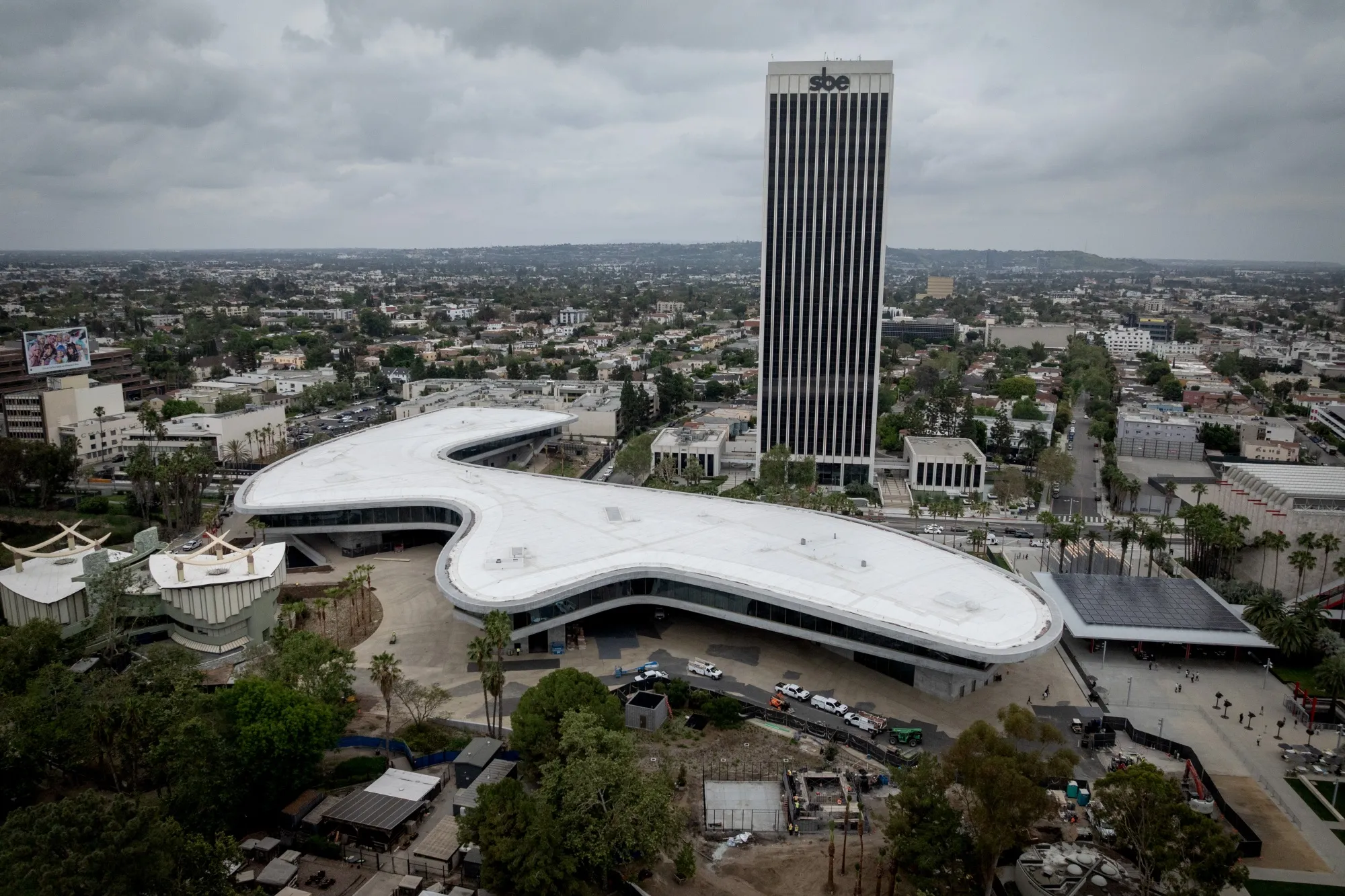
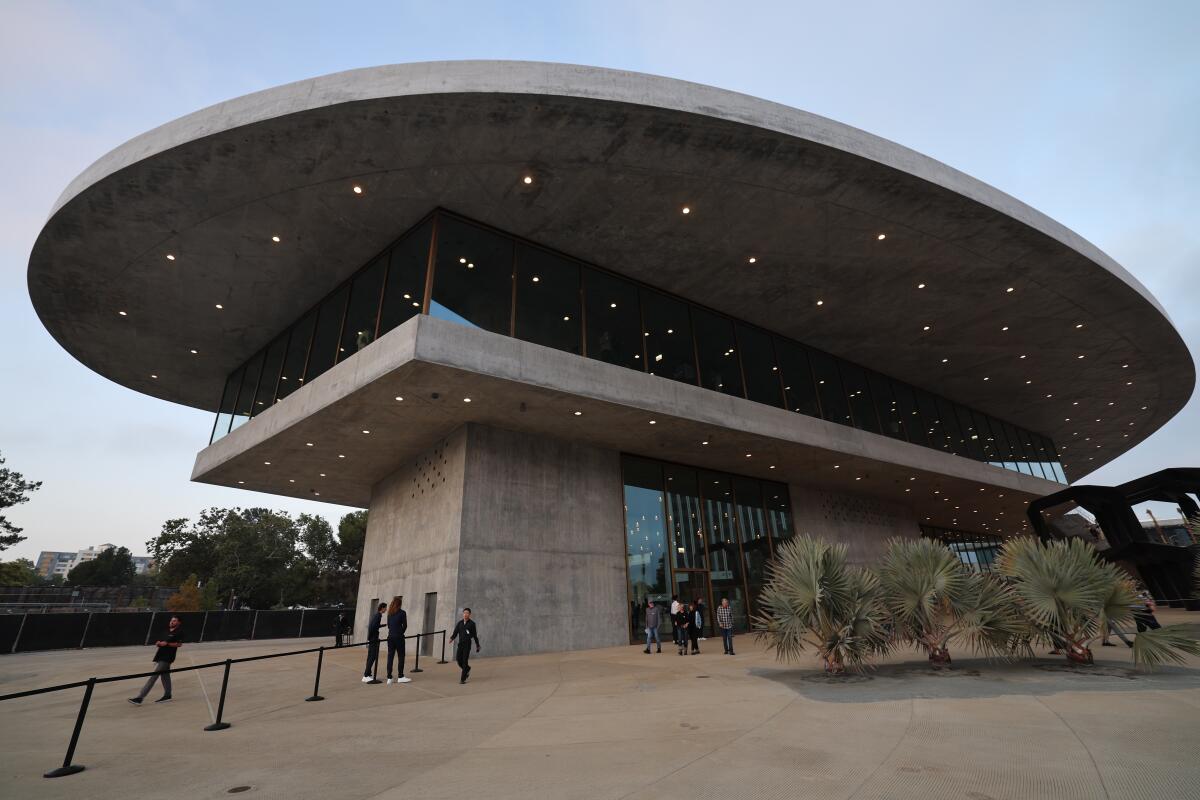
The most striking feature of this architecture lies in its flexible approach to the site. The museum takes the form of a structure floating above the ground, tracing soft curves like a giant amoeba or a lotus leaf on a pond.
- Floating Structure: Designed as a massive concrete mass raised above ground level, it provides pleasant shade and unobstructed views for the pedestrian space below.
- Glass façade: Full-height glazing runs along the uniquely curved exterior walls, allowing the dynamic urban landscape of Los Angeles to blend seamlessly with the artistic scenery within the museum.
- Horizontal Continuity: Rather than constructing a tall tower, a horizontally elongated structure was chosen to allow visitors to move along the circulation routes naturally, like flowing water, without experiencing vertical fatigue.
Imprints of Archaeology and Ecology: Mariana Castillo Deball’s Commissioned Work
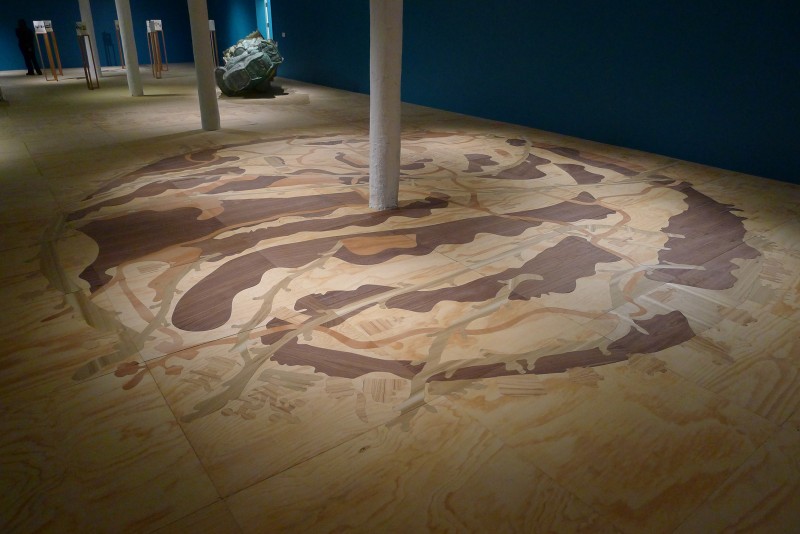
The most notable artistic achievement in this opening exhibition is ‘Feathered Changes’, a massive site-specific commission by the world-renowned Mexican artist Mariana Castillo Deball.
This monumental floor painting, covering approximately 75,000 square feet across the entire Plaza level of the museum, draws inspiration from the history of the museum site—which for thousands of years was a fertile wetland ecosystem—and the rich fossil archive discovered during the site’s development. Deball has carved massive lines into the ground by combining the technique of raking sand found in Japanese Zen gardens with concrete brushing techniques.

Visitors can see the footprints of coyotes, bears and raccoons, as well as the fragmented imagery of the ‘Feathered Serpent’, inspired by ancient Teotihuacan murals. In a sense, the very act of visitors walking through the plaza becomes a grand performative art that reintegrates and connects scattered ancient memories and ecosystems.
A Curation of Light and Shadow
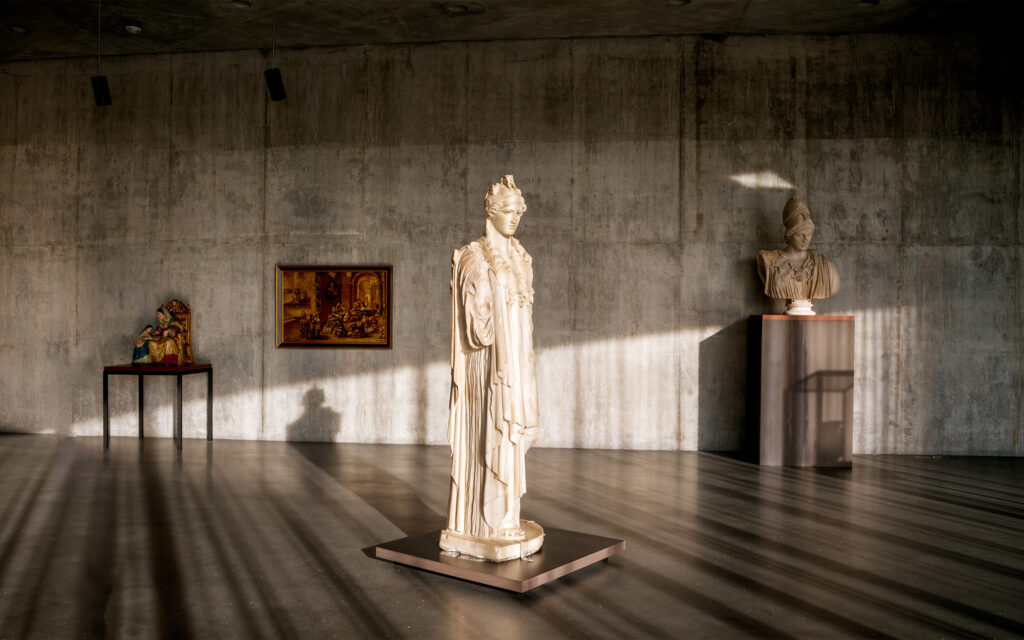
The moment visitors step inside the David Geffen Gallery, they are met with a completely new spatial experience. Chumtor has moved away from the solemn and bureaucratic exhibition methods of traditional art galleries, fostering a ‘non-hierarchical arrangement’ that transcends the boundaries of time and place.
The soft, off-white concrete walls strip away artificial opulence to support the intrinsic aura of the artworks, whilst the unfiltered, transparent natural light unique to Los Angeles, streaming in through the ceiling and side windows, constantly shifts the interior’s play of light and shadow.
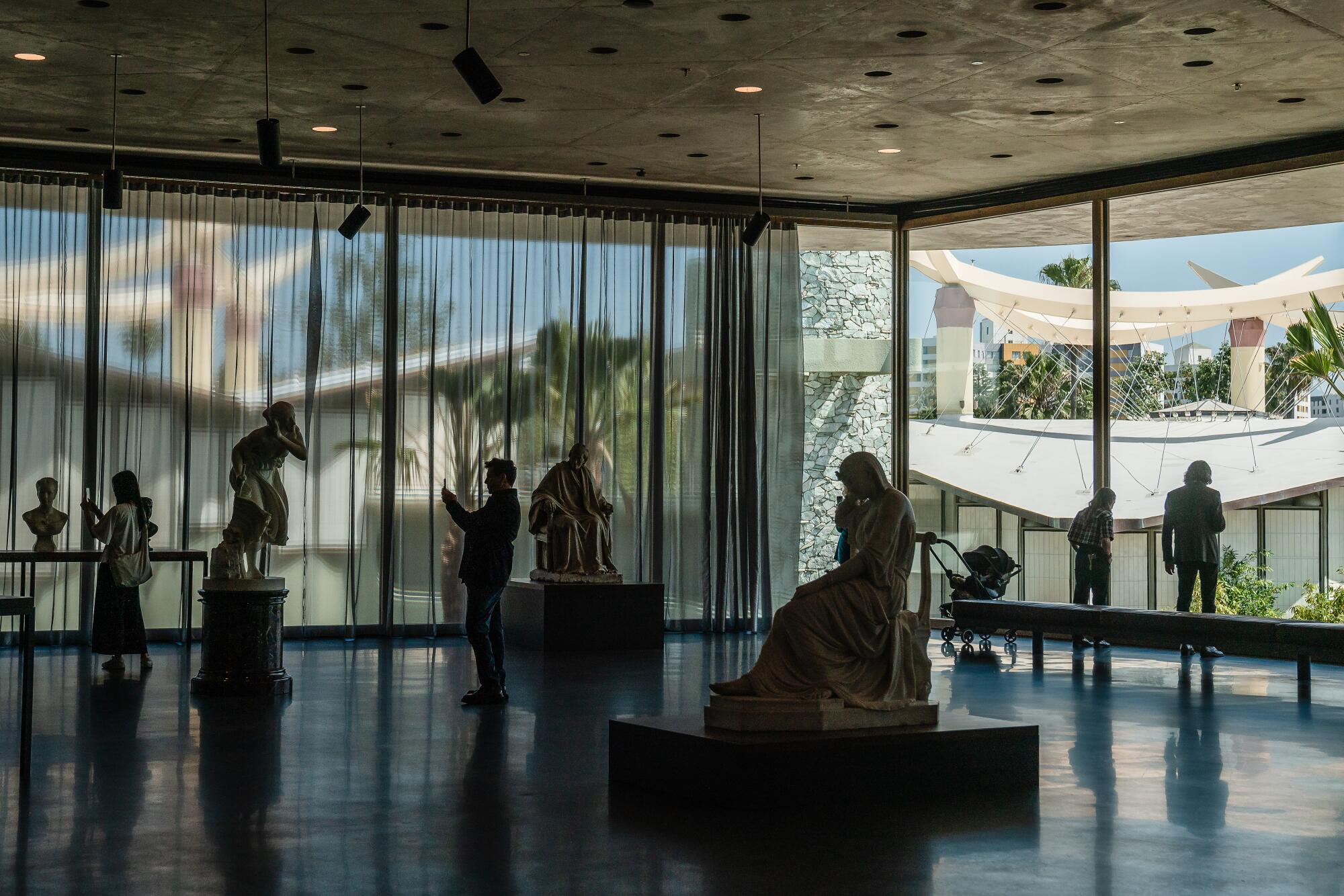
Even without ornate marble or metal decorations, the David Geffen Gallery exudes an unrivalled dignity through its extreme simplicity and the authenticity of its materials alone. This space, realised by Peter Zumthor, represents a sustainable future for contemporary art museum architecture and a sacred sanctuary where we can find solace amidst a deluge of materialism.