The Magician Who Sculpts Space: Anish Kapoor
A journey that began in a vast empty space
Born in Mumbai, India, in 1954, Anish Kapoor grew up to an Indian father and a Jewish mother. Having been raised amidst disparate cultures from an early age, he became naturally attuned to the concept of ‘breaking down boundaries’. And breaking down those boundaries would ultimately become the core of his artistic world.
In the mid-1970s, he moved to the UK, where he studied sculpture at Hornsey College of Art and Chelsea College of Art, embarking on his career as a professional artist. At the time, his sculptures, which incorporated Eastern philosophy and sensibilities into the Western art world, attracted attention as a novel approach. In particular, he developed a deep interest in the archetypal images of humanity proposed by the psychoanalyst Carl Jung.

Sculptures that turn the world upside down – between presence and absence
When encountering Kapoor’s works, people are often left perplexed. ‘Is this a sculpture?’ ‘Is it empty or full?’ His works transcend physical form, conveying both visual illusion and conceptual depth simultaneously.
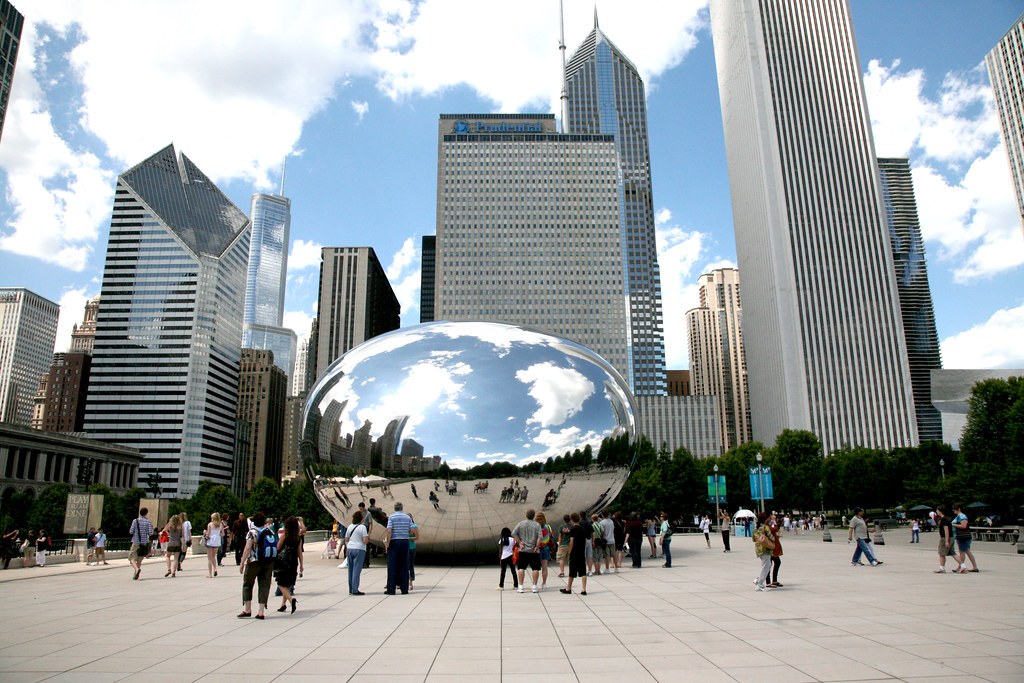
His signature piece, ‘Cloud Gate’, also known as ‘The Bean’, is the work that established him as a world-renowned artist. Installed in the heart of Chicago’s Millennium Park, this gleaming, kidney-shaped sculpture reflects the sky, the city and the people, creating an ever-changing landscape. Never the same for a single moment, this work is not merely a structure, but a living entity in which people and space are in constant dialogue.
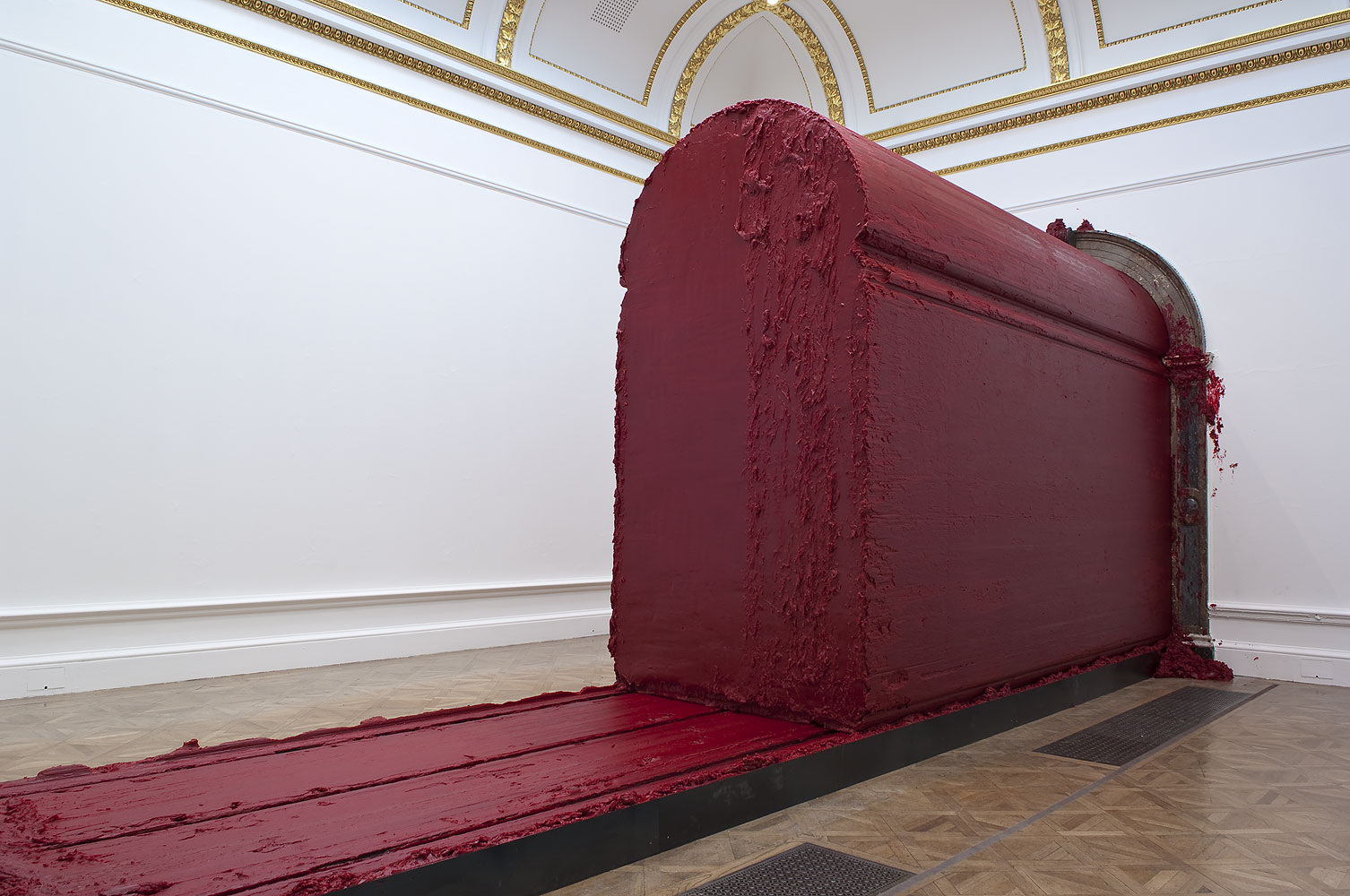
In contrast, his other iconic work, ‘Svayambhu’, depicts a massive lump of red wax passing through a narrow doorway, leaving a trail behind. Viewers are overwhelmed by the intense imagery, which seems to oozing with blood and flesh. Through his work, Kapoor has sculpted the ‘passage of time’.
A black hole that swallows light, and controversy
Anish Kapoor’s challenge did not stop there. He wanted to get his hands on ‘the blackest colour that swallows light’. And finally, by securing exclusive rights to ‘Vantablack’, he found himself at the centre of controversy.
Vantablack is the darkest substance in the world, absorbing 99.965% of light, and sculptures painted with it create the illusion that dimensions have vanished. However, as he gained exclusive rights to this colour, other artists began to protest. In response, another British artist, Stuart Semple, unveiled ‘The Pinkest Pink’, a colour available to everyone, and the controversy continued.
You can read more about this controversy in the article below.
When Sculpture Meets Architecture – Anish Kapoor’s Future
His works now go beyond mere sculpture, merging with architecture to become part of the city. His pieces, which utilise curves, reflections and depth, are evolving into spaces where people can linger, experience and reflect. What he creates is not merely a physical object, but a ‘sensory experience’. The moment we stand before his sculptures, we feel as though we have stepped out of an ordinary space and passed through a door into a new dimension.
Anish Kapoor is renowned as an artist who moves freely between the realms of architecture, sculpture and painting.
Is it a painting? A sculpture? Or a building? To visitors pondering this,
You must be very curious about the appearance of the wall on which this three-metre-deep cavity was created. The museum reportedly erected a temporary wall to install
“A sculpture is not merely an object. It has the power to transform space and alter people’s experiences.” – Anish Kapoor