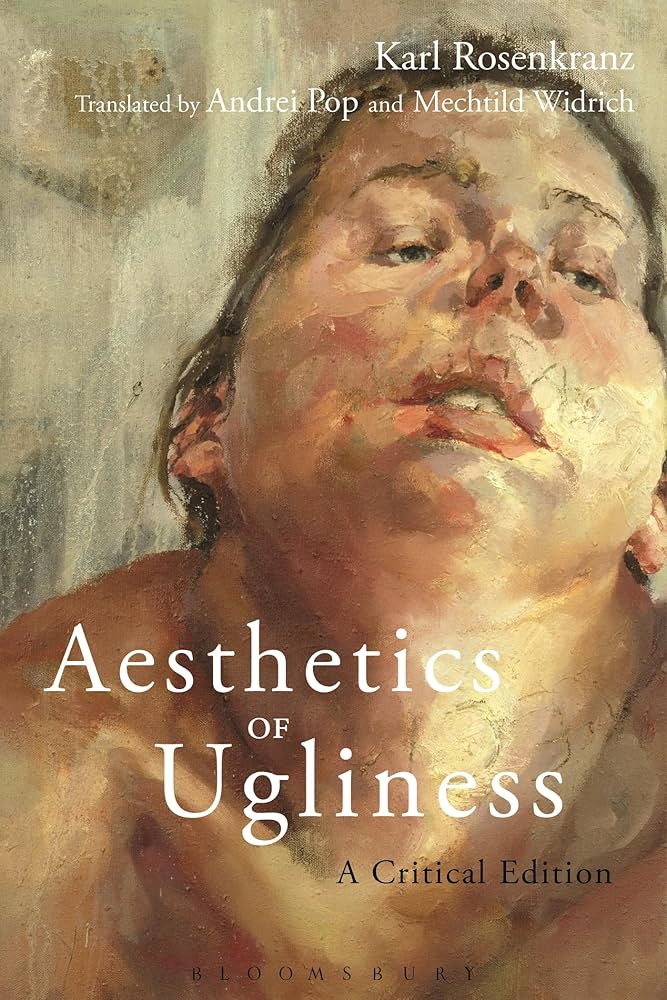
The Aesthetics of Ugliness – Karl Rosenkranz
In this book, the nineteenth-century philosopher Rosenkranz introduced ugliness as an object of ‘the study of beauty’—that is, aesthetics. In aesthetics, which seeks to answer the question of what makes something ‘beautiful’, he introduced the question: ‘What makes something “ugly”?’
Let us examine the arguments of the German philosopher Karl Rosenkranz, who expanded the scope of aesthetics by incorporating the concept of ‘the ugly’, which had previously been excluded from the discipline.

Baumgarten, who pioneered the field of aesthetics in the 18th century, argued that ‘the aim of aesthetics is the perfection of sensory perception itself. Consequently, the imperfection of sensory perception—that is, the ugly—must be avoided’. Kant, the Prussian philosopher who laid the foundations of German idealism, also adhered to an academic tradition within formal aesthetics that dealt solely with beauty whilst excluding the ‘ugly’.
Rosencrantz, who began his university studies in 1824 whilst living with his uncle in Berlin, transferred to the University of Halle in 1826 to attend lectures on Hegel’s philosophy. Hegel’s philosophy steered his fundamental Romantic worldview in a classical and idealistic direction.
Over a period of more than 40 years, until 1879, Rosenkranz reinterpreted Hegelian philosophy and established his own philosophy whilst experiencing the period of social and political revolution and upheaval that swept across Europe, centred on France and Germany.
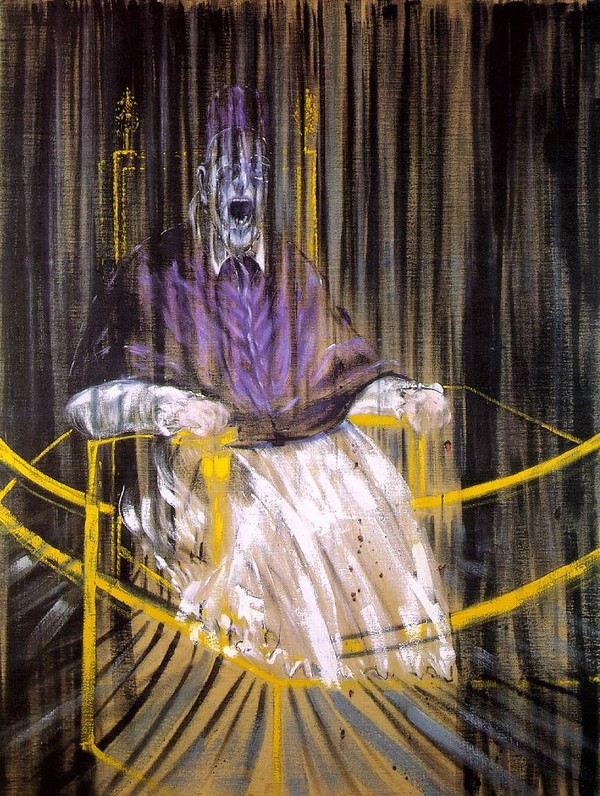
The Perfection of Beauty, Ugliness
Straddling the divide between Romanticism and Classical Idealism, Rosenkranz sought to achieve the perfection of aesthetics by incorporating ‘the ugly’—the relative concept of beauty—as an indispensable part of aesthetics. This encompassed informality, imprecision, the vulgar and the base. On this basis, he also interpreted the ‘ugly’ social phenomena of the mid-19th century, arising from urbanisation, within the framework of aesthetics.
In his work published in 1853, Rosenkranz examined the dialectical relationship between beauty and ugliness, identifying ugliness as an essential element of true beauty. In other words, he argued that to achieve a more complete form of beauty, one must pass through the stage of ugliness.
Of course, there are limitations. This is because ugliness, like beauty, cannot exist independently in its own right. It exists solely as the relative concept of beauty, as the antithesis of beauty (Antithese: a state that emerges anew after the original state has been negated).
A relationship in which neither can exist without the other – ugliness and beauty
He stated, ‘Ugliness exists only when beauty exists, for beauty constitutes the positive aspect of ugliness. If beauty did not exist, ugliness could never exist.’ Rosencrantz viewed ugliness not merely as something to be eliminated, but as an essential element that enriches both art and philosophy.
Do you consider ‘ugliness’ to be part of the realm of beauty?
He declares, ‘We are… in the very midst of ugliness.’ The complexity and diversity of this ugliness manifests in ‘countless forms’, ranging from the early stages—such as ‘deformity, grotesque shapes, baseness and the horror of revulsion’—to ‘that immense monstrosity where the wickedness of hell bares its teeth and smiles at us’. Each of us bears ‘our own share’ of ‘the torments of hell’, and our emotions, eyes and ears encounter this hell in various ways. In particular, ‘the cultured person’ must often endure ‘indescribable suffering’ due to this ‘hell of beauty, the hell of evil, and the hell of reality’, which is why ‘grotesque and hideous forms’ in thousands of guises ‘fill the nobler senses with terror’.(The Aesthetics of the Grotesque, pp. 19–20)