The Tragic Love Story of Two Genius Sculptors: Auguste Rodin and Camille Claudel
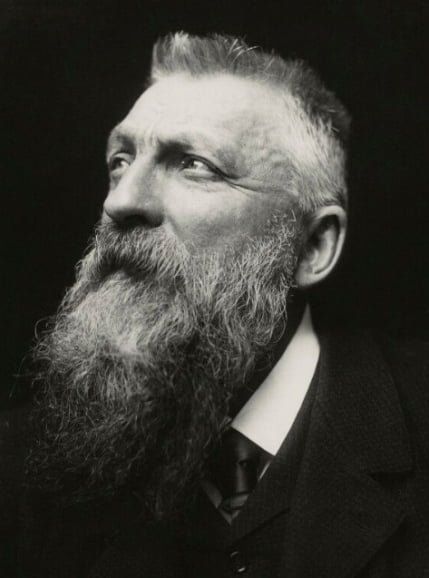
Auguste Rodin (1840–1917), a master who epitomised 19th-century French sculpture, and his pupil and lover, Camille Claudel (1864–1943).
The two shared a passionate love and an artistic rapport, yet their relationship ultimately ended in tragic ruin.
The fateful encounter of two genius sculptors
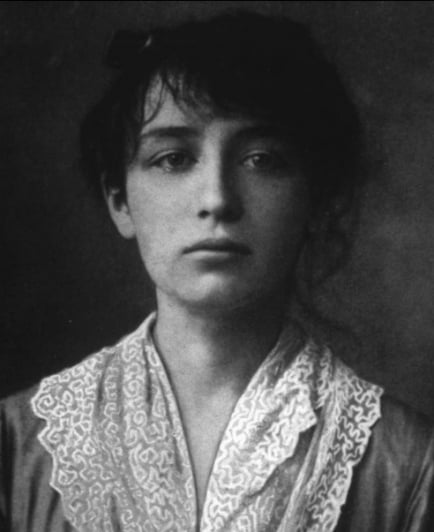
Paris, France, in the 1880s. At the age of 17, Camille Claudel entered the art world, demonstrating exceptional talent for sculpture. Although it was impossible for women to enrol in art schools at the time, she learnt sculpture in a private studio and eventually joined Auguste Rodin’s workshop, becoming his assistant.
Rodin recognised Clodelle’s genius at a glance and, whilst teaching her sculpting techniques, began to share a deep artistic bond with her.
However, in 1884, their relationship evolved beyond that of mere teacher and pupil into a passionate love affair. Camille was twenty years old, whilst Rodin was forty-three.

Love and Artistic Rivalry
The two deeply influenced each other’s work, and Camille Claudel played an active role in the creation of Rodin’s masterpieces, *The Gates of Hell* and *The Burghers of Calais*. She complemented Rodin’s work and, at times, even sculpted parts of the pieces herself.
However, Camille Claudel found it increasingly difficult to bear the fact that her own work was overshadowed by Rodin’s fame. Although she was herself an outstanding sculptor, she struggled to gain recognition as an independent figure in the art world simply because she was a woman, and people viewed her merely as ‘Rodin’s assistant’.
She longed to establish her own artistic identity, and eventually her relationship with Rodin became fraught with conflict.

Rodin’s Plagiarism
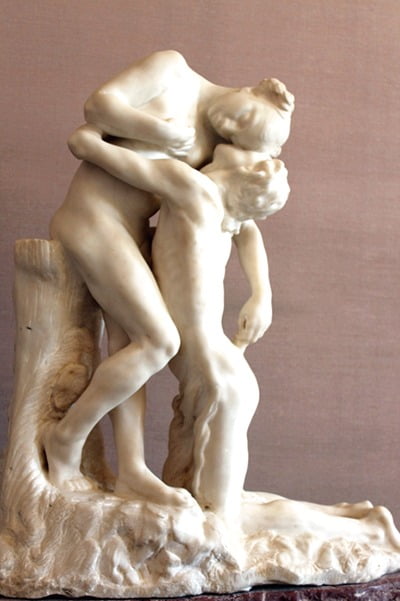
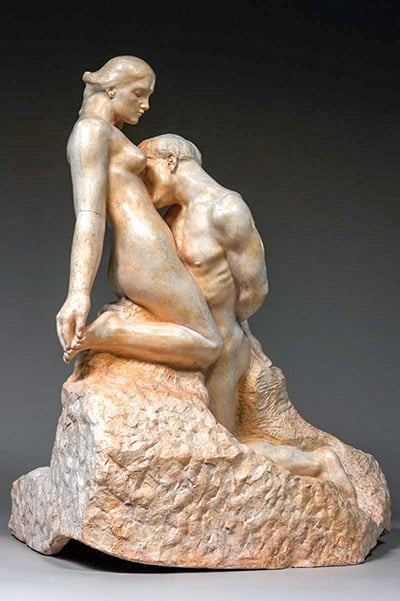
Rodin was also jealous of Claudel’s talent. An incident occurred that caused a major rift between the two: a scandal arose alleging that Rodin had plagiarised Claudel’s work. The works in question were Claudel’s ‘Sakuntala’ (1888) and Rodin’s ‘The Eternal Idol’ (1898). They share similarities in their passionate energy and sensual poses.
Rodin was deeply anxious that the scandal would deal a severe blow to his reputation. He put pressure on Claudel to prevent her from exhibiting the work, thereby barely managing to quell the plagiarism allegations.
Rodin also interfered with Claudel’s creative process on one occasion. Claudel’s work *Middle Age* (1899) depicts a man being led away by one woman, whilst another woman begs him not to leave. It perfectly illustrates the relationship between Bœret, Rodin and Claudel. Fearing that this work would cause him great embarrassment, Rodin prevented Claudel from having it cast in bronze.
Subsequently, Claudel became pregnant with Rodin’s child, but she soon suffered a miscarriage. Rodin abandoned Claudel, failing to care for her even after her miscarriage. Ultimately, the two parted ways.
A tragic ending: Claudel confined to a mental hospital
In 1913, Camille Claudel’s family had her forcibly admitted to a mental asylum on the grounds of her mental state. Although some artists called for her release, her family kept her isolated from society until the very end, and she spent the last 30 years of her life in the asylum.
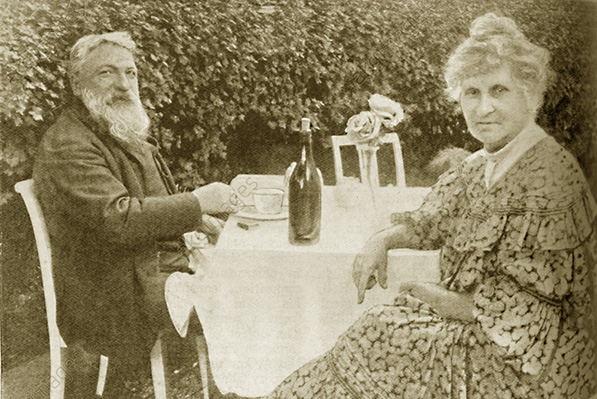
Meanwhile, Rodin continued to be hailed as France’s foremost sculptor and died of natural causes in 1917. His partner, Rose Beuret, passed away two weeks after him, and the two were buried side by side.
Camille Claudel, on the other hand, died alone in 1943, without even a visit from her family, and no marker was left on her grave.
Camille Claudel: the genius sculptor whose talent was recognised too late
It was not until decades after her death that Camille Claudel’s work began to be re-evaluated.
Today, her works reveal a sculptural world entirely distinct from that of Rodin; in particular, works such as ‘The Waltz (La Valse)’ and ‘Maturity (L’Âge Mûr)’ are regarded as masterpieces that powerfully convey her inner anguish.
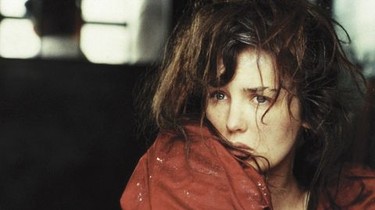
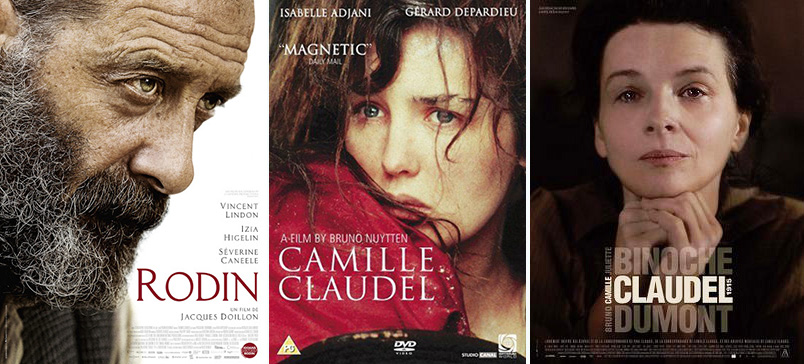
In 1988, she became widely known to the general public following the release of the film *Camille Claudel* (starring Isabelle Adjani), which was based on her life.
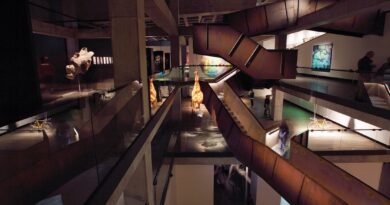
Today, her artistic achievements are once again being recognised, and the ‘Camille Claudel Museum’, named after her, has opened in Paris to exhibit her works.
Art, Love and Ruin
The story of Auguste Rodin and Camille Claudel is not merely a love story.
It was a tragic drama unfolding amidst artistic genius and passion, love and obsession, and the limitations of the era.
They inspired one another, yet were ultimately star-crossed lovers whose relationship led to their downfall.