Is the world we see real? The question posed by ‘Umwelt’
Your universe and mine may well be completely different
We all believe that we live within a single, objective space-time. But is that really the case?
According to concept of ‘Umwelt (subjective environment or perceptual world), proposed by the early 20th-century biologist Jakob von Uexküll, every living being on Earth inhabits its own unique, subjective universe, filtered through its own sensory organs. Recently, the contemporary art world has borrowed this fascinating ecological concept to experiment with new expansions of the senses, moving away from an anthropocentric perspective. We take an in-depth look at the essence of this subjective universe, which originated in the realm of science and has shaken up the world of art.

‘Umwelt’ Discovered in the World of Ticks
In 1934, the Estonian-born biologist Jakob von Uexküll gained a decisive insight into the ‘Umwelt’ theory whilst observing the life of a tiny creature—the ‘tick’—which possesses neither eyes nor ears.
Ticks cling to tree branches in the forest, waiting for weeks or even months without seeing a thing. Then, when they detect the chemical signal of ‘butyric acid’ (the odour of sweat and fat) emanating from the fur of a passing animal, they drop down. Once settled on the animal’s body, they follow the thermal signal of a ‘body temperature of 37°C’ to find hairless patches, and rely on the sensation of sucking blood to sustain their lives.
Wicksquire discovered a remarkable fact during this process: for ticks, the vast forest landscape visible to humans and the chirping of birds simply do not exist in their world. A tick’s universe is composed entirely of just three sensory signals: ① the smell of butyric acid, ② a temperature of 37°C, and ③ the taste of blood.
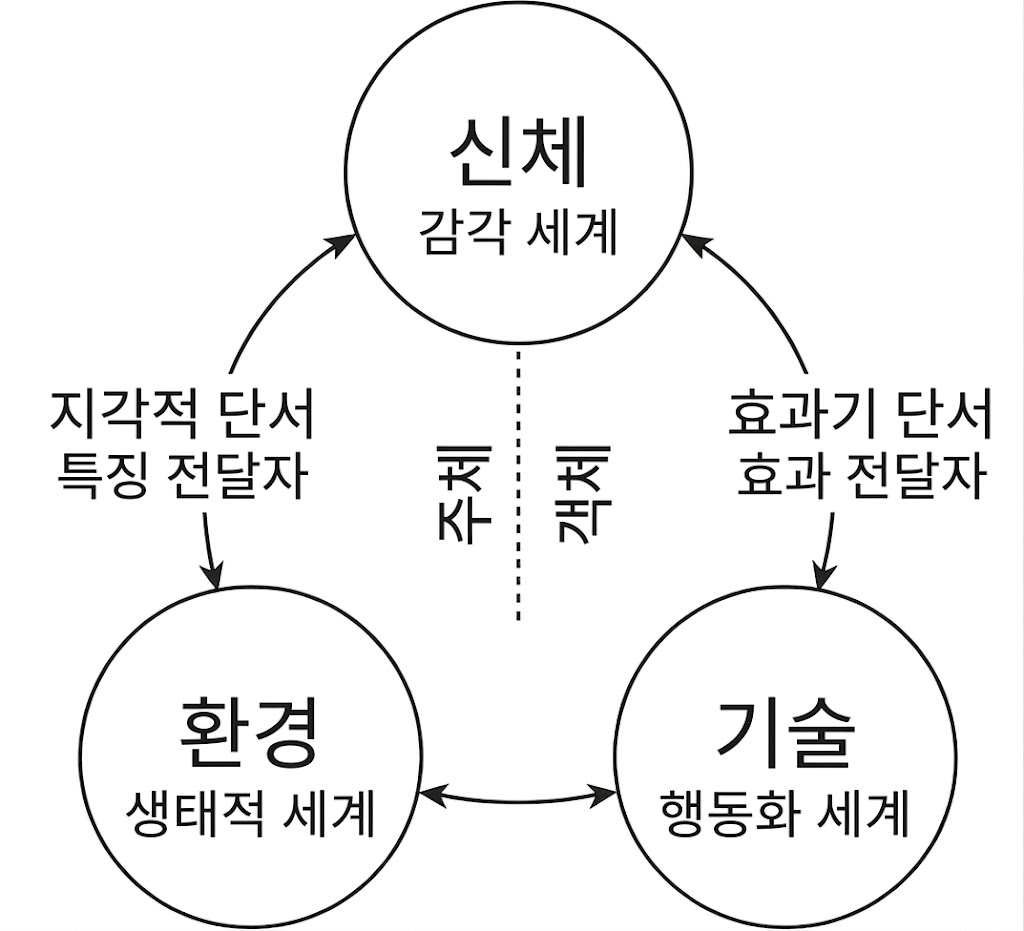
Wicksquare believed that living beings do not merely passively receive the external world, but rather create their own subjective universe by linking their unique ‘sensory functions’ with their ‘behavioural functions’. Every living being, in a sense, lives trapped within a spherical soap bubble (Umwelt) woven from its own senses.
Philosophical and artistic significance that challenges anthropocentrism
The concept of the ‘Umwelt’, which originated from the observation of a tiny mite, left a profound mark not only on science but also on the worlds of philosophy, literature and art. This was because it deconstructed the ‘anthropocentric, monistic worldview’ that humanity had taken for granted.
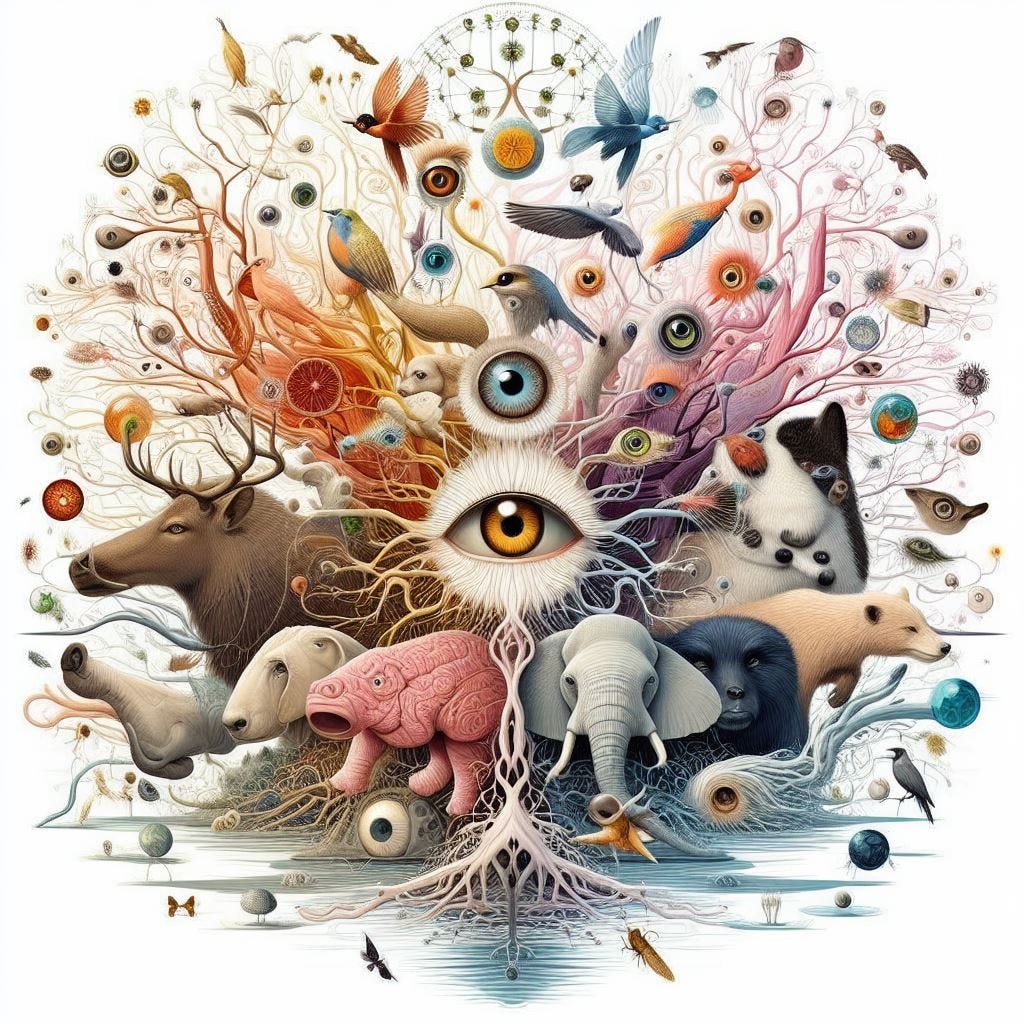
According to the Umwelt theory, the world as perceived through human sight, hearing and cognitive abilities is merely one of countless ‘soap bubbles’ in the universe. It compels us to relinquish the arrogance that humans, as the lords of all creation, hold a monopoly on objective truth.
For artists, the Umwelt has become a new source of inspiration. Moving away from classical representation—which sought to depict landscapes exactly as they are—it has provided an opportunity to broaden the spectrum of artistic expression by posing the pluralistic question: ‘How do non-human beings perceive the world?’.
Disconnection and connection: can we communicate?
The concept of the Umwelt offers sharp insights not only into biology but also into the relationships between us humans living in modern society. This is because, even when we speak the same language and share the same physical space, we each live within our own ‘psychological and social Umwelt’, shaped by our individual physical conditions, accumulated experiences, social values, and the media environment curated by algorithms.
Perhaps we are all solitary beings trapped within our own soap bubbles.
Some visual artists utilise art as a medium to connect these disconnected individual worlds. Through interactive art—which is completed as viewers with different perceptual worlds interact within a single space—they continue to attempt to break down the invisible walls of perception. Even if we cannot fully perceive or replicate one another’s ‘Umwelt’, acknowledging that a ‘universe entirely different from our own’ undeniably exists within the person standing before us—this is precisely where art conveys the message that true empathy and solidarity begin.
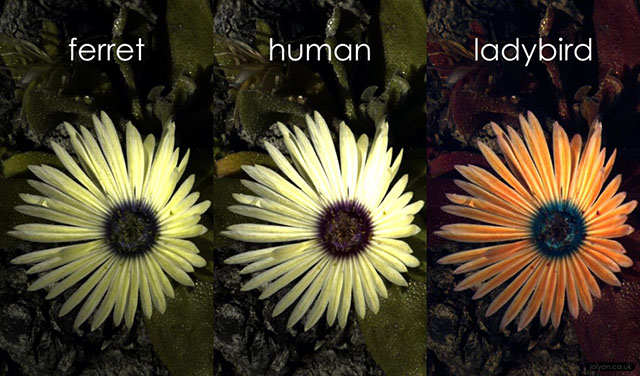
Art: A Window into Another Universe
One of the great powers of art is that it allows us to imagine worlds we have never seen.
Originating in ecology and now a central intellectual theme in contemporary art, the concept of ‘Umwelt’ constantly challenges us, reminding us that the world we see and believe in is not the whole picture. Stepping away, if only for a moment, from our fixed human perspective to imagine the subjective universes of other beings—might that not be the most sensorial sense of liberation that contemporary art offers us?