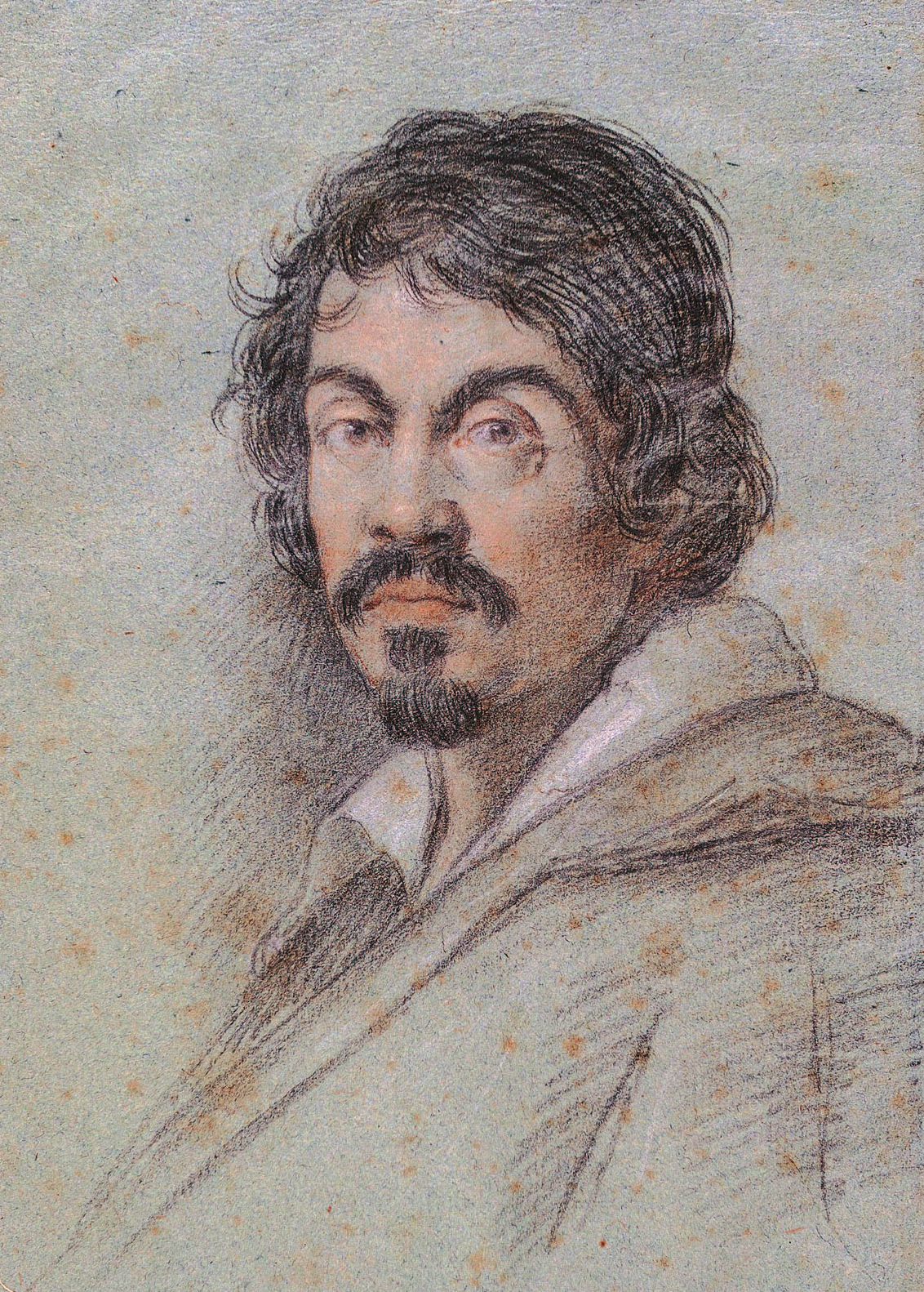
The Fall of a Genius – Caravaggio
One night in 1606, in Rome, Italy. In an alleyway bathed in faint moonlight, two men were locked in a fierce physical struggle.
One of them was Michelangelo Merisi da Caravaggio. The other was Tommasino Ranuccio, a man of wealthy lineage who was treated as little more than a local ruffian.
Caravaggio was already hailed as Rome’s greatest painter, yet he was a man teetering precariously between genius and violence. And that night, the tip of his knife pierced his opponent’s body. This single act of murder transformed him from an icon of his time into a ‘fugitive’. Yet, paradoxically, it was this very tragedy that made his art shine all the brighter.

A man with the hand of God, yet a painter with the temperament of a devil
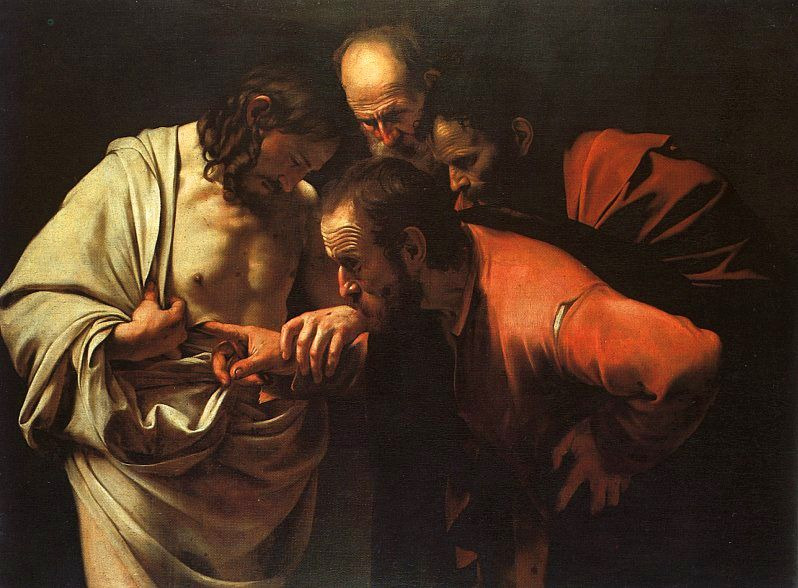
Caravaggio was the artist who perfected the ‘Tenebrism’ technique, sculpting light and shadow as if carving them from stone; the figures in his paintings boasted a dramatic realism that seemed to burst through the canvas. Tenebrism refers to the use of stark contrasts between light and darkness in Western painting history to heighten dramatic effect through figurative composition. (Derived from the Latin word tenebrae, meaning ‘darkness’)
What made Caravaggio’s paintings so different from those that came before? In 16th-century Europe, the majority of religious paintings depicted noble and sacred subjects—far removed from the mundane—featuring heavenly hosts and angels, whilst biblical protagonists such as Jesus and the Virgin Mary were invariably portrayed as holy and beautiful.
However, Caravaggio never once painted such religious works. Instead, he frequently cast the protagonists of his religious paintings as ordinary people in very everyday scenes. Perhaps it goes without saying that the shock felt by the religious establishment at the time can be easily imagined, given that the protagonists of his religious paintings were backstreet prostitutes, thugs and swindlers—figures who could hardly be described as ordinary. Caravaggio’s works, which elevated the profane to the sacred, caused a tremendous stir. Caravaggio used to point to passers-by on the street and say, ‘All those people are my teachers.’ By this he meant that there was no separation between the sacred and the profane.
However, his character was as extreme as his paintings. Alcohol, gambling, brawls, and endless rage—all of this drove him to ruin.

The Fateful Night – Becoming a ‘Murderer’
Rome, 1606. Caravaggio was involved in a fierce argument with a man named Rancho Tommaso over a gambling debt. This altercation was no mere quarrel.
Knives were drawn, blood was spilled, and a man fell to the ground.
“Caravaggio killed him!”
Because of this single moment of explosive rage, Caravaggio became a fugitive, immediately sentenced to death in Rome. He fled the city at once and spent the next four years wandering throughout Italy, painting. And his paintings were becoming ever more intense and ever darker.
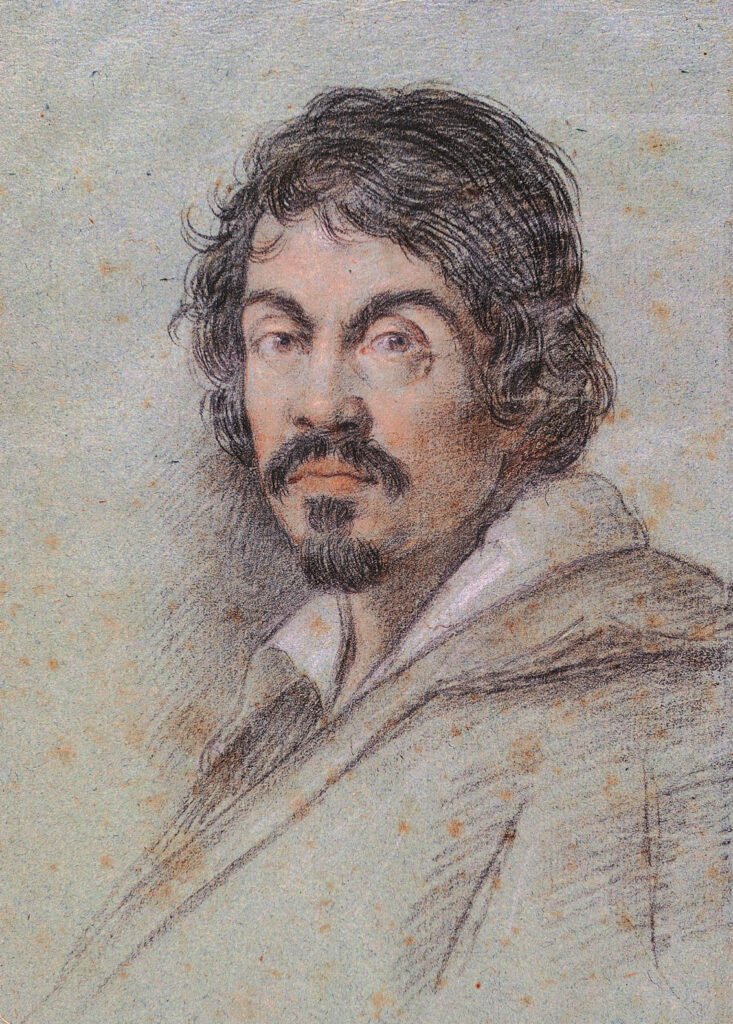
A life on the run, yet art that grew more intense
Even whilst on the run, Caravaggio left his mark as he wandered from Naples to Malta, then to Sicily, and back to Naples. Yet wherever he stayed, there was no end to the stabbings, fights and clashes. As if to reflect his own dark inner world, he used even darker colours and stark contrasts in his works, capturing his despair and madness exactly as they were.
The painting he produced whilst in hiding is *David with the Head of Goliath*. Interestingly, Caravaggio’s own likeness is projected onto the two figures depicted in this work. Caravaggio’s face, which bore a large scar on his forehead from an attack by a rival whilst in hiding, is embodied in the figure of Goliath, whilst David, gazing with compassion at the decapitated Goliath, bears a resemblance to Caravaggio in his youth. Consequently, the scene in this painting can be interpreted as the past self killing the present self.
Imbued with deep self-loathing and a desire for penance, this painting was created by Caravaggio for Cardinal Scipione Borghese, the Pope’s nephew, in the hope of receiving absolution for his sins.

The Final Moment – ‘Even his death remains a mystery’
In 1610, Caravaggio returned to Rome to seek a pardon. However, on his way back, he suddenly vanished without a trace. A few days later, his body was found on the beach. Questions surrounding his death remain to this day.
- The possibility that he was murdered by soldiers
- The possibility that he died of a fever
- The possibility that he was poisoned
Yet one thing is certain: the works he left behind are still alive and breathing today.
He was, ultimately, a genius ahead of his time, yet at the same time a tragic figure consumed by his own rage. And the light and darkness within his canvases were a direct reflection of his own life.