Local Life Connected by Water – Tokyo’s Denki-yu Sento Bathhouse
A Community Hub: Japan’s Sento Culture
Today, we are connected to the whole world via a single smartphone, yet, paradoxically, the significance of the physical ‘neighbourhood’ we walk through and live in every day is gradually fading. In a daily life where we do not even know our neighbours’ faces, where exactly does the true essence of a neighbourhood lie? Perhaps it lies not in a place demarcated on a map, but in the everyday vibrancy created when people gather and interact without any preconditions.
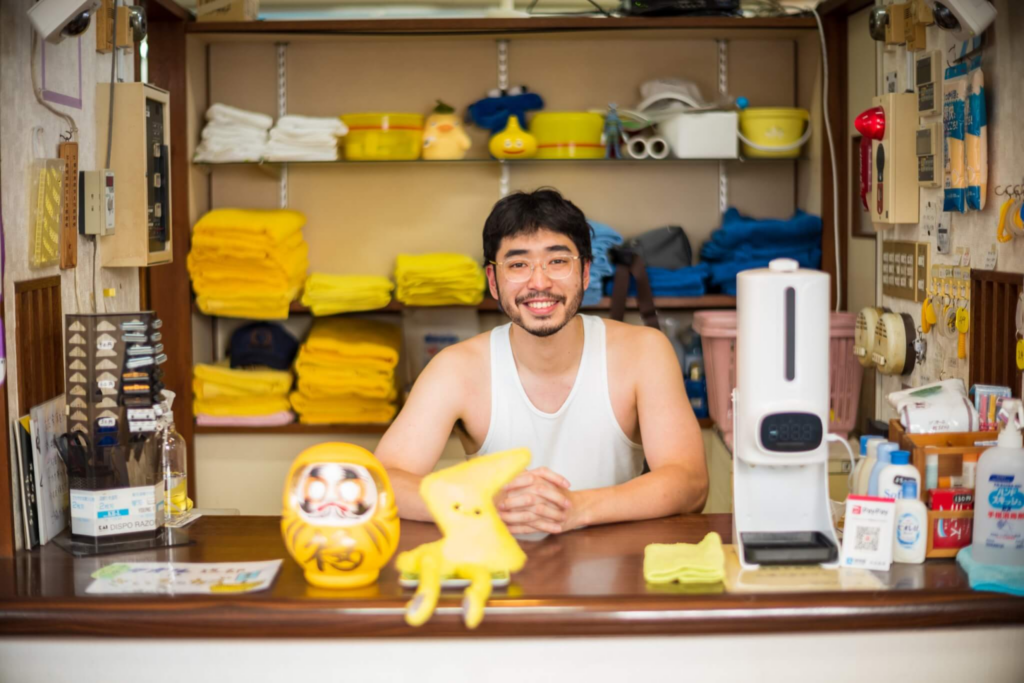
Here, we introduce Japan’s public bathhouses, which preserve the ‘essence of the neighbourhood’ in their own unique ways whilst offering travellers the most authentic local experience. This is the story of ‘Denki-yu’ (電気湯), situated in the alleyways of Kyojima in Sumida Ward, with a view of Tokyo’s iconic Skytree, a bathhouse that has stood guard over the neighbourhood for over a century.
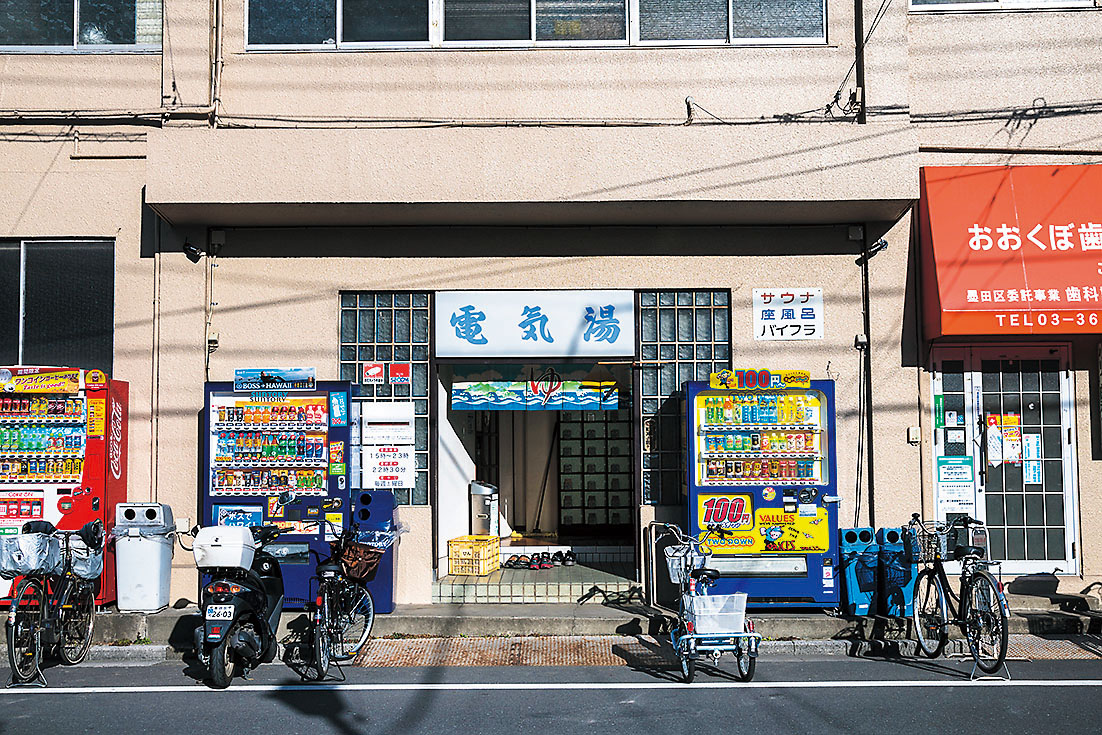
A long-standing fixture in the alleyway, opened in 1922
Nestled in a quiet residential alleyway in Sumida Ward, with a view of Tokyo’s iconic Skytree, lies ‘Denki-yu’ (Electric Bath). Operated across generations and having stood in the same spot for over a century, its exterior perfectly embodies the style of a traditional Japanese public bathhouse (sento).
It is one of Tokyo’s most historic ‘sento’ (public bathhouses). Although it has long served as a community hub for the residents of Sumida Ward, like many long-established bathhouses, it has faced crises due to ageing facilities, the emergence of large-scale spa resorts, and the overall decline in the number of sento. However, Denki-yu refused to be confined to its legacy as a relic of the past. Whilst preserving its traditional framework intact, it began to actively embrace the experimental ideas of a new generation.
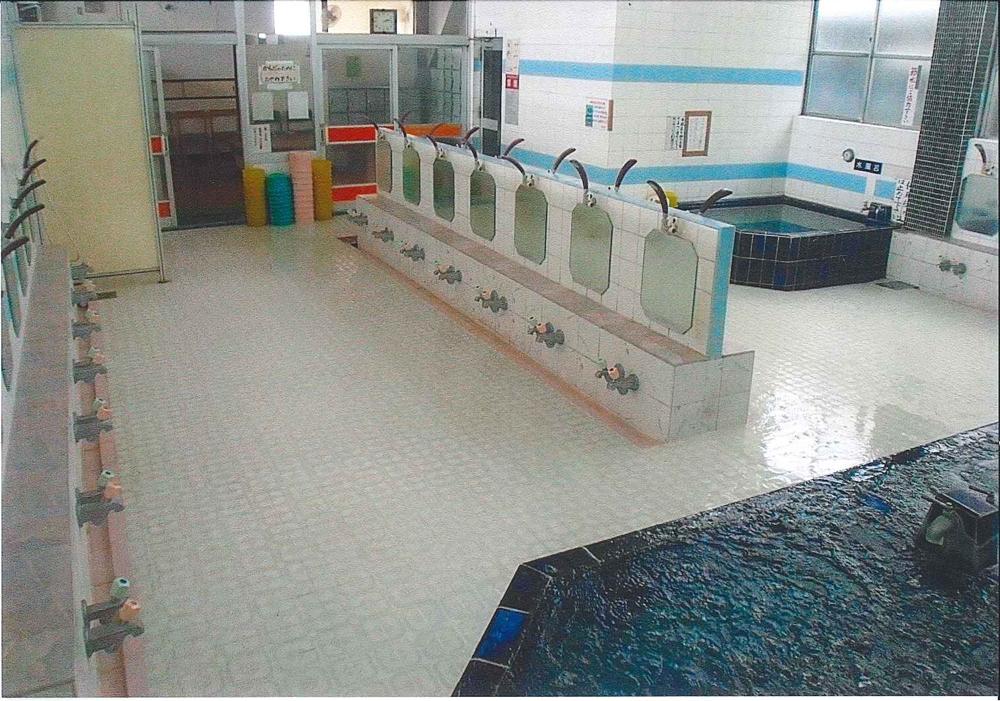
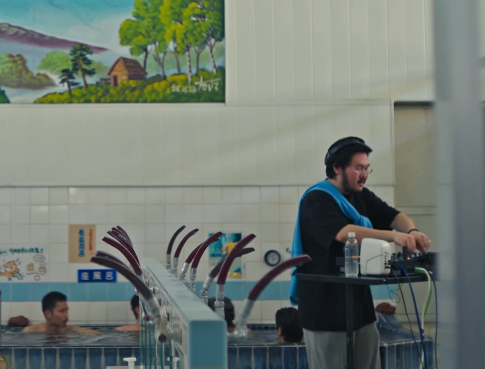
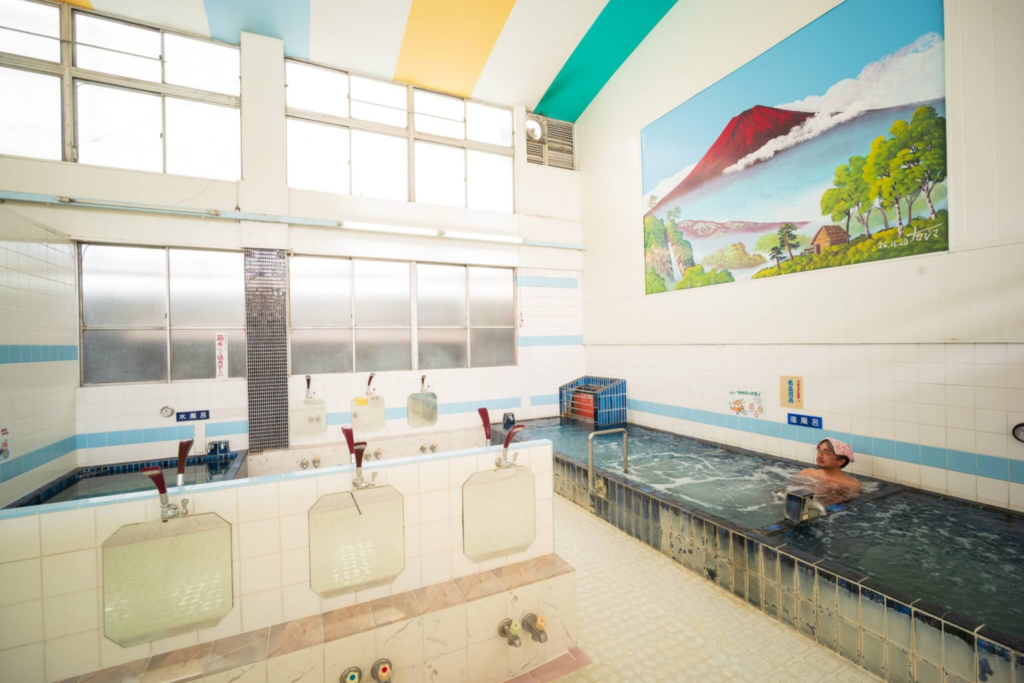
The lyrical, retro wooden shoe cupboards, the high lattice-patterned ceiling and the enormous tiled mural of Mount Fuji adorning the front of the bathing area have all been left intact. Instead, it has expanded its role as both an art gallery and a social club by utilising the changing rooms and open-plan areas to host exhibitions by local artists, as well as music festivals and panel discussions. It is here that a peculiar yet sensorial experience unfolds: soaking your feet in a hot bath whilst listening to live performances by independent musicians.
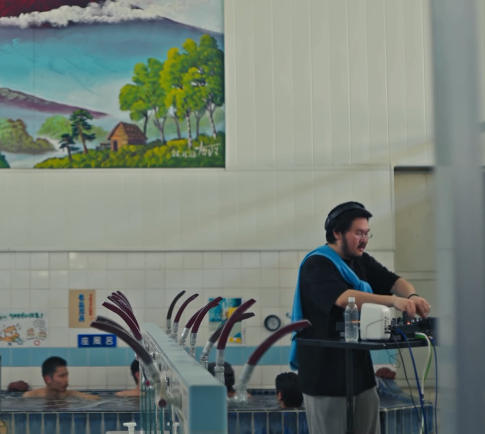
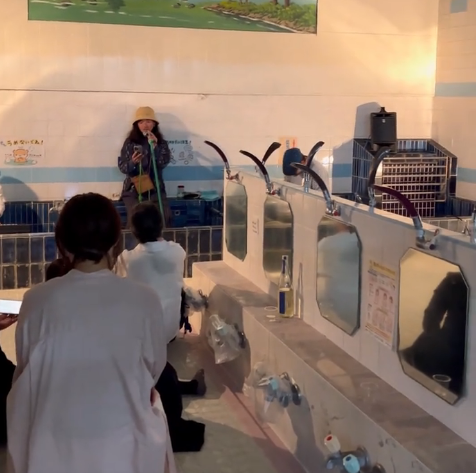
A place of ‘loose solidarity’
Denki-yu’s greatest value lies in the way people connect with one another, without any conditions. Given the nature of the bathhouse—a space where one enters having removed one’s clothes—barriers of social status, nationality and age are rendered powerless here.
From the elderly local gentleman who has been visiting at the same time every day for decades, to young Tokyo-based creatives drawn by word of mouth, and global travellers seeking to experience the area’s unique local culture—all gather side by side in the same bath beneath the Mount Fuji mural. Without encroaching on one another’s worlds, they share the common goal of ‘rest’ whilst immersed in water of the same temperature. In this way, Denki-yu continues to provide a space for a light-hearted yet affectionate ‘loose solidarity’ amongst the city’s isolated residents.
The warmest way to slow down the pace of city life
Denki-yu, in Sumida Ward, Tokyo, clearly demonstrates that the essence of a space is not limited to mere function (bathing). In a modern city that emphasises efficiency and speed above all else, it has preserved the warmth of a century-old bathhouse whilst creating a space for human interaction and sensory rejuvenation.
If your eyes have grown weary of Tokyo’s dazzling skyline whilst travelling here, do take a moment to slow down and step into the blue waters of Denki-yu. There, you can switch off from the complexities of the world and experience the genuine, unhurried relaxation of a true local.
- Name: Denki-yu (電気湯 / Denki-yu)
- Location: 3-10-10 Kyojima, Sumida-ku, Tokyo 131-0046 (5-minute walk from Keisei Hikifune Station on the Keisei Airport Line)
- Opening hours: 15:00–23:00 (Closed every Saturday)
- Admission Fee:
In accordance with the Tokyo Metropolitan Government’s standard public bath rates
- Adults (aged 12 and over): 550 yen
- Primary school pupils (aged 6 to under 12): 200 yen
- Infants (under 6 years old): 100 yen
- Please note: Separate charges may apply for towel hire, soap and shampoo, so we recommend bringing your own
- Key facilities: Traditional electric bath (low-frequency hot bath), floor-seating shower cubicles, retro changing rooms, and stalls selling artist merchandise and drinks