Picasso and Matisse: A Rivalry in 20th-Century Art
Paris, 1906. In the capital of art, two painters began to take keen notice of one another: Henri Matisse and Pablo Picasso. Viewing each other as both fierce rivals and colleagues, they forged one of the most intense rivalries in the history of art.
Matisse, the ‘innovator of colour’ who founded Fauvism
In 1905, at the Salon d’Automne exhibition, Matisse gave birth to ‘Fauvism’ through his experiments with intense colours that broke with tradition.
It was characterised by shocking primary colours and rough brushstrokes, earning them the nickname ‘the beasts of the art world’. His masterpiece, *Le Bonheur de Vivre* (*The Joy of Life*), was harshly criticised by art critics of the time as “irrational and radical”, but was later re-evaluated as a work that established the sensual power of colour as art. Matisse pushed the boundaries of his colour-centred, bold style of painting to such an extent that he declared, ‘Colour is my weapon.’

Picasso, the Spanish genius who responded with Cubism
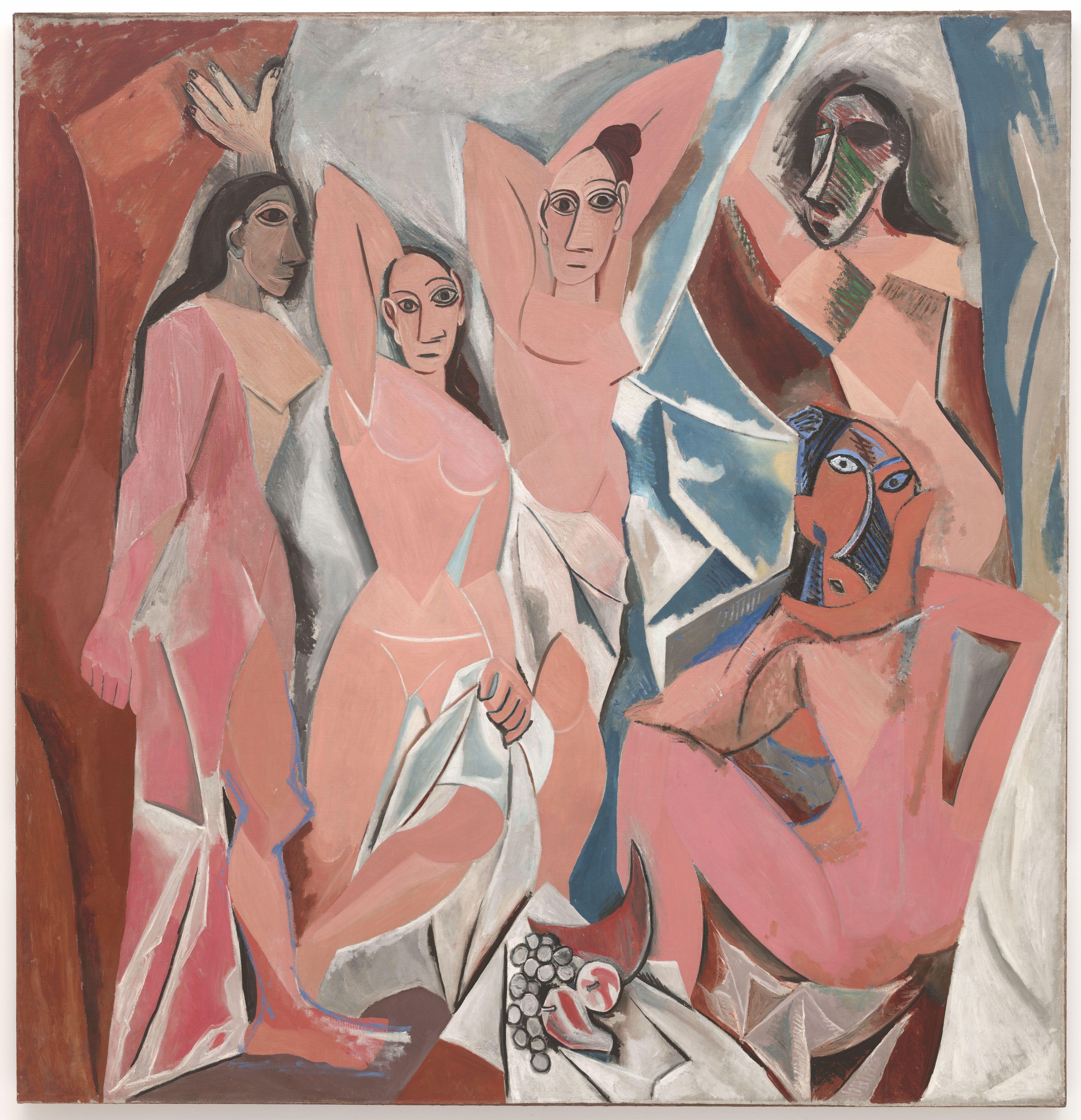
Although Picasso was younger than Matisse, he was already an artist attracting attention in the Paris art scene. Inspired by Matisse’s experiments with colour, he began to focus on the deconstruction of form. In 1907, he unveiled his shocking work, *Les Demoiselles d’Avignon*. This marked the beginning of Cubism, which broke with the conventional concepts of figurative painting by deconstructing and reconstructing forms. The art world was once again stunned.
Picasso subsequently worked alongside Braque to give concrete form to Cubism, expanding the very scope of the art world by extending his practice beyond painting to include sculpture, printmaking and ceramics. Whilst Matisse chose colour, Picasso deconstructed form and structure, thereby redefining art.
‘A rival’s painting’ hanging in the studio, a source of mutual vigilance
The two were not officially close friends. However, they were acutely aware of one another. It is said that Picasso hung Matisse’s works on the walls of his studio to spur himself on. Matisse, too, showed strong wariness whenever a new work by Picasso appeared.
Picasso once remarked, ‘I can only rest when Matisse is dead.’ Although this statement may sound like a joke, it is regarded as the most candid insight into their relationship.
Even whilst battling cancer in 1954, Matisse found new forms of expression through ‘collage’, a technique involving cutting and pasting paper. The ‘Blue Nudes’ series, created whilst he was cutting and pasting paper from his sickbed, illustrates his lifelong obsession with colour right up to the very end. Picasso, too, never ceased to experiment with new approaches even after Matisse’s death, continuing until his own passing in 1973. He left behind some 130,000 works during his lifetime, a volume recorded as the most extensive in the history of modern art.

There were no losers; art history itself was their battlefield
Today, the art world recognises both ‘Matisse of Colour’ and ‘Picasso of Form’ as leading figures in modern art.
Matisse pushed the pictorial possibilities of colour to their absolute limits, whilst Picasso broadened the horizons of art by deconstructing form and structure. Their confrontation was not merely a competition, but a ‘creative clash’ that reshaped art itself. As a result of their struggle to surpass one another, the entire history of art became the product of that very contest.