William Turner, the Painter of Light Beloved by Britain
We encounter him every day on the £20 note, or in the name of the ‘Turner Prize’, which rocks the global art world every year. Yet before becoming this colossal cultural icon, Joseph Mallord William Turner (J.M.W. Turner, 1775–1851) was a radical artist who defied the conventions of his time to pursue his own unique vision of the essence of light and atmosphere.
We retrace the life journey of Turner, Britain’s most beloved national painter, and explore his great artistic philosophy.
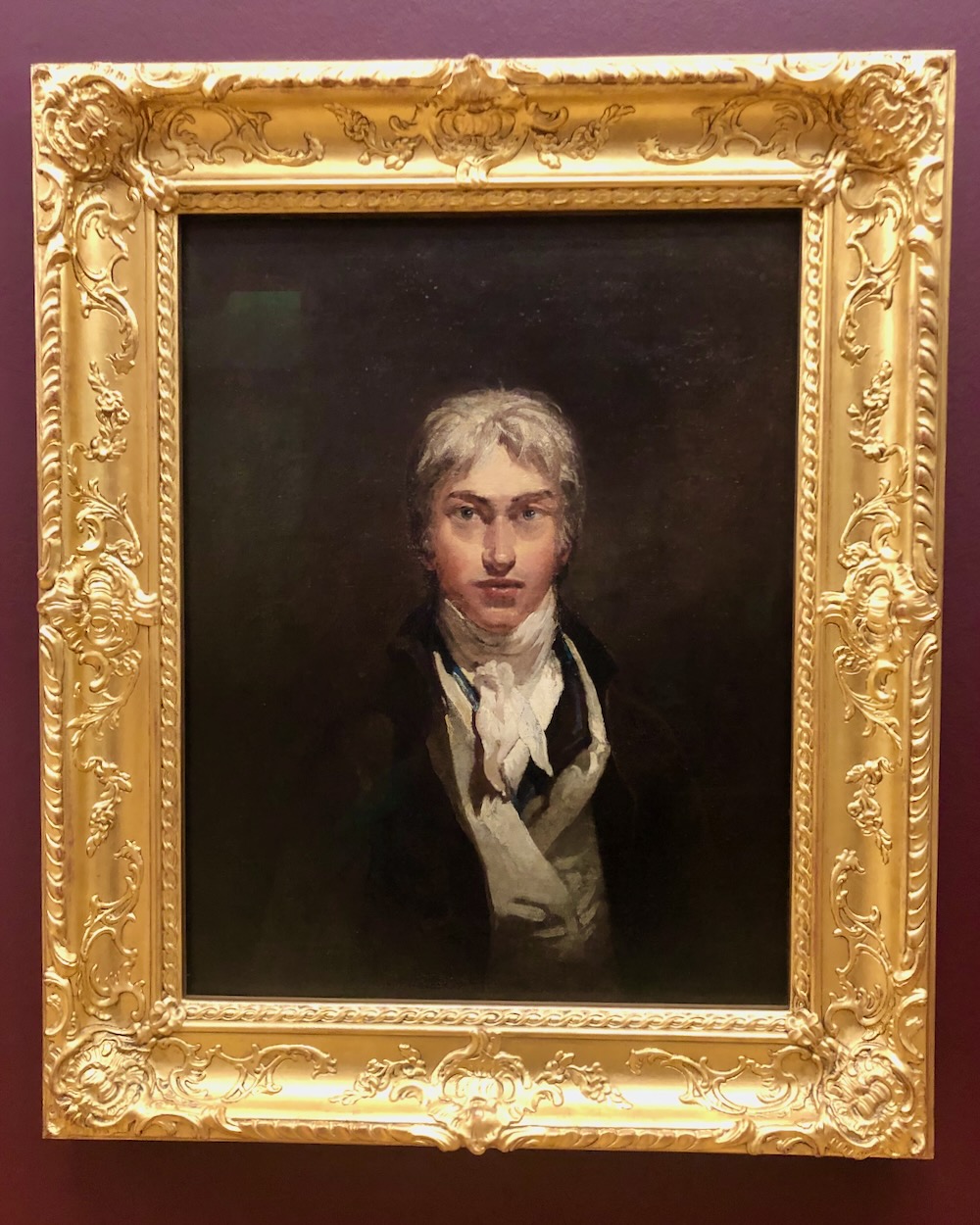
From barber’s son to prodigy of the Royal Academy
Turner was born in 1775 into a poor barber’s family in Covent Garden, London. Although he had a difficult childhood due to his mother’s mental illness, Turner’s genius for art was not overshadowed by poverty. Seeing his son’s paintings, displayed in the barbershop window, being sold to customers, his father gave Turner his full support.
As a result, Turner achieved the remarkable feat of being admitted to the Royal Academy of Arts, Britain’s most prestigious art institution, at the tender age of just 14. Starting with his first watercolour exhibition the following year, he had already secured fame and fortune by his early twenties, becoming the Academy’s youngest full member and firmly establishing himself on the ‘elite path’.
.jpg)
Erasing Form to Paint Essence – “Light is Colour”
Turner’s artistic philosophy did not stop at ‘faithfully reproducing visible objects’. He sought to capture on canvas the ‘invisible essence’—such as light refracting as it strikes objects, the density of the air, and the ever-changing movements of the atmosphere. His signature philosophy, “Light is therefore colour”, became increasingly pronounced as he approached the end of his life. Turner boldly erased the specific forms and outlines of the landscape, filling the canvas with rough brushstrokes and intense masses of colour.
Contemporary critics mocked his work, remarking that “one cannot tell what is depicted” or that it resembled “soap suds and plaster”, yet Turner’s bold experiment became a magnificent prelude that later opened the door to French Impressionism and abstract art.

Masterpieces capturing the sublimity and fury of nature
Turner was the painter who best expressed the awe and fear that humans feel in the presence of nature—that is, the ‘sublime’. He did not merely contemplate the landscape; he painted after experiencing nature in its raw, vivid form first-hand.
*Snow Storm: A Steamship Leaving the Harbour* (1842)
This work is associated with the most famous anecdote illustrating Turner’s artistic madness. It is said that, in order to fully experience the dynamism of the sea during a blizzard, he tied himself to the mast of a sailing ship for four hours. The swirling blizzard and waves, and the silhouette of the steamship struggling against them, convey the overwhelming power of nature in its raw, unadulterated form.

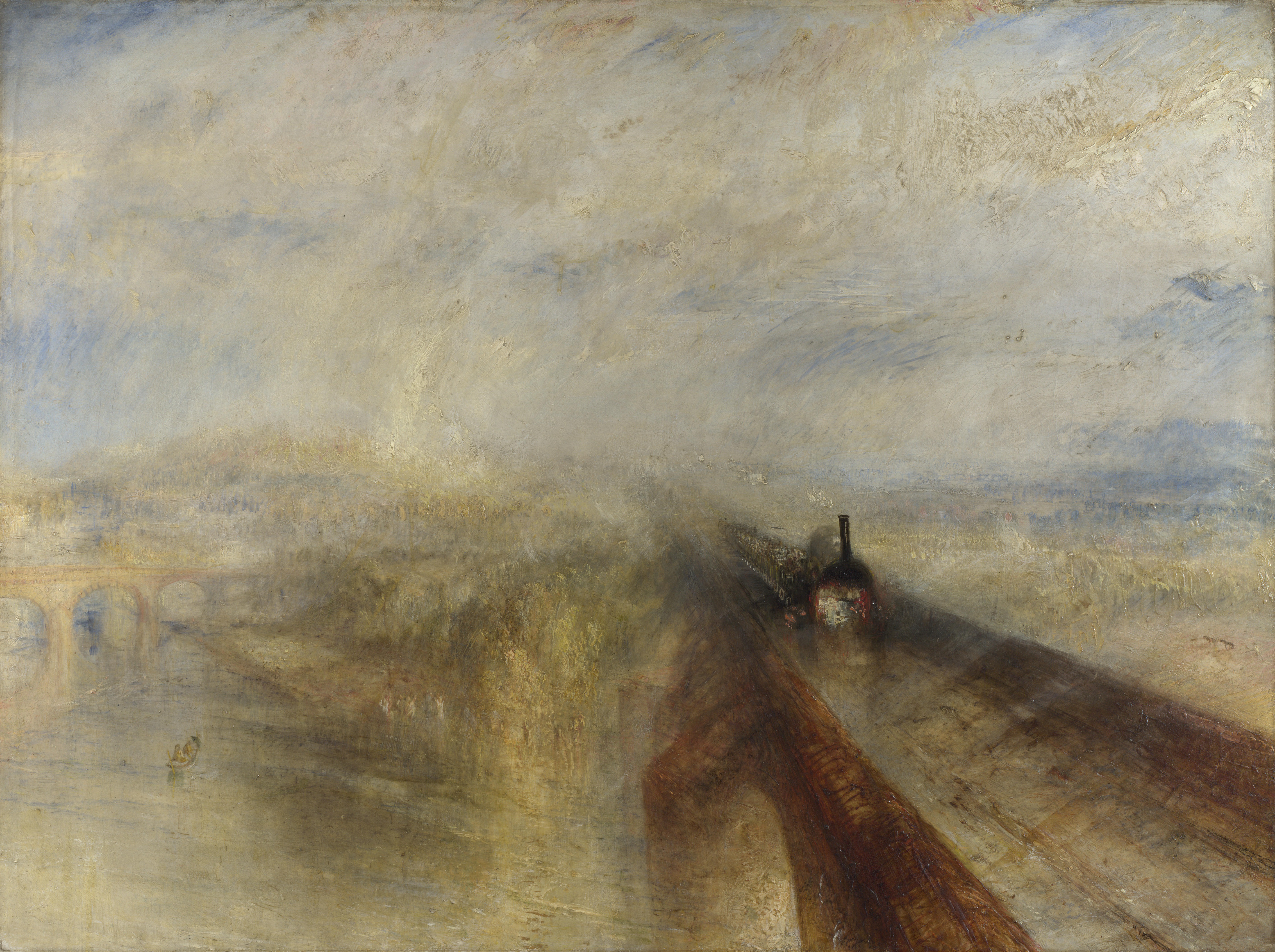
*Rain, Steam and Speed – The Great Western Railway* (1844)
This work depicts a train racing through pouring rain. Rather than adhering to the conventions of classical landscape painting, he interpreted the ‘train’—a symbol of the Industrial Revolution that was shaking the world at the time—through sensory elements such as atmospheric humidity, steam and a sense of speed, thereby brilliantly visualising the advent of modernity.
The Lonely Painter’s Final Testament
Turner lived his entire life as a bachelor, devoted solely to his art. In his later years, he chose a life of such peculiar solitude that he severed all social ties and lived in seclusion under a pseudonym. In 1851, he passed away leaving behind the testament, “The Sun is God”, and bequeathed his entire estate and tens of thousands of works to society.
In an era dominated by portraits of the aristocracy and religious paintings, Turner elevated ‘landscape’ to the ranks of the greatest art forms. His intense life, in which he worshipped only light and nature as if to mock the greed of capital and institutions, has itself become a monumental compass guiding the direction of modern art.